
35 Positive Lunchbox Notes for Kids That Build Self-Love
Inside: Learn how to write positive lunchbox notes for kids that build self-love instead of just giving empty praise. You’ll also fun a free printable you can download with 35 lunchbox notes and a page of ideas so you don’t have to come up with ideas on your own. Disclosure: This post contains affiliate links.
Ep 27: The Words that Shape Who Your Kids Become: Writing Positive Lunchbox Notes that Build Self-Love
It’s 6:45 AM.
You need to be in the car so your kids aren’t late for school (or the bus) by 7:15 am.
Your kids are moving in slow motion, getting dressed and brushing their teeth. Heck, one kid may still be in bed, not even awake yet, although you turned on their lights and gently shook their shoulder with a sweet, “It’s time to wake up.” Or maybe you yelled, “Wake up!” towards their part of the house. No judgement here.
All you can feel on the inside is, “It’s GO time!”
You realize the backpacks are missing from where they are supposed to be, your high schooler’s Chromebook is still at the end of the hall and NOT in his missing backpack, your son’s reading log is not signed, and lunch boxes are sitting empty on the counter.
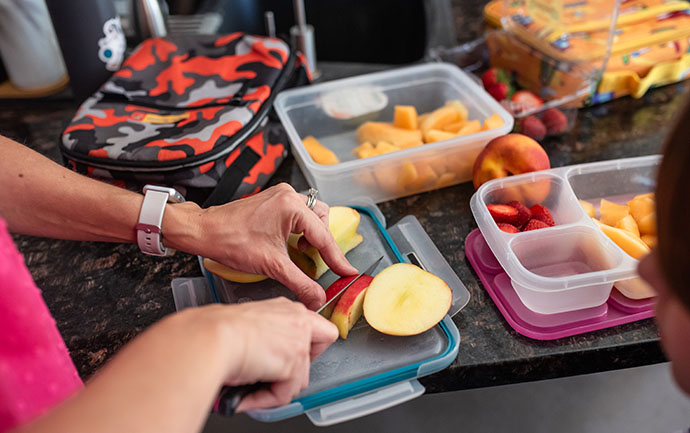
Even though you prefer that your kid pack his or her own lunch, you’re now rushed, so you throw together sandwiches, toss in some crackers, and grab a paper towel from the kitchen counter.
“Have a great day!” you scribble quickly, slapping it onto a juice box before snapping the lunchbox shut. Or maybe there’s no note at all.
Is this what your mornings are like?
If not, envision what it’s like for you and what is going on in your kids’ lunchboxes! I’ve been that mom more times than I’d like to admit. But this year, I have decided things are going to be different. I’m putting this out in the world for accountability.
When I attended the very first school in rural Pennsylvania, from kindergarten to 2nd Grade, I remember lunchtime vividly.
My lunch was free, which I didn’t know how or why that was, but that meant I waited in a different line than my friends who carried their bright, character-themed lunchboxes. I remember watching them at our long cafeteria table, opening their My Little Pony and Transformers lunchboxes like little treasure chests.
Inside wasn’t just food, their parents packed surprises!
From what I remember, my friends had a special treat, maybe some crackers in fun shapes, and almost always, a folded piece of paper with their mom’s handwriting. I’d watch my friends unfold those notes and read them out loud.
I didn’t have a packed lunch or a note.
I don’t think I was jealous exactly, but I definitely wondered what it would feel like to find a note from my mom tucked between my sandwich and apple.
Later, when I moved in with my dad and stepmom, things changed. I graduated to packed lunches complete with a thermos that kept soup steaming hot even at noon. But still, no notes. I never asked for them, so they didn’t know I wanted them, but I secretly wanted to find one when opening my lunch.
Fast forward to today, where I’ve been a mom to school-aged kids for over 12 years!
I’d love to say I’m the organized parent who meal preps on Sundays and writes thoughtful notes every morning, but honestly, I’m usually the one grabbing a Sharpie and scribbling a funny pun (at least it is to me!) on a napkin as we’re heading out the door.
This year, all three of my boys are heading “to school”. My teenager will continue his fifth year at a hybrid middle/high school, my middle son is transitioning from four years of homeschooling to join his younger brother at a Christian microschool, and suddenly, I realized: this is my chance! And being as dramatic as I am in my mind, I envision myself standing like a superhero with bright lights shining all around me. Ha!
Recently, I read a book called Self-Love for Kids, and was thinking about how I can do this through positive lunchbox notes for kids.
Just telling our kids that they are awesome isn’t really what they need. They need a deep, lasting foundation that helps them navigate whatever life throws their way.
And you know what I discovered?
That tiny piece of paper I used to watch my friends treasure has the power to do so much more than just say hello.
What if those few scribbled words could actually build the kind of unshakeable self-worth that helps kids believe in themselves when nobody else is watching?
What if, instead of writing generic encouragement, we could plant seeds of self-love that grow stronger with each passing day?
Those lunch cards I’m about to share with you are for your kids and for mine, too. I finally realized that the power of intentional lunchbox notes isn’t just in making kids laugh; it’s a great way to help them develop a very important relationship: the one with themselves.
Table of Contents
The Problem: Many Parents Write Generic Lunchbox Notes Without Realizing Their Potential
If you’re like most parents who leave little love notes in your child’s lunchbox, your note game probably looks something like this: you grab a sticky note during the morning rush and scribble “Love you!” or “Have a great day!” before tossing it into the lunchbox alongside the sandwich.
There’s absolutely nothing wrong with those notes. The love behind them is real, and any connection with our kids is valuable. I mean, I would’ve been happy even with a simple “Hi” when I opened my lunchbox.
I discovered we are missing a great opportunity.
Those few seconds we spend writing a note could be building something much more powerful than just a momentary smile. They could be laying the foundation for how our children see themselves for years to come.
Most of us write lunchbox notes focused on external circumstances: “Hope you do well on your test!” or “Remember to be kind to others!” While these messages come from a place of love, they often focus on performance and behavior rather than affirming our child’s inherent worth.
Kids Face Daily Challenges to Their Self-Worth at School
While we’re home thinking about what to make for dinner or about needing to schedule dentist appointments, our kids are navigating a complex social and academic environment that can be incredibly challenging to their developing sense of self.
The research is sobering.
Academic stress may be the single most dominant stress factor that affects the mental well-being of students, and this pressure starts much earlier than we might think. Nearly 80% of children ages 8–17 reported feeling stressed at school some or most of the time.
I just heard from one of the girls from the church I lead about her first day of 10th grade, and she said she got home and cried in the shower. Reading this absolutely broke my heart!
Here’s what our kids are dealing with every single day:
Academic Pressure:
Students face ongoing stress relating to their education, such as pressure to achieve high marks and concerns about receiving poor grades. Even elementary students are not immune to academic-related stress. The tension, discomfort, and other emotions caused by the pressure from school, family, and society in the learning process can lead to anxiety, depression, and physical symptoms like fatigue.

Social Comparison:
Research shows that students’ academic self-concepts form by contrasting their own achievement with their peers.
When parents compare their children to others, they inadvertently teach their children to gauge their own worth and achievements against their peers (or siblings). This creates what researchers call “upward social comparison,“ where children compare themselves to those who seem to be doing better, leading to negative emotions like depression and anxiety.
Peer Pressure:
Studies reveal that individuals who perceive pressure from their peers tend to show low self-esteem. The findings show that when adolescents’ peer pressure increases, their self-esteem decreases. About 7 in 10 (68%) of teens say they personally feel a huge amount of pressure to get good grades or do well in school.
The result?
A systematic review found evidence that academic pressure is positively associated with depression, anxiety, self-harm, and suicidal ideation among adolescents. Forty-eight studies found evidence of a positive association between academic pressure and at least one mental health outcome.
Traditional Encouragement Focuses on External Achievements Rather Than Internal Worth
Here’s where things get tricky. Most of the encouragement our kids receive, from parents, teachers, and society, is tied to what they do rather than who they are.
“Great job on that test!”
“You’re such a good student!”
“I’m proud of you for making the team!”
While this kind of praise feels positive, research shows it can actually backfire.
When kids focus on protecting or increasing their self-esteem through external achievements, it can set them up for failure. They learn that their worth is contingent on performance, which means they only feel good about themselves when they succeed.
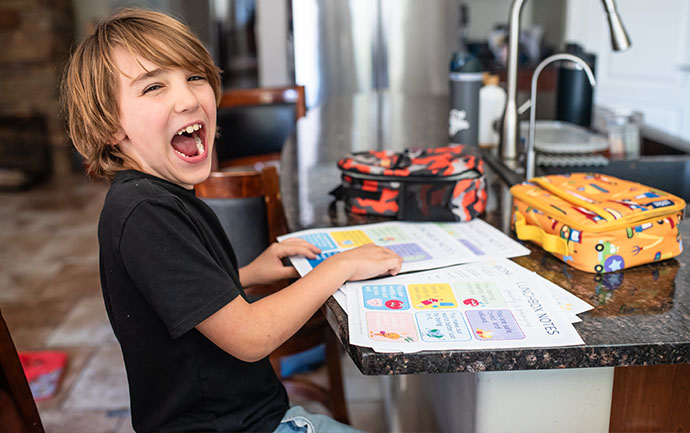
Studies show that higher self-esteem does not cause better school performance, prevent risky behaviors, or lead to healthier relationships when it’s based on external validation.
The problem with performance-based encouragement is that it teaches children their value fluctuates based on circumstances. When they inevitably face setbacks like a bad grade, social rejection, or failure at something they attempted, their entire sense of worth crumbles because it was built on shaky external foundations.
Read Next: Why Praise Doesn’t Work to Motivate Kids and What We Can Do Instead
Why Self-Love Matters More Than Self-Esteem
This is where the distinction between self-esteem and self-love becomes crucial.
Self-esteem is essentially a positive evaluation of self-worth based on external factors. It says “I’m good because I achieve,” or “I matter because others approve of me.”
As Dr. Kristin Neff’s research shows, self-esteem is often contingent on things like looking a certain way or being successful, and that contingency means we only have self-esteem when we succeed, and it deserts us when we fail.
Self-love is unconditional.
It’s about relating to yourself with kindness, regardless of circumstances.
According to Keri Powers in Self-Love for Kids, self-love helps children develop security, confidence, and identity in a way that doesn’t depend on external validation.
Self-compassion research reveals that self-compassion is associated with well-being just like high self-esteem: it’s linked to less depression, anxiety, and stress, and greater happiness and optimism. But critically, it’s not linked to the same problems associated with self-esteem, such as narcissism or social comparison.
Interesting!
Why Kids Need Self-Love Building Tools
When kids who are struggling practice self-compassion, powerful things happen: Their sense of self-worth, resilience, and ability to cope with problems improve.
This is especially important because self-esteem tends to remain relatively stable across one’s lifespan, and by age 5, children already have a sense of self-esteem comparable in strength to that of adults.
The messages we send our children during these formative years literally shape their internal voice for life. The inner voice is set for kids by the age of 7, making it critical to instill positive self-talk during early development.
That’s where positive lunchbox notes for kids come in.
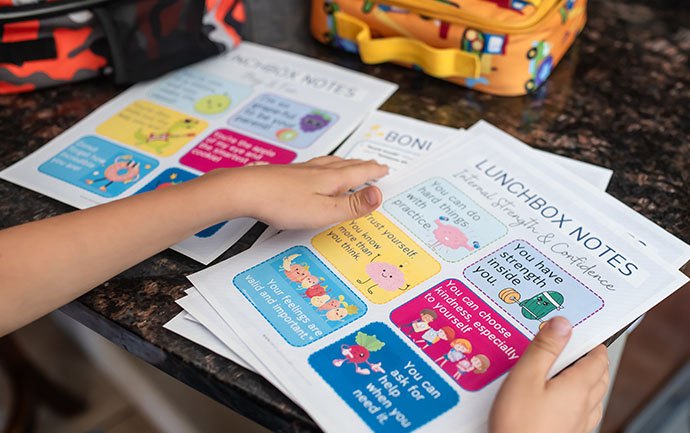
Instead of generic encouragement or performance-based praise, we can use these daily touchpoints to build the kind of unshakeable self-love that helps kids navigate whatever life throws their way.
Positive lunchbox notes for kids that focus on inherent worth rather than external achievements give kids what they need most: the deep knowing that they are loved, valued, and worthy exactly as they are, no performance required.
The Science Behind Affirmations for Children
Here’s something fascinating that might change how you think about those little lunchbox notes: the brain does not distinguish between reality and fantasy when processing affirmations.
It’s neuroscience!
As psychologist Dr. Ronald Alexander explains, affirmations work because the brain cannot tell the difference between what’s real and what’s imagined. When children read positive statements about themselves, their brains respond as if these statements are already true.
Self-affirmations activate brain systems associated with self-related processing and reward. Specifically, neuroimaging studies reveal that when people engage with affirmations, there’s increased activity in key regions of the brain’s self-processing (medial prefrontal cortex and posterior cingulate cortex) and valuation (ventral striatum and ventral medial prefrontal cortex) systems.
What does this mean for our kids?
Every time they read one of our positive lunchbox notes for kids, their brains are literally creating the same positive neural patterns they would experience if they were living out those affirming messages.
Connection to Growth Mindset Development
The science behind affirmations connects beautifully with Dr. Carol Dweck’s groundbreaking research on growth mindset: the belief that abilities can be developed through effort and perseverance, rather than being fixed traits.
Self-love, building affirmations, and a growth mindset are neurologically linked. Both involve creating neural pathways that support resilience, learning, and the belief that growth is possible. When children receive messages that focus on their inherent worth and capacity for growth, they develop what Dweck calls “a passion for learning rather than a hunger for approval.”
Dweck’s research shows that students who believed their intelligence could be developed (a growth mindset) outperformed those who believed their intelligence was fixed. Neuroimaging studies have found that people with growth mindsets show greater neural activity related to learning from errors than those with fixed mindsets. Specifically, they demonstrate enhanced focus on learning after mistakes, which helps them persist through challenges.
The language we use in our lunchbox notes can actively build growth mindset neural pathways. Instead of praising intelligence (“You’re so smart!”), growth mindset affirmations focus on process and potential:
- “You can learn anything with practice and effort”
- “Your brain grows stronger when you try hard things”
- “Mistakes help you learn and grow”
- “You are becoming who you’re meant to be”
What This Means for Your Positive Lunchbox Notes
Understanding the neuroscience behind affirmations transforms how we think about those little daily notes. We’re not just sending sweet messages, we’re actively participating in shaping our children’s neural architecture for self-love, resilience, and growth.
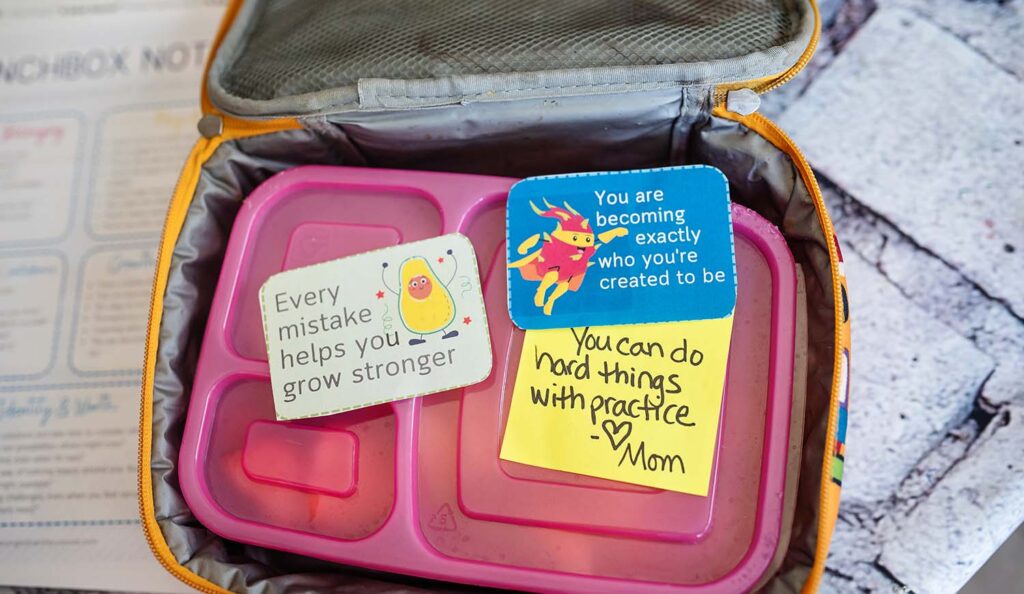
Every positive, affirming message you place in your child’s lunchbox is:
- Creating stronger neural pathways for positive self-talk
- Activating brain reward centers associated with self-worth
- Building growth mindset neural networks that support learning and resilience
- Influencing neurotransmitter production linked to happiness and emotional regulation
The consistency matters more than perfection.
Each day’s note adds another layer to the foundation of self-love and growth mindset you’re building in your child’s developing brain. And because neuroplasticity continues throughout life, it’s never too late to start this practice.
What to Include on Lunchbox Notes and How to Keep Messages Fun
Now that you understand the science behind why positive lunchbox notes for kids work, let’s dive into the fun part: what to actually write! The key is balancing self-love-building messages with elements that make your child excited to discover their daily note.
The Self-Love Foundation: What Every Note Should Include
Before we get creative with jokes and riddles, let’s establish the core elements that transform a regular lunchbox note into a self-love building tool.
Focus on Identity, Not Performance
Instead of “Great job on your test!” try messages that affirm who your child is, thoughtful and caring, has a creative mind, or is acting brave and strong.
Emphasize Unconditional Love
Your child needs to know they’re loved regardless of circumstances.
Include Growth Mindset Language
Help build those neural pathways for resilience so that they are capable and can continue to learn and grow. Normalize failure!
Acknowledge Their Inner Strength
Remind them of the resources and gifts they have been blessed with.
Making It Fun: Creative Elements That Spark Joy
The magic happens when you combine these powerful self-love messages with elements that make your child smile and look forward to their daily surprise.
Add Humor and Wordplay
Education expert Kristin Miller recommends age-appropriate jokes and words of encouragement. Humor can transform a tough day and help shy kids start conversations during lunch:
Use Visual Elements
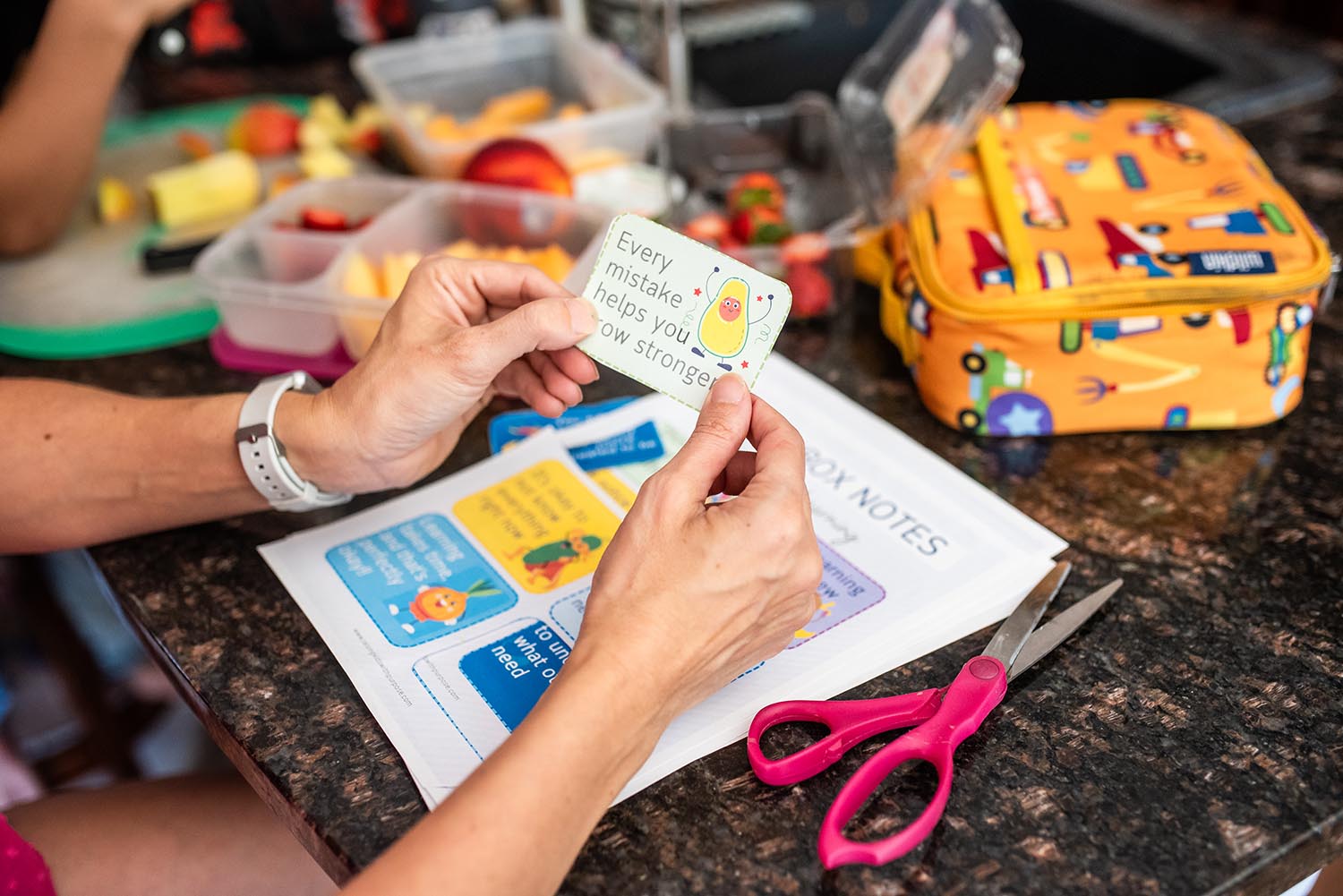
For younger children who are just learning to read, draw small pictures like hearts or smiley faces to make them feel your loving presence. Get creative with colored pens, markers or glitter pens.
Okay, maybe not glitter.
You can add stickers that celebrate their interests or doodle their favorite animal with an encouraging message. occasions
Create Interactive Elements
Keep your child engaged and thinking throughout lunchtime with riddles and brain teasers.
Make It Personal and Specific
Tailor your notes to your child’s personality, interests, and current experiences.

Quick and Easy Ideas for Busy Mornings
Let’s be realistic, some mornings are more chaotic than others. Here are simple ideas that take under 30 seconds:
Pre-Written Note Banks
- Keep a jar of pre-written affirmations you can grab quickly
- Use sticky notes with rotating messages
- Print sheets of positive phrases and cut them apart
- Create themed weeks (animal notes, space notes, etc.)
Simple Format Templates
- “You are _____ (brave, kind, smart, loved)”
- “Today I hope you _____ (smile, learn something new, feel confident)”
- “Remember: You are _____ enough”
- “I love how you _____ (help others, try hard, care about people)”
One-Word Wonders
Sometimes a single affirming word with a heart doodle is perfect:
- Loved
- Brave
- Amazing
- Enough
- Brilliant
- Cherished
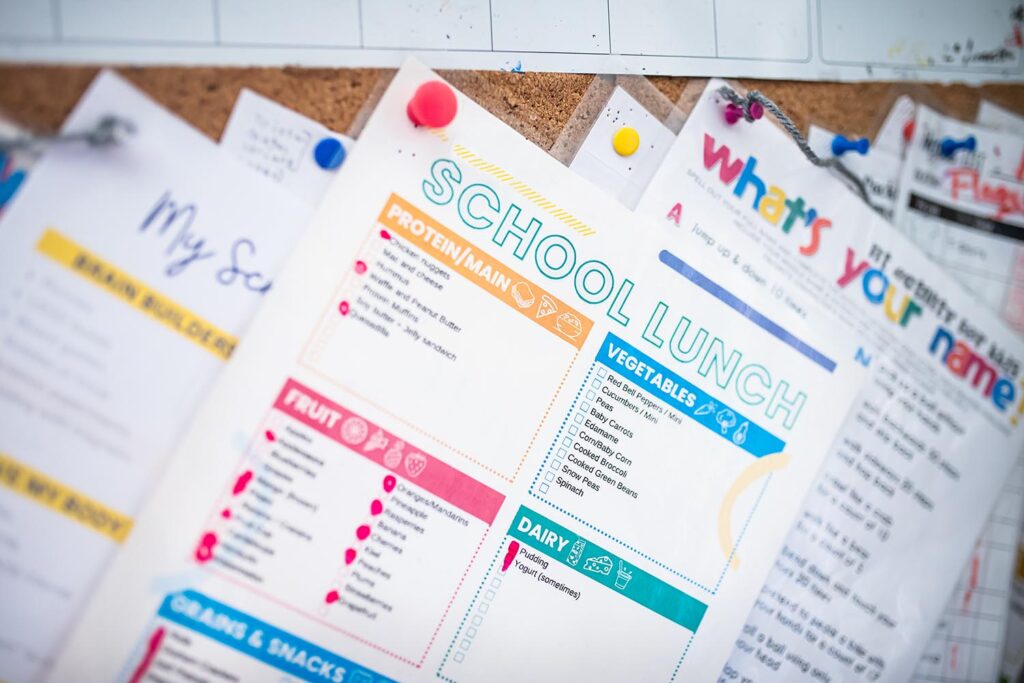
PSST: I also have another way to help decrease stress when it comes to packing lunches. You can download my Free Lunchbox List printable by signing up in the form below. If you want to learn more about how to teach your kids to pack their own lunch, read this: An Easy Way for Kids to Pack Their Own School Lunch
What to Avoid
While keeping it fun, remember to avoid:
- Performance-based praise: “You’re the smartest kid in class.”
- Comparison messages: “You’re better than your sister at…”
- Conditional love: “I’m proud when you…”
- Overly personal details: Keep it appropriate for sharing with friends
- Pressure statements: “Don’t disappoint me today.”
Instead, focus on messages that would make any child feel valued and loved, regardless of their achievements or behavior.
Remember, the goal isn’t to write the most clever note. The whole point and why the effort is worth it is to send a daily dose of unconditional love and affirmation that helps build your child’s foundation of self-love.
Even on your most rushed mornings, a quick “Loved you yesterday, love you today, will love you tomorrow” can be exactly what your child needs to face their day with confidence.
35 Self-Love Building Lunchbox Note Ideas
Now that you understand the framework, here are 35 ready-to-use positive lunchbox notes for kids organized by category. Each section includes an explanation of why these particular messages are so powerful for developing self-love.
Security & Belonging
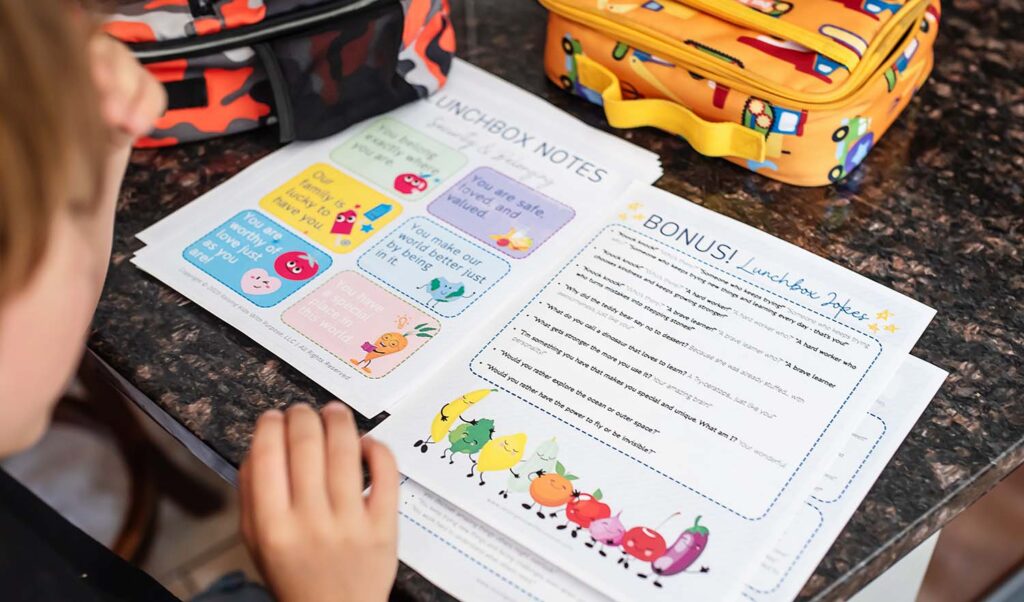
- “You belong exactly where you are.”
- “You are safe, loved, and valued.”
- “Our family is lucky to have you.”
- “You make our world better just by being in it.”
- “You are worthy of love just as you are.”
- “You have a special place in this world.”
Why belonging matters for self-love development: Security and belonging form the foundation of healthy self-love. When children feel they truly belong in their family, classroom, and world, they develop what psychologists call a “secure attachment.”
Psst: If you’re looking to develop a secure attachment with your child but are finding it hard, I’d love to chat and see how I can support you.
Schedule a free Parent Support Call by finding a time on my calendar here!
Emotional safety allows kids to explore, take risks, and develop confidence because they know they have a safe base to return to. These notes address the fundamental human need for connection and remind children that their place in the world is not conditional on their behavior or achievements.
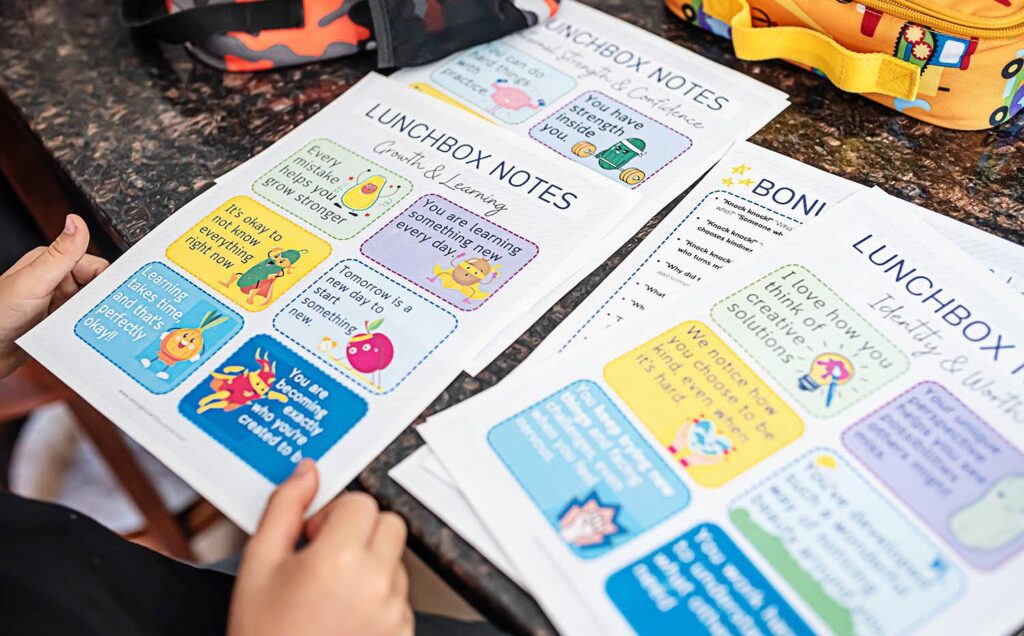
Identity & Worth
- “We love how you think of creative solutions and take time to consider others’ feelings.”
- “Your unique perspective helps you see possibilities others might miss.”
- “We notice how you choose to be kind, even when it’s hard.”
- “You’ve developed such a wonderful way of noticing beauty around you. Your curiosity and openness help you discover amazing things others might overlook.”
- “You keep trying new things and facing challenges, even when you feel nervous.”
- “You work hard to understand what others need.”
These notes help children understand that their worth comes from who they are at their core, not what they accomplish or how others view them. This distinction between intrinsic value (internal worth) and extrinsic value (external validation) is crucial for healthy self-love development.
Internal Strength & Confidence
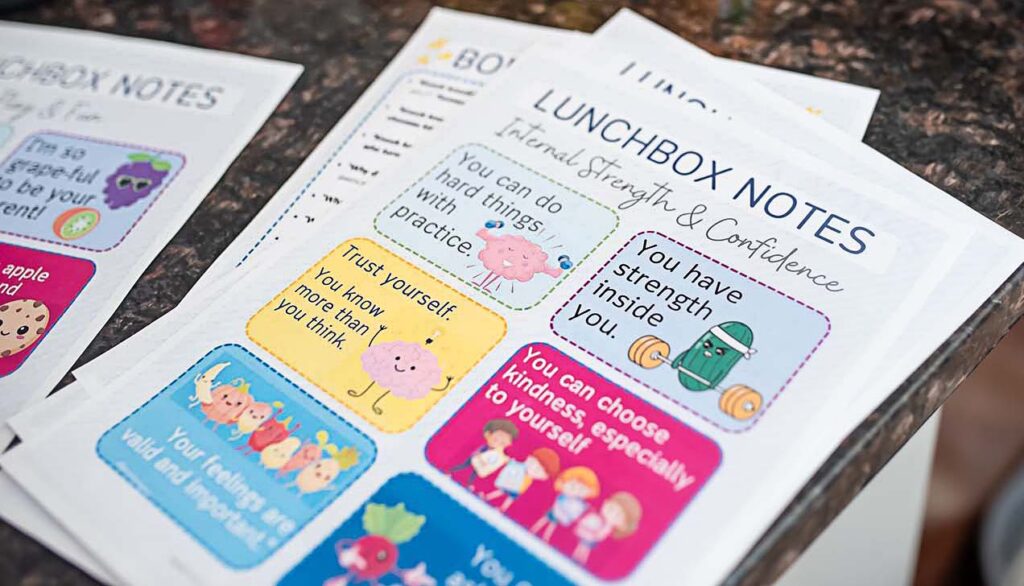
- “You can do hard things with practice.”
- “You have strength inside you.”
- “Trust yourself. You know more than you think.”
- “You can choose kindness, especially to yourself.”
- “Your feelings are valid and important.”
- “You can ask for help when you need it.”
- “You are strong and brave.”
By regularly receiving these messages, children begin to internalize these beliefs and turn to their own resources first when facing challenges, rather than immediately seeking external validation or rescue.
Growth & Learning
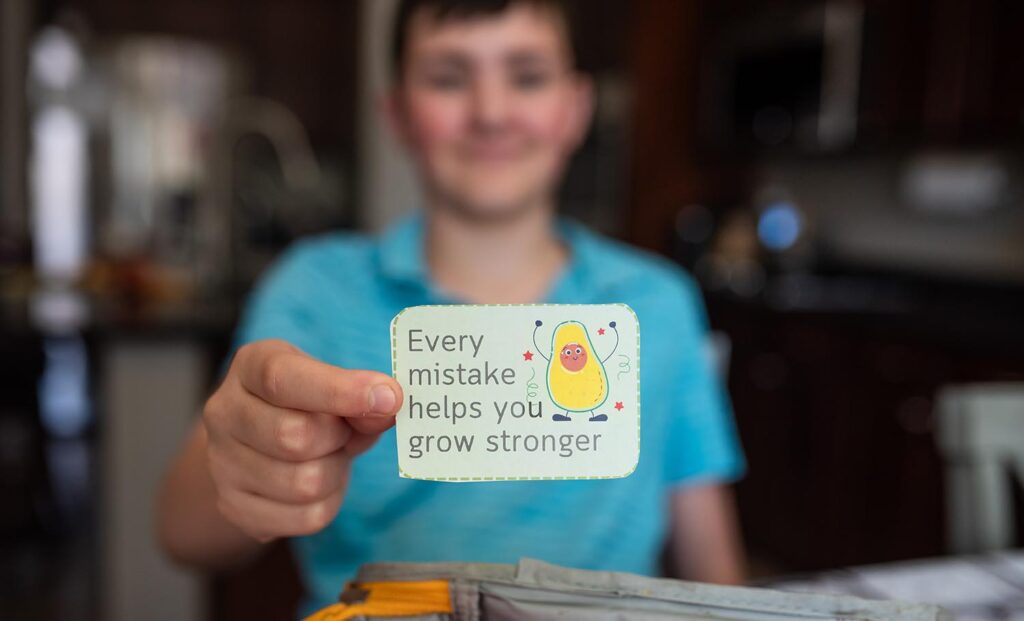
- “Every mistake helps you grow stronger.”
- “You are learning something new every day.”
- “It’s okay to not know everything right now.”
- “Tomorrow is a new day to start something new.”
- “Learning takes time, and that’s perfectly okay.”
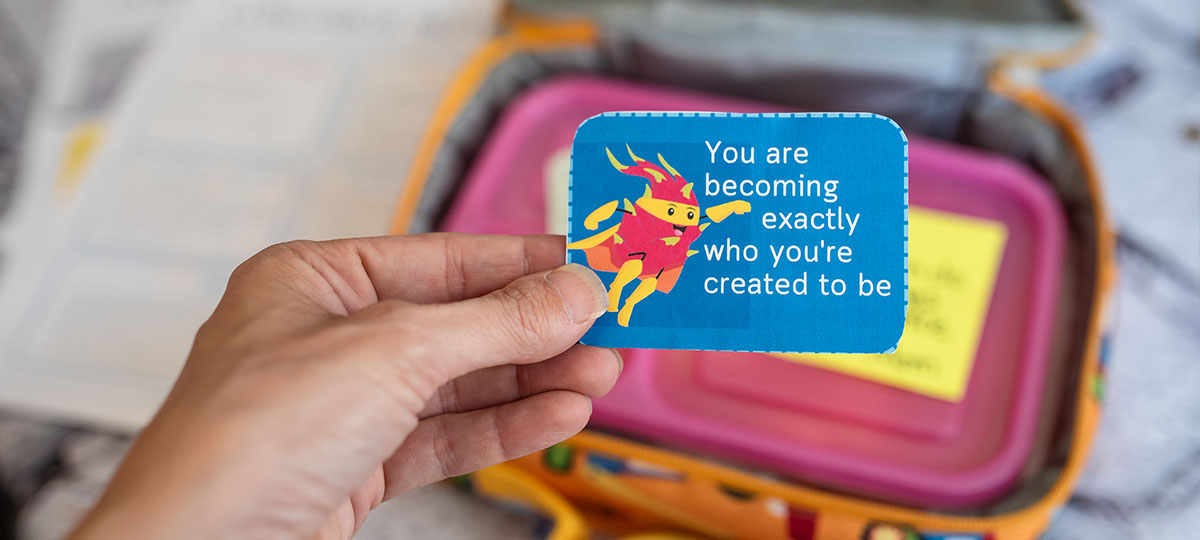
- “You are becoming exactly who you’re created to be.”
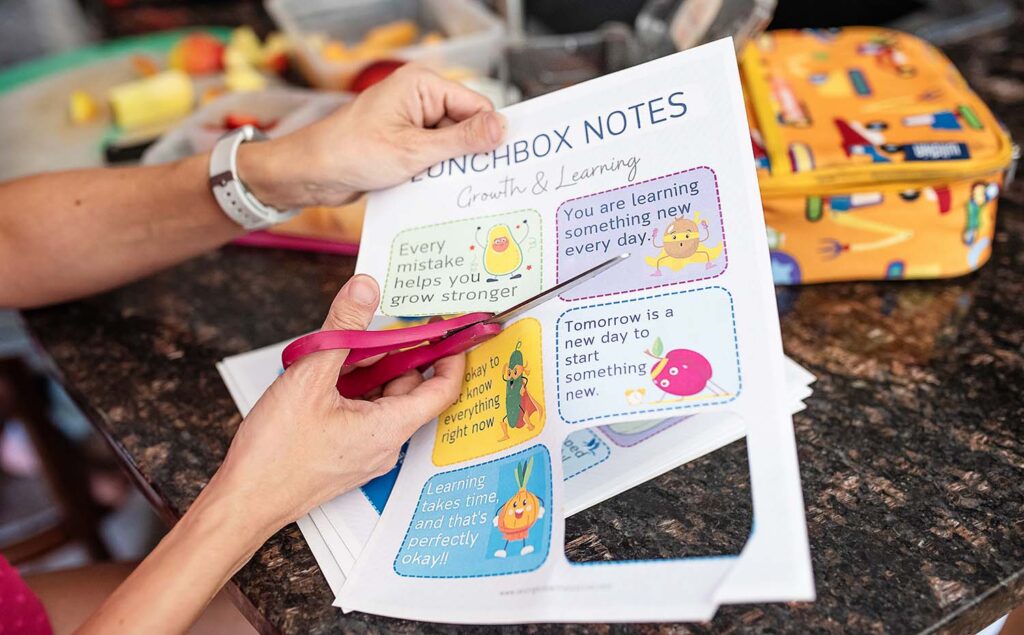
When children receive consistent messages that learning is a process, that mistakes are valuable, and that growth takes time, they develop what researchers call “academic resilience,” which is the ability to bounce back from setbacks and persist through challenges.
Play and Fun
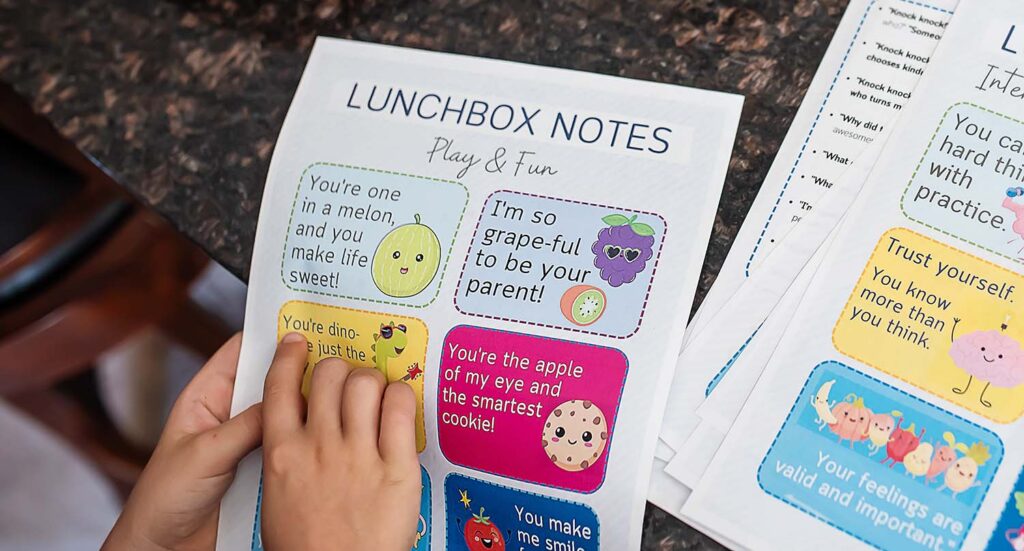
- “You’re one in a melon, and you make life sweet!”
- “I’m so grape-ful to be your parent!”
- “You’re dino-mite just the way you are!”
- “You’re the apple of my eye and the smartest cookie!”
- “Donut forget how incredible you are!”
- “You make me smile from my head to-ma-toes!”
- “You’re otterly wonderful in every way!”
- “I love you to the moon and back, then around the stars!”
- “You’re my favorite human in the whole wide world!”
- You’re tea-riffic and brew-tiful inside and out!
Bonus! Knock Knock and Silly Jokes that Build Self-Love
- “Knock knock!” “Who’s there?” “Someone who keeps trying!” “Someone who keeps trying who?” “Someone who keeps trying new things and learning every day – that’s you!”
- “Knock knock!” “Who’s there?” “A hard worker!” “A hard worker who?” “A hard worker who chooses kindness and keeps growing stronger!”
- “Knock knock!” “Who’s there?” “A brave learner!” “A brave learner who?” “A brave learner who turns mistakes into stepping stones!”
- “Why did the teddy bear say no to dessert? Because she was already stuffed… with awesomeness, just like you!”
- “What do you call a dinosaur that loves to learn? A Try-ceratops… just like you!”
- “What gets stronger the more you use it? Your amazing brain!”
- “I’m something you have that makes you special and unique. What am I? Your wonderful personality!”
- “Would you rather explore the ocean or outer space?”
- “Would you rather have the power to fly or be invisible?”
Laughter and joy are essential components of healthy self-love.
When children associate positive emotions with affirming messages about themselves, the neural pathways for self-acceptance become stronger and more accessible.
Playful notes serve multiple purposes: they provide stress relief during potentially challenging school days, create opportunities for children to share joy with peers, and help children develop a positive relationship with themselves that includes lightness and fun.
Common Concerns & Challenges
Let’s tackle the most common worries parents have about putting positive lunchbox notes in their kids’ school lunch.
“My Child Says the Notes Are Embarrassing”
Age-appropriate approaches:
- For younger children (5-8), focus on visual elements like stickers and simple drawings rather than lengthy text.
- Middle schoolers (9-12) prefer discrete notes that don’t draw attention.
- Teens appreciate humor and references to shared experiences.
Private placement strategies:
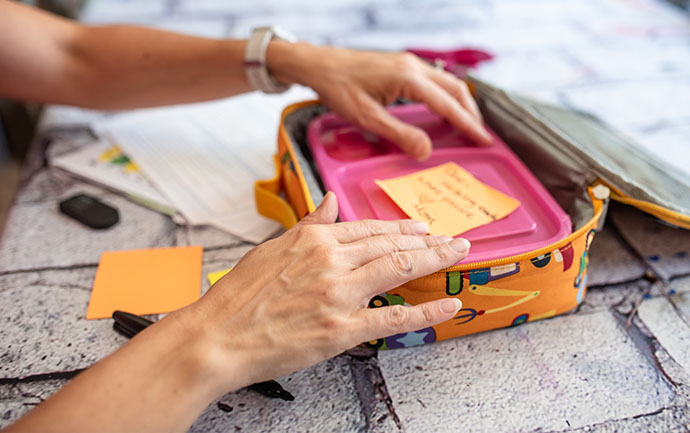
- Tuck notes inside sandwich wraps, tape them inside lunchbox lids, or slip them into thermos containers.
- Consider writing on napkins that naturally get unfolded during lunch rather than bright sticky notes that announce their presence.
Involving kids in the process:
- Ask your child what types of messages they’d enjoy and where they’d prefer to find them.
- Some kids love sharing positive notes with friends, while others want them kept private.
- Let them guide the approach.
“I Don’t Have Time for Daily Notes”
As a parent, you may be thinking this. Most of these phrases take less than one minute to write. I would ask yourself, “Why don’t I think I have time to do this?” Because really, 60 seconds isn’t much time.
Batch preparation tips:
Spend 10 minutes on Sunday writing a week’s worth of notes. Store them in a small container near your lunch-packing area and grab one each morning.
Use simple one-word affirmations:
“Loved,” “Brave,” “Enough,” “Amazing,” and “Strong” take seconds to write, but pack powerful meaning. Add a simple heart or smiley face for extra impact.
Using the printable cards:
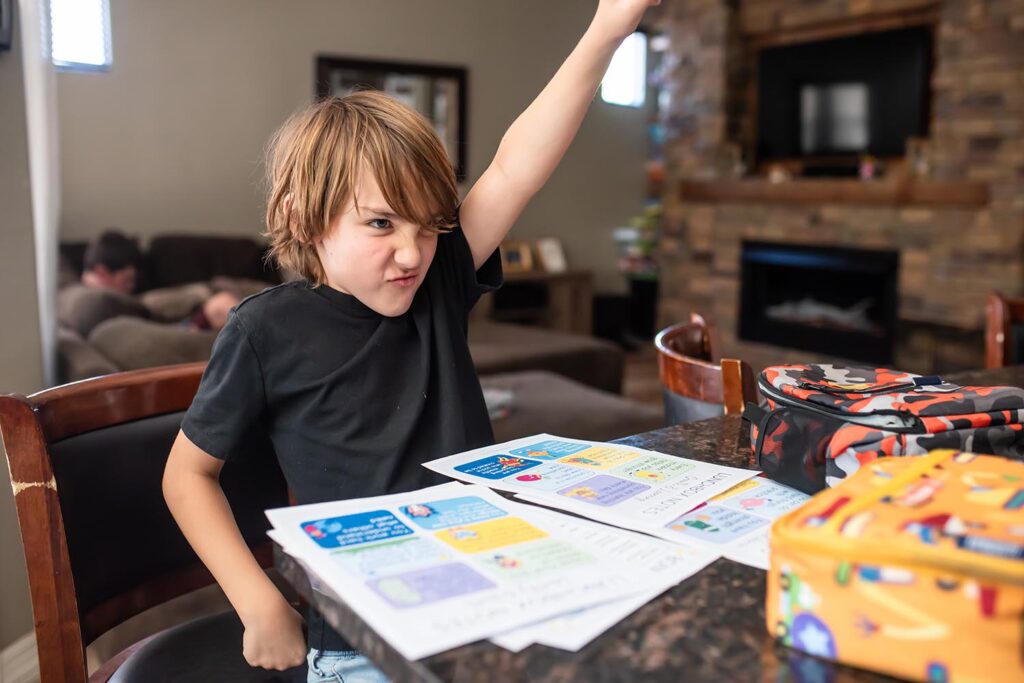
Although it’s more powerful and personal to write the notes for your kids, if you are tight on time, you can print the free downloadable positive lunchbox notes for kids to save the day!
Simply print, cut, and you have weeks of ready-made notes that require zero morning prep time.
“My Child Doesn’t Seem to Respond to Positive Messages”
Understanding different learning styles and love languages:
Some children respond better to acts of service (packing their favorite snack) than words of affirmation. Others need physical touch or quality time. Experiment with different approaches while maintaining consistency.
When professional support might be helpful:
If your child consistently rejects positive messages, shows signs of depression or anxiety, or seems unable to internalize any affirming feedback, consider consulting with a school counselor or child therapist.
Being consistent even when the response isn’t visible:
Remember that neural pathway building happens gradually. Your child may not mention the notes, but they’re still processing and internalizing these positive messages. Consistency matters more than visible reactions.
“What If Other Kids See and Make Fun?”
Teaching kids how to handle peer comments:
Practice simple responses like “My mom/dad likes to encourage me” or “It makes me feel good.” Help them understand that families show love differently, and that’s okay.
Building confidence to share positivity with others:
Some children become ambassadors for kindness, sharing affirming messages with friends who might need encouragement.
This builds leadership skills and emotional intelligence.
Creating a classroom culture of encouragement:
Consider sharing the concept with your child’s teacher. Many educators love incorporating positive affirmations into classroom culture, making your notes part of a broader supportive environment.
Remember, every family navigates challenges differently. If you’re struggling with any of these concerns or need additional support for your child’s emotional needs, don’t hesitate to reach out for professional guidance. Building emotional resilience is a journey, not a destination.
Free Printable: Positive Lunchbox Notes for Kids
Ready to make lunchbox notes simple and sustainable? I’ve created something special just for you!
What’s Included in Your Free Download
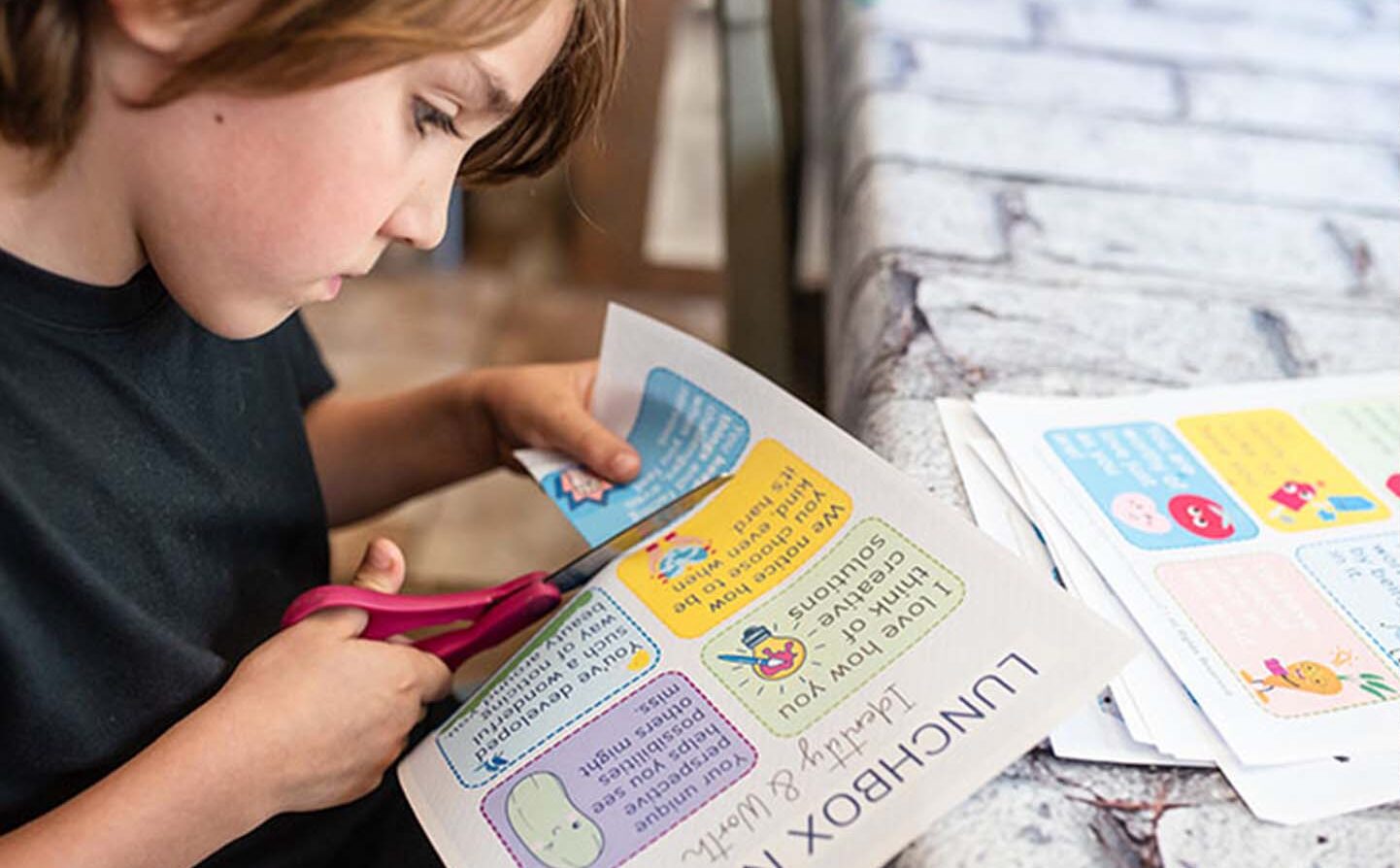
30 pre-designed affirmation lunchbox notes on cute little cards covering all 5 self-love categories:
- Security & Belonging cards
- Identity & Worth cards
- Internal Strength & Confidence cards
- Growth & Learning cards
- Fun & Playful cards
Bonus materials:
- Easy-to-copy list of lunchbox notes
- Lunchbox jokes

How to Use the Printable Cards
- The best way to print the lunbox cards is on cardstock or thicker paper
- Print, cut, laminate (if you want them to last longer), and put in a jar in the kitchen
- Optional: Use dry-erase marker to put a special message on the back
- Put a note in the lunchbox every day!
Beyond Lunchboxes: Creative Uses for the Cards
Bathroom mirror motivation: Tape a weekly affirmation to your child’s bathroom mirror for daily morning encouragement.
Car dashboard affirmations: Keep a few cards in your car for after-school pickup surprises or encouragement before big events.
Backpack surprise notes: Slip cards into backpack pockets, pencil cases, or homework folders for unexpected moments of love.
Bedtime reading: Use affirmation cards as part of bedtime routine, reading the day’s message together and talking about what it means.
Holiday and special occasion cards: Save certain messages for specific times when your child might need extra encouragement.
Ready to Transform Your Lunchbox Notes?
Download your free Positive Lunchbox Notes here!
Simply enter your name and email above to get instant access to all 30 printable cards plus bonus implementation tips. You’ll also receive weekly encouragement and practical parenting strategies directly in your inbox.
Raising emotionally healthy kids is a journey we can take together!
If you’re looking for more support or someone to listen about what’s going on in your parenting, you can schedule a complimentary parent support call with me here or by finding a time below:


Hello!!! I’m Adriane. I’m a mom to three loud boys, am a research-a-holic and very passionate person who writes at Raising Kids With Purpose. Parenting can feel so hard sometimes but with mindset shifts and understanding, it can be very enjoyable. My hope is to inspire parents like you to create lifelong connections with your children and enjoy the journey along the way!




My spouse and I stumbled over here coming from a different website and thought I might check things out. I like what I see so i am just following you. Look forward to looking at your web page for a second time.