Help Your Kids Build Frustration Tolerance to Become More Resilient
Episode 16 of The Raising Kids With Purpose Podcast: Learn how to help your kids build frustration tolerance to become more resilient. Adriane shares a story about how she wanted to rescue her son but instead, became his emotion coach and allowed him to feel his disappointment and frustration.
Listen on your favorite podcast player:
My nine-year-old son had a brilliant plan to go to the pickleball courts after church on Sunday night. We stopped at home to pick up his brother and a neighbor friend so we could play with four players.
Well, half of our city had the same idea because the courts were crowded. Therefore, it did not go the way my had imagined.
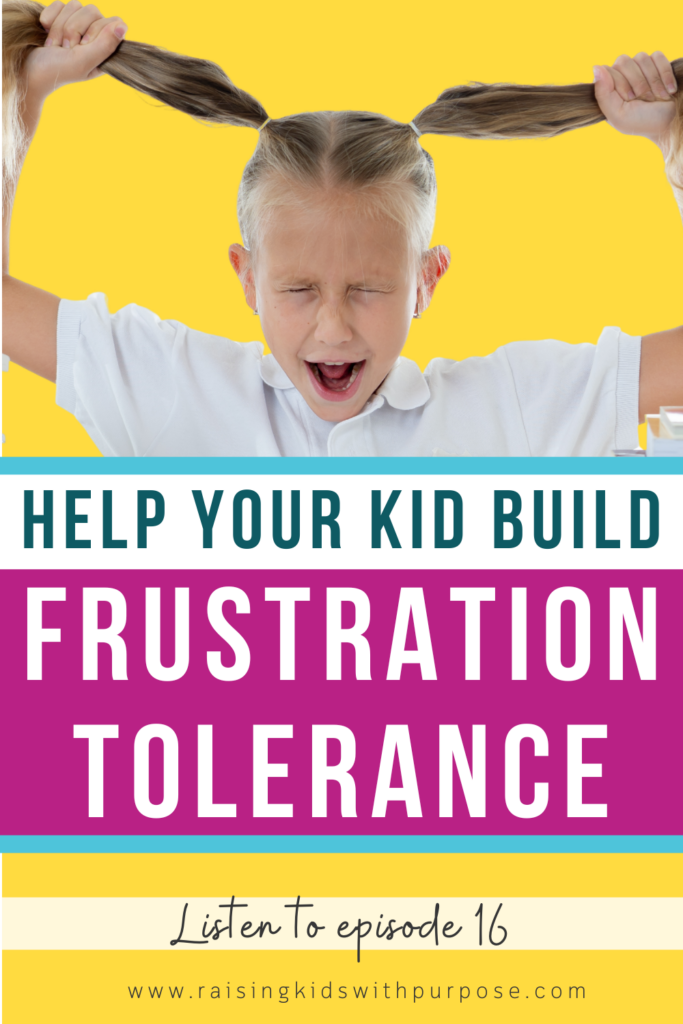
Within minutes, he was bawling hysterically, begging to leave. Completely overwhelmed by the disappointment of it all.
And I felt that pull. You know the one. The voice that says, just let him leave, this isn’t worth it, make it stop.
But I did not rescue him.
We stayed. He cried. I stayed present with him in it without trying to fix it. He played for a bit, settled down slightly, then dipped back into sadness because it still was not the experience he had wanted. And I held that too.
We got home and it was a little rough. He went from sad to mad to furious to resisting to do anything.
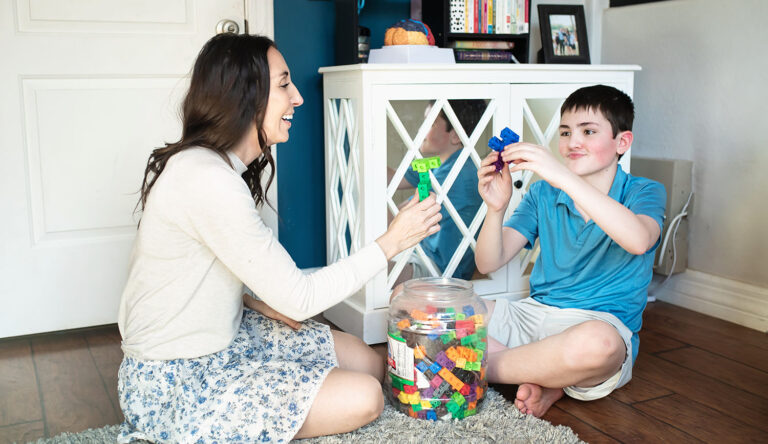
Then I turned my “playful parenting” hat on, and that seemed to help get him moving towards bed. We ended the night reading The Wild Robot.
Read Next: The Ultimate Guide to Becoming a Playful Parent
The next morning, I woke him up a little earlier than he typically gets up on a non-school day and gave him the choice for a re-do. I gently asked him if he wanted to go back to the courts to see if it’s less busy than I walked out of his room.
This is the life lesson he learned from this moment: I can have hard moments, but I can always try again.
I’ve never seen him get dressed so fast! We both ate French toast with maple syrup, laced up our shoes, grabbed the gray pickleball bag, and then got in the car to drive to our city park.
As I pulled up, it was apparent that the courts were STILL busy but not overflowing like the night before. There happened to be ONE court open!
We played together for a full hour, just the two of us, and it was one of the best mornings we have had in a long time.
I did not lecture him. I did not give a big speech about resilience. I didn’t even mention that word. Instead, I allowed him to live it out. This is how we, as parents, can positively and actively build our children’s brains! This is also how we help our kids build frustration tolerance, which then leads to being more resilient and being able to pick themselves back up after a setback.
And I was able to guide him through his big feelings of disappointment and frustration by doing one thing: Choosing NOT to rescue him.
Table of Contents
Why So Many Parents Are Struggling With This Right Now
Here is something worth noting: a lot of parents today want to provide a different kind of childhood than they had for their own kids.
They may have had parents who weren’t physically there because they had to work a lot. They may also have avoided feelings because it felt too hard. You probably had to “tough” it out because that’s what adults thought built resilience back then. Hint hint: it does the opposite!
A lot of parents today also grew up in a home where disappointment, frustration or any other kind of “negative” emotions simply were not allowed to exist.
Big feelings were dismissed, minimized, or punished. You learned to keep it together on the outside, no matter what. This usually had nothing to do with the child, but it was just too uncomfortable for the adult because their parents also shut down their emotions.
And now, out of deep love and a genuine desire to do better, many of us parents have swung the pendulum in the complete opposite direction.
We do not want our kids to feel alone with hard emotions.
But somewhere along the way, the intention shifted. We went from “I will not leave my child alone with hard feelings” to “I will not let my child have hard feelings at all.”
- We give in at the checkout line to avoid the meltdown.
- We let them quit when something gets hard.
- We step in to solve the problem before they even have a chance to try.
- We soften every disappointment before it fully lands.
And we do it because watching them struggle feels unbearable to us.
Here is the question worth sitting with:
Whose discomfort are we actually managing — theirs or ours?

What Frustration Tolerance Actually Is
Frustration tolerance is the ability to experience setbacks, obstacles, and disappointment without becoming emotionally overwhelmed, shutting down, or giving up.
It is what allows a child to keep trying when something is hard, to move through a bad moment without it derailing their entire day, and to learn that difficult feelings are survivable.
And here is the part that matters most: it is a skill. Like reading, riding a bike, cooking, cleaning, organizing, etc. And skills need to be practiced.
When we remove every hard moment from our child’s path, we are not building a safe environment. We are building a child who has no tools for when life does not go their way, and life will not always go their way. We are not allowing our kids to be able to tolerate frustration and disappointment.

What the Brain Has to Do With It
Kids’ brains are literally under construction.
The frontal lobe is the part of the brain responsible for regulating emotions, making decisions, and understanding cause and effect, and it is not fully developed until someone is in their mid-twenties.
This means your child is not being dramatic or manipulative.
They are being developmentally normal. Brain maturation is messy! And so is building frustration tolerance.
Kids genuinely cannot regulate the way an adult can. It’s takes time and PRACTICE!
Your job as a parent is not to remove the frustration. Your job is to be the scaffold while they learn to move through it.
What It Looks Like to Stay Present Instead of Rescuing Your Kid
Did you notice that I did not rescue my son when he kept begging me to leave?
I also did not leave him alone with his feelings. This is the part that a lot of parents miss out on as I did for years. I either wanted the uncomfortable feelings to stop so I would have just let my son leave. Or I would’ve yelled or lectured him for “acting that way”.
Instead, I’ve learned to stay present with him in the hard moments.
During that night when we attempted to play pickleball, I acknowledged what he was feeling without trying to make it go away. And I held the boundary of staying even when it would have been so much easier to just go home.
That is the balance so many parents are searching for.
It is not about being harsh or rigid. It is not about “toughening kids up” the old-fashioned way because that’s actually NOT how anyone gets tough. Instead, we learn how to hide, ignore, shove down, or dismiss our feelings.
We have a gift that we can give to our kids by providing a warm, steady presence that says: “I see you. This is hard. And I believe you can get through it.“
Here is what staying present without rescuing can look like:
- Sitting near your child without immediately trying to talk them out of their feelings
- Naming what you see: “I can see you’re really disappointed right now. I’m right here.”
- Resisting the urge to fix it, explain it away, or minimize it
- Letting the feeling move through them at its own pace
- Coming back together after a through connection, play, a snack, a quiet drive
The rupture is not the failure. Leaving it unrepaired is.
If you need more support in the “play” department, you can download the Playful Parenting Scripts printable that gives you ideas so you don’t have to come up with them on your own!
How to Recognize When Your Triggers Are Running the Show
This is the part nobody talks about.
When your child is melting down, that feeling in your chest: the urgency, the discomfort, the need to make it stop immediately…that might not just be about your child.
That might be your own unhealed experience with frustration waking up.
Does any of this resonate?
- You were not allowed to be upset as a kid.
- Your feelings were dismissed or punished.
- You learned that expressing frustration meant being a burden

And now, watching your child express theirs feels like something you need to fix as fast as possible.
This is the human experience, right?!
But it is worth asking yourself: when I give in to make the discomfort stop, am I doing it for my child or for me?
Three Things You Can Start Doing This Week
You do not have to overhaul your entire parenting approach overnight!
1. Stay present, do not fix.
When your child hits a wall, resist the immediate urge to solve it. Let them feel the frustration for a moment. Acknowledge it first: “I can see you’re really upset right now. I’m right here.” That alone is more powerful than any solution you could offer.
2. Let natural disappointment happen.
Not every hard moment needs to be softened before it lands. The long line, the lost game, and the plan that fell apart are all low-stakes training grounds for real resilience. Your child needs these moments. Let them practice moving through disappointment while you are right there beside them.
3. Reconnect after the hard moment.
You do not have to end on the frustration. After the storm passes, come back together.
Play a game, share a snack, take a quiet drive.
Let the repair be the anchor. That is where the connection deepens and where your child learns: hard moments do not break us, and they do not break what we have together.

Pssst: If your kids need coping skills to help them get through the discomfort of disappointment and frustration, check out my friend Janine Halloran’s Coping Skills Hub! It’s full of resources to help your child cope AND you have access to a community of other parents supporting each other.

Building Frustration Tolerance that Leads to Resilience
My son did not need me to explain resilience to him. He experienced it.
He woke up after a hard night and chose to try again. Instead of a lecture or a lot of words coming out of my mouth directed at him, what he needed was a mom who could co-regulate with him, who could hold space and NOT rescue.
I did not do this perfectly.
At one point, I started to feel irritated and annoyed. But I have done this work long enough to stop that nonsense in its tracks so I could teach my son that he could handle it. Ironically, I’m doing that for myself too!
That is what you are building when you choose to stay present instead of fix. You are not just getting through a hard moment. You are wiring your child’s brain to believe: I can do hard things.
That kind of core expansive belief will carry them so much further than anything we could have solved for them.
Ready to Go Deeper?
If this resonated with you and you are ready to work on your own regulation so you can show up for your kids in the moments that matter most, I would love to support you.
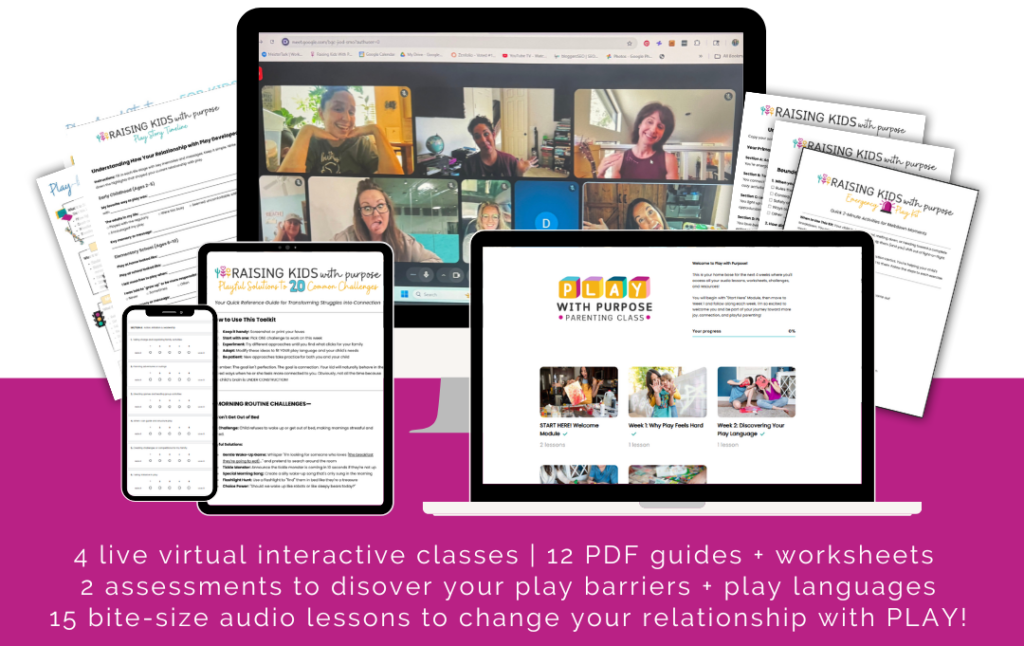
The Play with Purpose Parenting Class helps parents connect with their children through intentional, purposeful play while building the skills kids need to grow, feel secure, and thrive.
The P.U.R.P.O.S.E. Parent Transformation Program is my signature 7-step framework for parents who are ready to do the deeper work — understanding your own story, regulating your nervous system, and becoming the steady presence your child needs.
To book a call and find out which path is right for you, visit www.raisingkidswithpurpose.com/chat
You are not just raising kids. You are breaking cycles. And that starts with you.


Hello!!! I’m Adriane. I’m a mom to three loud boys, am a research-a-holic and very passionate person who writes at Raising Kids With Purpose. Parenting can feel so hard sometimes but with mindset shifts and understanding, it can be very enjoyable. My hope is to inspire parents like you to create lifelong connections with your children and enjoy the journey along the way!