
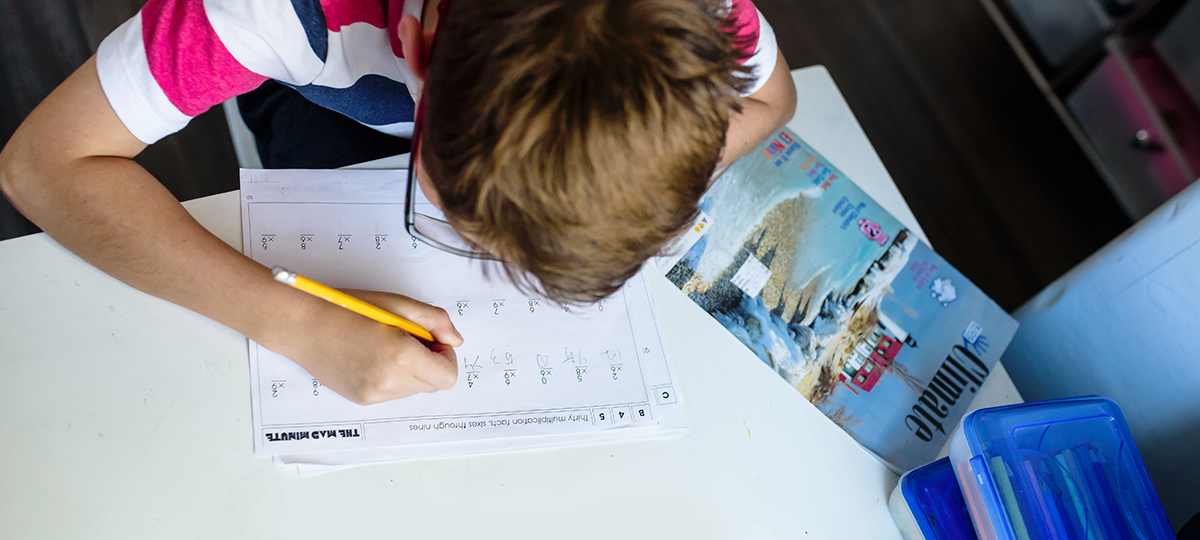
5 MUST-HAVE Back-to-School Routines for Overwhelmed Moms
Learn how to establish back-to-school routines! Guest blogger, Emily McDermott, shares the five must-have routines that make the biggest difference for busy families. She breaks down everything from after-school chaos to morning routines, giving you simple systems you can start implementing today to reduce overwhelm.
Guest Post by: Emily McDermott
Have you ever experienced back-to-school routine whiplash?
It’s when the first week of school arrives and you’re not prepared, and by Friday afternoon, you’re looking around at the chaos, asking, “What just happened??”
Sometimes in the midst of shopping for backpacks and preparing school lunches, we forget a critical part of getting ready for back-to-school: reviewing our routines and making the necessary adjustments to help things run smoothly.
If you want to get out of overwhelm and start the school year feeling prepared and peaceful, consider locking in these five must-have back-to-school routines.
Table of Contents
1. After-School Routine
Many time management experts may argue that the best place to start reviewing your routines is the morning. I recommend starting with the time of day that is the most chaotic and stressful!
For me, it’s the after-school routine. It’s the time when my kids get off the bus to the time when we are sitting down for dinner (approximately 4-6 PM). My kids are typically hungry and dysregulated, and I am trying to transition from a full workday to “mom mode”.
PRO TIP: Have healthy grab-and-go snacks available that kids can access easily (or you can pack easily in the car).

Activity and No Activity Days
Another factor is whether your kids have to prepare for sports practices or other after-school activities, which may impact the routine. For this reason, I like to categorize my week by:
- “A” days (activity)
- “NA” days (no activity)
Here are some questions to ask yourself (and discuss with your spouse or partner) when planning your after-school routine:
- If you are picking your kids up at school, do you need to pack a snack in the car?
- What are they doing at home after they have their snack? Homework? Free play? Getting ready for after-school activity (for A days)?
- What needs to be packed for kids’ activities on A days? Sports equipment, books for the car, a water bottle, etc.? Can this be done the night before?
- When do you need to start preparing dinner on A and NA days so you can sit down with enough time to eat without rushing?
- Who is taking kid(s) to activities on A days? Who has the kids after school on NA days?
Take a few moments to write a loose routine stack for what needs to happen in the after-school routine and who is responsible. Here’s a sample:
Sample After-School Routine
| Responsible Party | Task |
| Kids | Bring backpacks into the kitchen, unpack folders, lunch boxes, and water bottles |
| Kids | Snack |
| Kids | Homework, remaining tech/tablet time, free play |
| Me | Dinner Prep (start by 5 PM) |
| Kids | Set table |
| Kids | Put cleats and soccer ball by front door refill water bottles |
| Everyone | Eat dinner |
Quick tip from Adriane: You may need to scaffold with your kids to get them to unpack all the things or follow the routine. A great way to do this is to teach them how. Read: 4 Easy Steps for Teaching Life Skills to Kids.
2. After-Dinner to Kids’ Bedtime Routine
A successful after-school routine tees you up for a successful after-dinner routine and the wind-down for the day.
A critical part of the after-dinner routine is tidying up the kitchen after dinner and resetting it for the next day. In our home, this includes:
- Loading and running the dishwasher every night
- Washing all remaining dishes and putting them on the drying rack
- Wiping down the counters and kitchen table
Depending on your kids’ ages, this also may include them showering/bathing, completing homework, preparing for the next school day, and getting ready for sleep.

PRO TIP: Look at your kids’ school schedules to see what specific things they need for the next day, and put reminders in your phone as needed. For example, they may need to wear sneakers to P.E., or they may have a specific day library books are due back each week.
To be consistent with kids’ bedtimes, determine your ideal “lights out” time for each child and work backward from there. What time do they need to leave the kitchen after dinner to have enough time to wind down before bed?
Take a few moments to write a loose routine stack for what needs to happen in the after-dinner routine and who is responsible. Here’s a sample from our house (approximately 6-8:30 PM):
Sample After-Dinner to Kids’ Bedtime Routine
| Responsible Party | Task |
| Everyone | Bring dishes to the sink, rinse, and put them in the dishwasher |
| Me | Run dishwasher, wash any pots/pans, and put on drying rack, wipe down surfaces |
| Kids | Go upstairs for showers, put pajamas on |
| Kids | Homework if applicable |
| Me/Kids | Pack lunches for the next day, prepare backpacks (library books, etc.) |
| Everyone | Tidy/reset of shared home areas |
| Everyone | Reading/have family connection time |
| Kids | Brush teeth, prayers, lights out |
3. Your Evening Routine
Assuming your kids are in bed (unless you have teenagers that stay up later than you do!) you’ll likely have some time between when your kids go to bed and when you do.
With all the demands of our days, it’s tempting to just spend the entire time scrolling through social media or watching Netflix. But the evening routine is a critical time of day because it’s often one of the only times we have for self-care. That’s why many of us stay up far later than we’d like to, because we want to enjoy as much “me time” as we can.
The danger in this is that our sleep quality can suffer from late-night activities (especially those involving screens), which can cause rushed mornings.
Your evening routine doesn’t need to be elaborate, but it does need to be intentional. Make a list of a few non-negotiables that you want included, including a “lights out” time for yourself.
PRO TIP: The last thing you want to do after the kids go to bed is clean the house. If possible, include tidying into your after-dinner routine to include the entire family.
Here’s a list of my evening routine “non-negotiables”:
- Review paperwork from kids’ backpacks and take action on anything time-sensitive. Put anything that needs signing in their backpacks.
- Put on pajamas, brush teeth, and do an evening skincare routine.
- Look at the calendar for the next day and make a short list of what needs to be done (including reviewing any dinner prep requirements).
- Read daily Bible Recap as well as any other reading (as time allows).
- Lights out by 10:15 PM.
4. Morning Routine
Depending on how you structured your summer mornings, it may take your kids some time to transition to early wake-up times for the school year. It may also take them more time to adjust to a time-sensitive morning routine so they can get to the bus stop or get in the car on time.
Because of this, waking up 10-15 minutes earlier than you normally do for the first 2-3 weeks of school may be a good idea to help support them in the transition while allowing yourself enough time to get ready.
Also, if an activity such as reading or journaling is important to help center you, you may need to wake up a bit earlier to accommodate that.
The morning routine can be tricky because there are often a lot of moving parts. Talk through these questions with your spouse/partner and kids to make sure everyone’s on the same page:
- What can the kids do independently with their morning routine? Where do they need support and reminders, and which parent is responsible for helping them?
- Can they get breakfast independently, or do they need help?
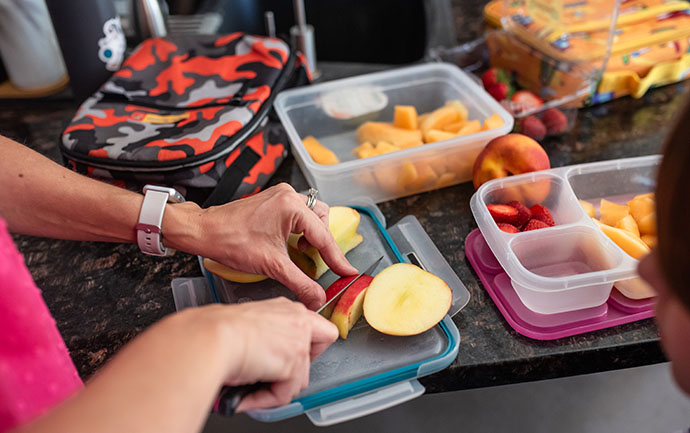
- Who is responsible for putting lunches, water bottles, and anything else they need into their backpacks?
- What are the approved activities before they go to school, if they have time (i.e. technology time)?
- What are the parents’ goals for getting ready/fed during this time?
- What time do the kids need to get their shoes on so they can get out the door on time?
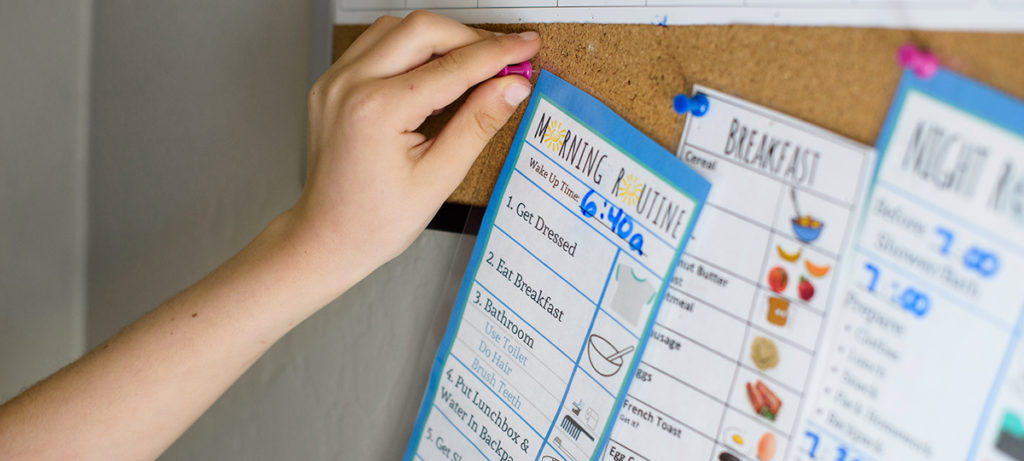
Sample Morning Routine
Take a few moments to write a loose routine stack for what needs to happen in the morning routine and who is responsible. Here’s a sample from our house (approximately 7:00 AM – 7:50 AM).
| Responsible Party | Task |
| Me | Set alarm for 6:45 AM: Get ready and wake kids up by 7:15 if not already awake |
| Kids | Do morning routine (get dressed, make bed, brush teeth, bring water bottle downstairs) |
| Husband | Support kids in routines if they get stuck or need help |
| Husband | Help kids with breakfast as needed |
| Me | Eat breakfast |
| Me | Put lunches + water bottles in backpacks, put shoes by the door |
| Kids | Come downstairs at 7:45 AM and out the door by 7:50 AM |
PRO TIP: After the kids get to school, you may have some time before you start work (if applicable). Find one home management task to complete before starting work. For me, this includes resetting the kitchen from breakfast and starting a load of laundry. This helps me focus on work rather than getting distracted by nagging tasks.
5. Weekly Planning Routine (Sunday)
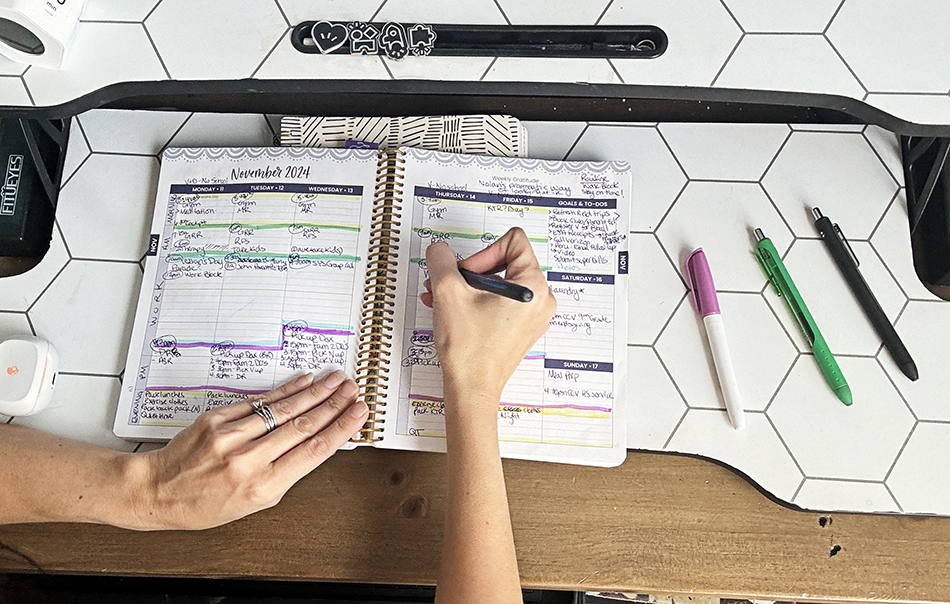
The final back-to-school routine that can be a game-changer is a weekly planning routine.
This will likely happen on Sunday, but can also happen on Friday, Saturday, or Monday morning if that works better for you.
Similar to your evening routine, the weekly planning routine does not need to be elaborate, but should be very intentional.
My current weekly planning routine includes:
- Reviewing the past week to see what went well (and what didn’t) so I can adjust and tweak as needed
- Looking at the upcoming week to make sure all appointments are in my Google Calendar (including anything for the kids) and reviewing these with my husband
- Blocking in any self-care or home management tasks
- Planning meals and scheduling grocery pick-up
- Looking at my work goals and ensuring that I schedule in some tasks that will help me work towards those larger goals
- Ensuring that there is margin/white space to expect the unexpected to happen
Even if your weekly planning routine starts at 10-15 minutes, doing it consistently will help you feel prepared for the week ahead and better handle anything that derails your plans.
Test and Tweak
Once you have a loose plan for these five routines, test how they go for the next 2-3 weeks.
Give yourself (and your family) grace during this adjustment period and pay attention to what’s working well and where the roadblocks are.
After the three-week mark, find ONE part of ONE routine to tweak and see how it works. Don’t try to change everything all at once!
Continue to communicate with your spouse/partner and kids to get their feedback. Instead of getting down on yourself or your family if a routine isn’t “sticking”, stay curious and maintain a “data over drama” mentality.
Finally, hold your routines with an open hand, since they will likely need to change anyway in the next season of life!
Ready to Create Your Own Family Routines?
Emily’s five must-have routines are game-changers, but I know putting them into practice can feel overwhelming.
If you’re looking for additional support in creating back-to-school routines that work for your unique family, I have daily schedule templates that can take the guesswork out of planning your days.
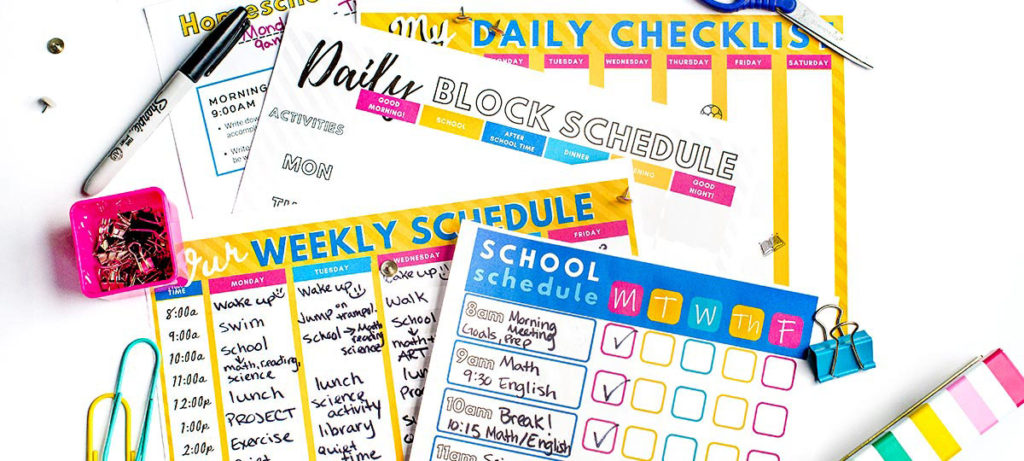
These aren’t rigid schedules that will stress you out. They’re flexible frameworks designed to help busy families create structure while still having room for the unexpected moments that make childhood magical.
Hope you enjoyed this week’s guest blog!


Emily McDermott is a wife, mother of two energetic boys, and simplicity seeker. She is also the host of the top 1% globally ranked podcast Moms Overcoming Overwhelm, where she helps moms declutter their homes, heads, and hearts. As an in-person decluttering coach, she works with moms one-on-one to let go of what is no longer serving them and create systems to maintain a clutter-free life.





I needed to read this today!! I just love the idea of routines but sometimes need a little kick! Routine whiplash describes it perfectly!!!
Yes, I think we can all use reminders to look at our routines!
Thanks so much for the opportunity to share this with your audience! I hope it helps all the moms out there overwhelmed with back-to-school craziness! 🙂
Thank YOU for writing such a great post with amazing tips!
Do you have the template in our picture for the morning routine? I didn’t see it in the available downloads.
Hi Julia!
Here is how you download the morning routine: https://landing.mailerlite.com/webforms/landing/m1s4n8. I’ll email you as well!
This was so helpful! I needed this after the first week of school. I love the idea of starting to evaluate your routines with the most chaotic time routine first -brilliant!
Thank you!!! And yes, I thought it was brilliant too!
I am such a sucker for a good routine, so this article is GOLD! I think one thing Emily shared that stuck out to me is assigning responsibilities. Yes, this should be a no-brainer. But also, sometimes I just do everything because it’s faster/easier. But is it?
Thank you for the reminder to get the kids (and the hubby) involved so that EVERYONE is a responsible party!
Hi there! This post couldn’t be written any better! Reading through this post reminds me of my previous room mate! He always kept talking about this. I will forward this article to him. Pretty sure he will have a good read. Thank you for sharing!
Greetings! Very helpful advice within this article!
It’s the little changes that make the biggest changes.
Many thanks for sharing!