
The Lie We’ve Been Told About Consequences (and Rewards)
Episode 9 of the Raising Kids With Purpose Podcast: Understand why consequences don’t work for kids and what to do instead.
Listen on your favorite podcast player:
I’m going to say something that may go against everything you believe about parenting…
Consequences don’t teach.
I know. I know. You’ve probably already thought of five reasons I’m wrong. You’re thinking about the time the consequence worked, about what your own parents did, about what every teacher and pediatrician has told you.
Stay with me. Because the research is clear, the neuroscience backs it up. By the end of this post, you’re going to understand why the most widely used discipline strategy in parenting history is built on a false assumption about how children’s brains actually work.
Table of Contents
Why Adults Think Consequences Teach a Lesson
We absorbed this message before we even became parents: kids need to feel bad to do better.
Misbehave → feel the consequence → don’t do it again
It’s the entire foundation of how most of us were raised. It’s what schools still rely on. It’s what pediatricians recommend. It’s even what well-meaning parenting books teach. And it comes from a real place — adults genuinely trying to raise responsible children.
But it’s built on a completely false assumption about how the developing brain works.
Why Consequences Don’t Work for Kids: What the Neuroscience Says
Here’s what nobody told you: your child’s brain is not capable of doing what consequences require.

Consequences rely on cause-and-effect thinking. They assume a child can connect a behavior that happened in the past to a punishment happening now, feel remorse, and choose differently next time based on that experience.
That requires the prefrontal cortex.
The prefrontal cortex is the part of the brain responsible for:
- Impulse control
- Cause-and-effect reasoning
- Long-term thinking
- Emotional regulation
- Decision-making based on future outcomes
Here’s the critical piece most parents have never been told: the prefrontal cortex isn’t fully developed until age 25. And in children, especially during moments of stress, frustration, or big emotion, it goes almost entirely offline.
That means when your child is dysregulated, when they’re melting down, acting out, hitting their sibling, refusing to listen, the very part of their brain you’re trying to reach with a consequence is the part that isn’t available.
You are trying to teach a lesson to a brain that is in survival mode.
It doesn’t matter how logical the consequence is. It doesn’t matter how consistent you are. A brain that is flooded with cortisol and adrenaline cannot access reasoning. It can only react.
This isn’t a parenting failure. This is neuroscience.
“But It Seems Like It Works…”
This is the part that trips every parent up, and honestly, it’s the most dangerous part of the whole conversation.
Consequences often look like they’re working. Your child stops the behavior. They say sorry. They seem to comply.
But here’s what researcher and author Alfie Kohn, who spent decades studying the effects of punishment and rewards on children, found in his groundbreaking work Punished by Rewards and Unconditional Parenting, behind the reason why consequences don’t work for kids.
Punishment produces compliance through fear, not internalized values.
What children actually learn from consequences isn’t “that was wrong.”
They learn one of two things:
- I got caught.
- I need to not get caught next time.
Short-term compliance is not the same as long-term learning. When the consequence disappears — when you’re not watching, when they’re at a friend’s house, when they’re a teenager with real freedom — the behavior returns. Because the why was never built. Only the fear was.
As Kohn’s research shows, children raised in punishment-based environments are more likely to:
- Hide behaviors from parents rather than come to them
- Struggle to develop an internal moral compass
- Act out more when the threat of consequence is removed
- Experience more shame, which actually decreases responsible behavior over time
Read Next: Why Praise Doesn’t Work to Motivate Kids and What to Do Instead

The Truth About Rewards
A lot of parents who hear this swing hard in the other direction. Sticker charts. Prize boxes. “If you do X, you get Y.”
I need to stop you right there because rewards are just the other side of the same coin.
Both punishment and rewards are systems of external control
Both communicate the same underlying message to your child: I don’t trust you to make good choices on your own, so I’m going to manipulate you into making them.
Kohn’s research on rewards is just as eye-opening as his work on punishment.
External rewards actually decrease intrinsic motivation over time.
The more you rely on them, the more your child needs them and the less they’re able to access their own internal drive.
There’s a famous study on this that I mention on the podcast and below, but there are many more to support this idea!
In 1973, researchers Mark Lepper, David Greene, and Richard Nisbett studied preschool children who already loved to draw. They split the kids into three groups: one group was promised a reward for drawing, one received an unexpected reward, and one received no reward at all.
Two weeks later, during free play time, the researchers observed how much each group drew when no reward was offered.
The kids who had been promised a reward? They drew significantly less than they had before the study began.
The no-reward group? Still drawing just as enthusiastically as ever.
Why? Because the children who received rewards had their brains re-code drawing as “something I do to get something.” Once the reward disappeared, so did the motivation. The joy of drawing, the intrinsic love of it, had been quietly, unintentionally destroyed by the very reward meant to encourage it.
This is called the Overjustification Effect, and it has massive implications for how we parent.
When we reward kids for doing the right thing, we’re not building children who want to do the right thing. We’re building children who want the reward. And when the reward isn’t there, neither is the behavior.
What You Should Do Instead of Using Consequences, Punishments, or Rewards
I know exactly what you’re thinking right now.
“Adriane, I hear you, but WHAT DO I DO? I can’t just let my kid run the house.”
You’re absolutely right. Doing nothing isn’t the answer. The goal isn’t to have no structure. The goal is a structure that actually works with your child’s brain instead of against it.
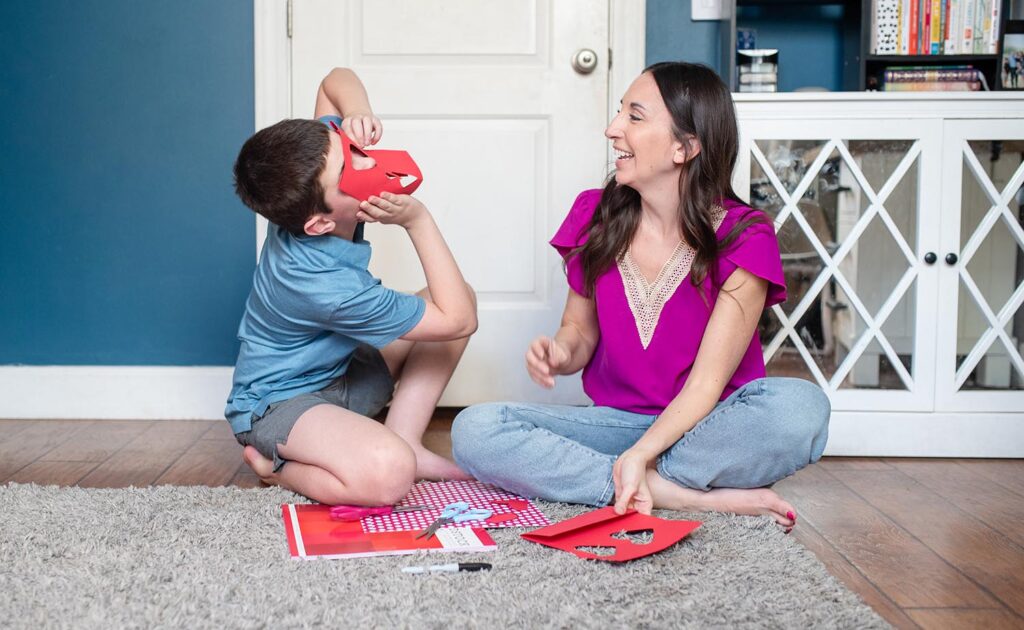
Here are a few foundational shifts you can start making right now:
1. Regulate yourself first. Your nervous system is the most powerful tool you have. You cannot co-regulate a dysregulated child from your own dysregulated state. Before you respond to behavior, pause. Breathe. Get back into your window of tolerance. Your calm is contagious. So is your chaos.
2. Name what you see before you do anything else. “I can see you’re really frustrated right now.” That’s it. That sentence alone begins to calm the nervous system. It signals safety. It tells your child’s brain: you are seen, not attacked. A brain that feels safe can learn. A brain that feels threatened cannot.
3. Connection before correction, always. A dysregulated child cannot receive teaching. Trying to deliver a lesson in the middle of a meltdown is like trying to have a quiet conversation during a fire alarm. First, help them get regulated. Then, when the nervous system has settled, THAT is when the teaching can happen.
4. Ask instead of tell. “What happened?” opens the brain. Punishment closes it. Curiosity communicates safety and invites the prefrontal cortex back online. You’ll be shocked by what your child shares when they don’t feel like they’re about to be punished.
5. Let natural consequences be natural, not manufactured. There IS a place for natural consequences. If your child leaves their bike in the rain, it gets wet. That’s a real consequence. But “you hit your sister so no screen time tonight” is not natural. It’s manufactured, and it has no logical connection to the behavior. Kids’ brains don’t make that leap the way we think they do.
The Question That Changes Everything
The next time your child misbehaves, I want you to try shifting from this question:
“What consequence will stop this behavior?”
To this one:
“What is this behavior telling me my child needs?”
Behavior is always communication. Always. The meltdown, the defiance, the hitting, the refusing. It’s not manipulation. It’s a nervous system that’s overwhelmed, a child who needs connection, or a skill that simply hasn’t been built yet.
The parent IS the intervention. Not the consequence. Not the behavior chart. Not the sticker system.
You.
Your regulated presence. Your curiosity. Your connection.
That’s what changes behavior, not just today, but for life.
Setting Boundaries Tool
Understanding why consequences don’t work is step one. But I know you also need the how.
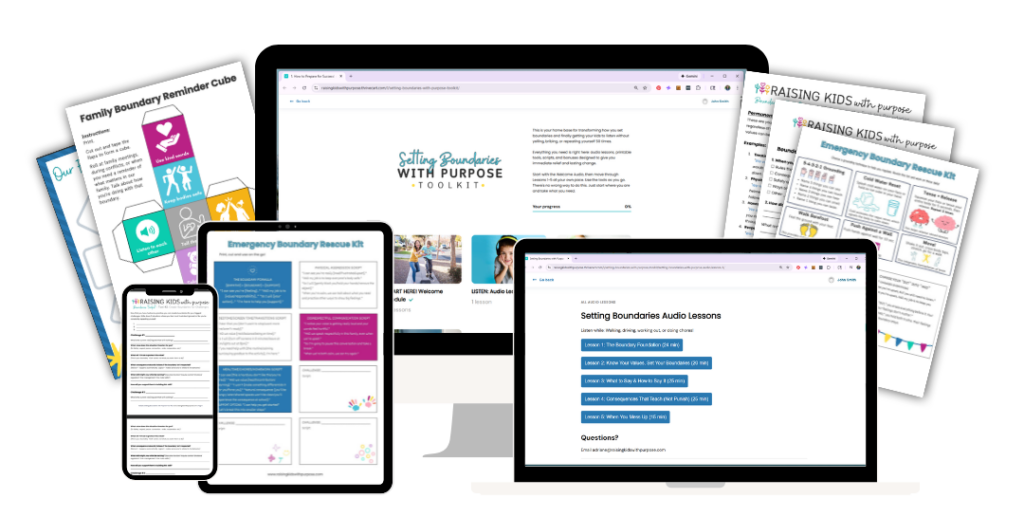
That’s exactly what the Setting Boundaries With Purpose Toolkit is built for. It gives you the framework and the actual scripts to set limits that work with your child’s brain so you can have structure AND connection at the same time.
Because you can hold a boundary AND hold your relationship. Both are possible. And you don’t need fear to make it happen.
👉 Grab the Setting Boundaries With Purpose Toolkit here.
Listen to the Full Episode
Want to go even deeper? This blog post accompanies Episode [#] of The Raising Kids With Purpose Podcast: The Lie We’ve Been Told About Consequences and Punishments. We go into even more of the research, I share personal stories, and we talk about what’s coming next, Plan B problem solving and how to actually build intrinsic motivation in your kids.

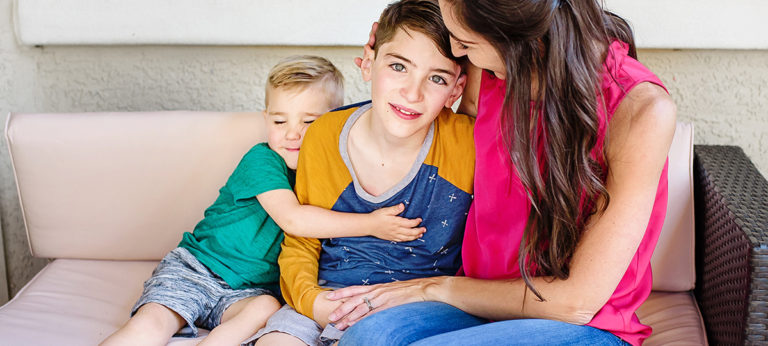
Hello!!! I’m Adriane. I’m a mom to three loud boys, am a research-a-holic and very passionate person who writes at Raising Kids With Purpose. Parenting can feel so hard sometimes but with mindset shifts and understanding, it can be very enjoyable. My hope is to inspire parents like you to create lifelong connections with your children and enjoy the journey along the way!




“The parent is the intervention”
Mic drop right there🎤
Aww man it’s so hard to break free of using consequences. Usually my kids are in their own loud world of bothering/wrestling each other and don’t stop unless I threaten to take away their tablets. I need to use a new strategy for sure!!!
It really is! You should try it and let me know how it goes!
This is probably one of my favorite articles you have written! I needed this one today! Thank you for doing it!
This is probably one of my favorite articles you have written! I needed this one today! Thank you for doing it!
Thank you!