The Power of the Pause: Stop Reacting, Start Responding
Inside: Learn how to stop reacting and start responding in parenting.
You know you shouldn’t yell. You know you should stay calm. But in the moment, something takes over, and then comes the guilt. Here’s the one tool that can change everything.
Table of Contents
Why You React Before You Can Think
Picture this: Your eight-year-old refuses to put on their shoes.
Again.
You’ve asked five times. You’re going to be late. And suddenly, out of nowhere, you find yourself yelling. Your voice is raised. Your body is tense.
You feel completely out of control. And you can’t stop reacting.
Here’s what actually just happened in your nervous system:
Your brain detected a threat. Not a real threat, like a bear or a fire, but your nervous system doesn’t know the difference between “late for school” and actual danger. So it flipped into fight-or-flight mode. Your thinking brain went offline.
When you’re in that state, you literally cannot access the calm, connected parent you want to be. That’s not a character flaw. That’s neuroscience.
The wiring didn’t start with your kids, either.
If you grew up in a home where you had to read the room to stay safe, walking on eggshells, watching for your parents’ mood, bracing for the yelling, your nervous system learned to react fast. And now?
That same wiring is running your parenting.

So What Do We Do About It?
The pause. The space between what your child does and how YOU respond. And in that space? That’s where your power lives.
But here’s what most parents get wrong: they think the pause just means “take a deep breath and count to ten.” That can help, but the real power of the pause isn’t only about calming down. It’s about noticing to actually get to a place where you can stop reacting.
Noticing where you are on the nervous system ladder. Noticing what’s happening in your body. Noticing the trigger.
A Real-Life Example
A few weeks ago, my middle son couldn’t find his shoes, which, let’s be honest, happens every single day. But this time, he started yelling at ME about it. And I felt it: the heat rising in my chest, my jaw clenching, the words already forming.
But I paused. Just for two seconds.
In that pause, I noticed: “Oh. I’m activated. My nervous system just registered ‘disrespect’ as a threat because that’s what I experienced as a kid.”
That noticing changed everything. Instead of yelling back, I said, “Hey bud, I can hear you’re frustrated. Let’s find them together.” Was it perfect? No. But I didn’t react. I responded.
Three Questions to Ask Yourself In the Pause
Question 1: What state is my nervous system in right now?
Am I calm and connected (ventral)? In fight-or-flight (sympathetic)? Shutting down (dorsal)? Just name it. You can’t change what you don’t notice.
Question 2: What do I need right now to regulate?
Maybe it’s a breath. Maybe it’s 30 seconds away. Maybe it’s putting your hand on your heart and saying, “I’m safe. My child is safe. This is not an emergency.” Your regulation is your responsibility — not your child’s.
Question 3: What does my child need right now?
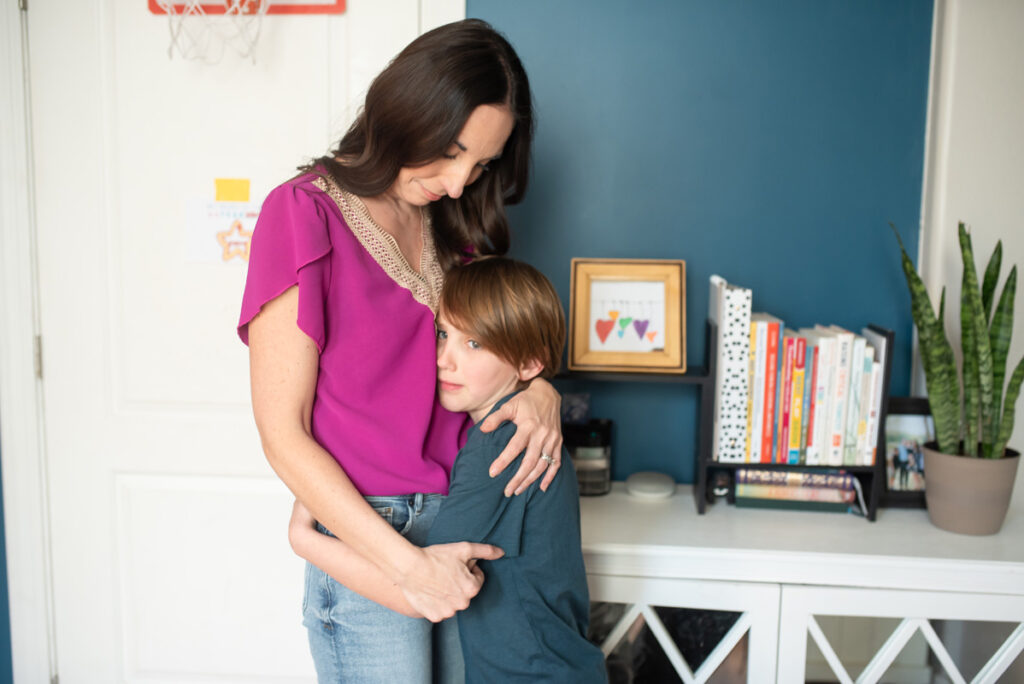
This question shifts you from reactive to relational. They’re not trying to make you late. They’re communicating something: “I’m overwhelmed.” “I need connection.” “I don’t have the skill for this yet.” When you ask this question, you move from control to connection.
A Practical Tool You Can Use Today: The “Name It to Tame It” Pause
This is not magic, but you will interrupt an automatic pattern.
Step 1: Name what’s happening in your body
Out loud or in your head: “I feel heat in my chest.” “My jaw is tight.” “I want to yell.”
Step 2: State Where you are in your nervous system
“I’m in my sympathetic (activated – fight or flight)”
Step 3: Take one breath
In through your nose. Out through your mouth. Longer exhale than inhale.
Step 4: Choose your response
“What do I want to do here? What does my child need?”
Why the Pause Feels Impossible (and Why It Gets Easier)
The pause can be hard at first. Your nervous system has been wired for speed: React fast, survive, control the situation.
That wiring is trying to protect you from a threat that isn’t there anymore.
Every time you pause, even for just two seconds, you’re building a new neural pathway. You’re teaching your nervous system: “I’m safe. I can slow down. I can choose my response.”
It won’t feel natural at first. It might feel impossible at first. But with practice? The pause becomes automatic.

And When You Mess Up? Repair.
You’re going to yell. You’re going to react. That’s human. And when it happens, you go back. You say, “Hey, I yelled at you earlier. That wasn’t okay. I was feeling overwhelmed, and I didn’t pause. I’m sorry.”
Rupture and repair is the work!
Here’s what starts to happen the more you practice the pause: your kids regulate faster, because your regulation is contagious. Power struggles decrease because you’re not meeting their dysregulation with yours. And you start to feel like the parent you actually want to be; not perfect, but present.
Your Challenge This Week
Practice the pause.
Pick one moment like at bedtime, during morning routine, or in the middle of a sibling fight, and commit: “I’m going to pause before I react.”
Name what you’re feeling.
Take one breath.
Choose your response.
And if you mess up? Repair. Try again tomorrow. You’re building new wiring: be patient with yourself.
Ready to Do the Deep Work?
If your body won’t let you pause and you go from zero to one hundred before you even realize what’s happening, that’s not a character flaw. That’s your nervous system doing exactly what it was wired to do. Inside the PURPOSE Parent Transformation program, we don’t just teach you the tools. We help you heal the nervous system patterns keeping you stuck in reactivity. Book a Parent Support Discovery Call

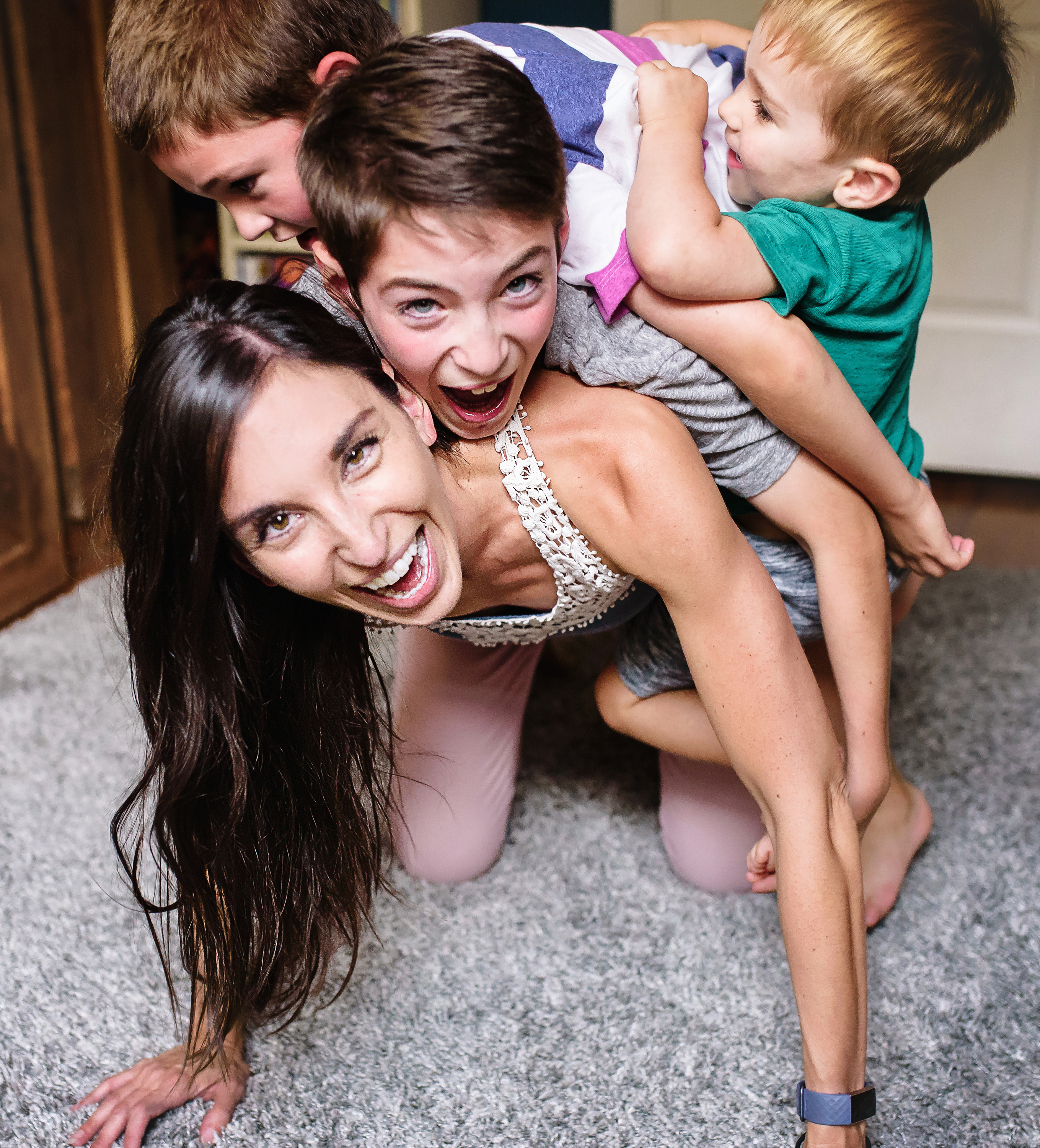
Hello!!! I’m Adriane. I’m a mom to three loud boys, am a research-a-holic and very passionate person who writes at Raising Kids With Purpose. Parenting can feel so hard sometimes but with mindset shifts and understanding, it can be very enjoyable. My hope is to inspire parents like you to create lifelong connections with your children and enjoy the journey along the way!