

4 Surprising Reasons Your Children are Ungrateful









Originally published: November 1, 2019 | Updated: October 2, 2025
Inside: You’ll learn the root causes of why children are ungrateful so that you can raise empowered kids who experience and show connected gratitude.
I often get texts from my son after he’s done with school that say, “Can you send me money for food?”
He goes to school about 25 minutes from our house, so instead of coming home right away, he’ll ride his scooter to the skatepark and sometimes then to church for youth group. It’s convenient for me, but I have noticed that after I “Cash app” him money, I don’t even get a simple, thanks, back.
I have found myself feeling frustrated and, honestly, disappointed. Not only disappointed in him, but in myself. How in the world did we raise such an entitled kid? are thoughts that often come around my mind.
The expectation isn’t for him to think I’m the best mom in the entire world (although that would be nice, sometimes), but it would be nice if there was even a glimmer of appreciation. A hint that he recognized someone else was making sacrifices so he could have money wired to him so he could hang out with friends.
It can sometimes feel like he’s so darn ungrateful!
If you’ve ever watched your child tear through birthday presents without a second glance, demand the latest trending item before the old one is even broken, or bawl their eyes out when you can’t afford something they want, you know exactly what I’m talking about.
And here’s what makes it even more frustrating: most parents I know work incredibly hard to give their kids “the world.”
We say yes to the birthday parties, the trampoline parks, club sports, music lessons, the special outings. We scroll through Amazon at midnight looking for that one thing they mentioned wanting. We pack weekends full of activities and experiences because we want them to have a childhood full of joy and adventure.
This often results in an inundation of so. much. stuff.
And I’m not only referring to physical toys and gifts. I’m talking about all the different places they can go to be entertained, the experiences they get to have, and the opportunities we create for them.
Financial status doesn’t necessarily differentiate kids from having too much, either. Even families on tight budgets have access to free resources like local city and library events, community programs, and giveaways. There are always ways to give kids experiences and more and more stuff!
And yet, despite all of this, children can seem so ungrateful.
They ask for more before they’ve even finished enjoying what they have. They complain that everyone else has something better. They barely look up when you hand them something they begged for just days ago.
It’s not that you are concerned about them having poor manners; it’s deeper than that.
It’s the sinking feeling that you’re raising a human who doesn’t see the value in what they have, who doesn’t recognize sacrifice, who might grow up to be… well, that person nobody wants to be around.
Here’s what I want you to know: my son shows appreciation in many different ways.
He notices when we go out of our way. When he got a mountain bike for his birthday, he gave us both a huge hug and told us thank you many times. It wasn’t just the words he said, but we could feel how grateful he was.
But there are certain things where he still seems so ungrateful, and I unpack why below. Maybe it’ll help you understand why your child appears (or is) ungrateful and what to do about it. After you’re done reading this post, you can head over to 10 Tips for Raising Grateful Kids.
Ungrateful kids aren’t born not having gratitude. And they don’t magically become grateful just because we lecture them about “kids in other countries” or take away privileges in frustration.
Teaching gratitude requires understanding why kids act ungrateful in the first place. And some of those reasons might surprise you.
In this post, I’m sharing four unexpected reasons your children might be acting ungrateful, plus what actually works to shift their mindset from entitlement to appreciation.
This post contains affiliate links; see disclosure policy for details.
When we think our kids are ungrateful, it can leave us feeling like we need to lecture them on how good they have it…with a PowerPoint and all! Are PowerPoints still a thing? Okay, even with Slides or a Canva slideshow! Ha!
Telling stories about how I only had two Barbie Dolls for toys and only got to go to the zoo twice in my whole childhood instead of having the opportunity to go every weekend, or how I had to walk to school up hill both ways, doesn’t really seem to teach gratitude.
The question is then: HOW do we teach gratitude?
Do we tell our children that they are ungrateful or threaten to take away all of their toys and park passes?
Does that help them see that they, in fact, have a pretty darn good life?
No! This actually doesn’t keep our kids from being ungrateful, as lectures rarely teach anything. If anything, it may just keep them in that feeling of ungratefulness.
Then this had me thinking if gratitude even matters.
Table of Contents
Gratitude Matters
It’s important to look at all the reasons why our children are ungrateful. If not, it’s really hard to instill gratitude. And like the subtitle says, Gratitude Matters.
The mere act of thinking about what you are grateful for is beneficial for your psychological, emotional, and even physical health! Gratitude matters for you as a parent as much as for your kids!
The research tells us that you don’t have to even be thankful; instead, there only needs to be thoughts about it.
Stop!
>> Think about how grateful you are for each of your precious children.
Did you do it?
I’ll give you one more chance to think about how thankful you are for your kids.
Simply reading those sentences can be beneficial for your mental health. You’re welcome 😆.
Concrete and Connective Gratitude
Yes, raising grateful kids leads to good manners, which are referred to as a concrete type of gratitude, but there are so many more health benefits when people reach connective gratitude!
According to PositivePsychology.com, ” {Connective gratitude} is a fully understood and appreciated receipt of whatever has been given. The appreciation is returned in a meaningful and heartfelt way, benefiting both the receiver and the giver. For gratitude to be an effective way to increase happiness, it must be felt, and connective gratitude is the key.”
There have been countless studies on the practice of being thankful. All have shown an increase in happiness, determination, focus, enthusiasm, and energy!
It’s important to note that teaching and practicing gratitude isn’t about comparing our situations to others who have it “worse.” That’s called comparative suffering, and I call it pseudo-gratitude. It is an unhelpful thought pattern that can hinder personal growth, diminish self-empathy, and prevent emotional expression. Whew! We don’t want that.
Instead, gratitude is about appreciating your life and all the things in it.
Our brains are not wired to focus on both negative and positive stimuli simultaneously.
It also falls back on the confirmation basis of looking for something the mind already knows to be true. Therefore, the more you acknowledge what you are thankful for, the more your brain looks for things to be thankful for. And remember, this feeling of gratitude leads to a whole slew of positive things in due time!

The Benefits of Being Grateful
- Expressing gratitude can increase oxytocin in the brain, which promotes empathy, relaxation, generosity, calmness, trust, attachment, intimacy, and a sense of safety. It also reduces the stress hormone, which in turn reduces anxiety.
- Thinking about what we are thankful for can redirect our attention from toxic emotions such as resentment, regret, and bitterness.
- Grateful kids often grow up to be emotionally, physically, and socially successful.
- Kids who can look at their lives and be thankful for what they have often have decreased levels of depression, envy, and materialism.
- Thankful kids can recognize the goodness in their lives, which helps them feel more connected and loved.
- Appreciation leads to generosity. Studies show that the more grateful a person is, the more likely he or she is to give to others.
- Acknowledging gratitude fosters strong relationships.
- It can train the brain to be more sensitive to other people over time which then leads to… an improved life and overall mental health!
The Surprising Reasons Children Are Ungrateful
Figuring out why children are ungrateful is important to understand, so we can make a change.
Developmentally, kids can typically understand gratitude starting between the ages of 4 and 6 years old. Besides development, there are other reasons why kids may keep asking for more, not say thank you, can’t see the good, or have an ungrateful attitude when something nice is given or done for them.
One of the most common reasons can accidentally be brought on by us, their parents. Gasp! And there can be a few other things at play, as well.
1. Entitlement: When “I Want” Becomes “I Deserve”
Let’s start with the hard one, because it’s also the most common.
Entitlement is defined as “an unrealistic, unmerited, or inappropriate expectation of favorable living conditions and favorable treatment at the hands of others.”
Read that again, but this time picture your child’s face when they don’t get what they want…do any of those words resonate?
- Unrealistic
- Unmerited
- Inappropriate expectation
The tantrum in the toy aisle. The meltdown when you say, “No”, to another snack. The assumption that someone else will clean up their mess, pack their bag, or fix their problem.
That’s entitlement in action.
And here’s the uncomfortable truth: we often create it.
How Parents Accidentally Raise Entitled Kids
The culprit? Giving children everything they want, when they want it, without requiring anything in return.
In her eye-opening book The Me, Me, Me Epidemic, parenting educator Amy McCready explains: “The entitlement epidemic usually begins with over-parenting—over-indulging, over-protecting, over-pampering, over-praising, and jumping through hoops to meet kids’ endless demands.”
We do it because we love them. We want them to be happy. We don’t want them to experience the disappointment or lack we might have felt growing up.
So we say yes. We rescue. We smooth out every bump in the road.
But in doing so, we rob our kids of something critical: the ability to struggle, problem-solve, and develop resilience.
When children never have to wait, work, or go without, they begin to form unrealistic expectations about how the world works. They start to believe that good things just happen to them, rather than understanding that effort, patience, and gratitude are part of the equation.
And that’s when ungratefulness takes root.
All people, young and old, learn through making mistakes!
Read More: Why Praise Doesn’t Work to Motivate Kids and What We Can Do Instead. As a bonus, by signing up for my newsletter, you will receive a Free Printable that helps you stop over-praising your children by giving you ways to encourage them through their strengths.
Entitlement Isn’t Always About Over-Parenting
Kids can feel entitled even in families that aren’t over-indulgent.
When we look at the psychology of entitlement, we find that it can actually function as a coping mechanism.
A child who has less than their peers may start to feel entitled to those things as a way of protecting their self-worth. It becomes a mental defense: I deserve this because I don’t have enough.
Entitlement can also stem from a compelling need to feel admired or to have an excessive sense of self-importance. In some cases, this leads to narcissistic tendencies where a child genuinely believes they are better than others or that rules don’t apply to them.
The good news? Narcissistic traits in childhood are often developmental and can be redirected with intentional parenting. If you want to be a more intentional parent but not sure where to start, let’s chat! You can schedule a complimentary Parent Support by finding a time on my calendar!
Entitlement is not a life sentence! It’s a pattern that can be interrupted.
Signs Your Child May Be Struggling with Entitlement
It’s important to recognize the signs early, so you can course-correct before entitlement becomes deeply ingrained.
The first step is awareness.
If you’re reading this list and feeling a pang of guilt or shame, pause!
Guilt won’t help your child.
Action will!
What’s done is done, and beating yourself up won’t change the past. Instead, look forward and remind yourself: I’m helping my child by addressing this now.
Signs that a child is becoming or is entitled:
- Will only do something if he will be receiving some kind of reward or bribe.
- Never feels like she or he has enough, but instead, is constantly wanting more.
- Doesn’t help anyone else and only thinks of him or herself.
- Acts as if rules and expectations are only for others.
- Expects that someone will come to his rescue anytime he is in trouble or needs help.
- Can’t go shopping without whining (or losing it) to the point where you give in to buy whatever it is that she wants.
- Doesn’t take the blame even if a problem is his or her fault.
- Is unable to handle any kind of disappointment.
Let’s Chat!
If this is something you’re looking for support in, I’d love to chat! Join me for a free Parent Support Discovery Call by finding a time on my calendar here!
What Actually Works to Combat Entitlement
So what do we do about it?
Rescue only in high-stress situations. Let your child experience natural consequences. Attune to their underlying needs and emotions, but don’t give in.
Require contribution. Kids who regularly contribute to the household through chores, helping siblings, or participating in family responsibilities develop a healthier perspective on give-and-take.
Delay gratification. Practice waiting. If they want something, create a plan together where they save, earn, or wait for a special occasion. The process teaches patience and increases appreciation. Kids growing up now REALLY struggle with this because we live in an “instant-culture”. We need to be intentional about delaying gratification wherever possible.
Model gratitude yourself. Let them see you express thanks, acknowledge others’ efforts, and talk about what you’re grateful for. Kids learn more from what we do than what we say.

2. Living in a Bubble: When Kids Don’t Have a Worldview
There’s a reason why “eat your dinner, there are starving kids in a village in Africa” never works.
It’s not that our kids are heartless or incapable of caring. It’s that they genuinely have no frame of reference for what life looks like outside their own experience. They lack a worldview.
When your child’s biggest problem is that their iPad died or their favorite snack ran out, it’s nearly impossible for them to grasp what it means to go without food, shelter, or safety. Their world is their world, and if that world has always included abundance, comfort, and security, they simply don’t have the context to feel grateful for it.
This is what I call living in a bubble.
And here’s the tricky part: that bubble they’re living in is one we created with love. We want to protect our kids from hardship, shield them from the harsh realities of the world, and give them a childhood full of joy and ease.
But when we shelter them too much, we accidentally rob them of perspective.
Why Exposure Matters More Than Lectures
When children are little, it’s great to encourage them to donate toys or pack backpacks for kids in need. Those are wonderful first steps! It gets them thinking about others.
But unless they can get a firsthand experience of what it’s like to live differently than they do, the lesson often gets lost because of where they are in brain development
A child can pack a shoebox full of gifts for a child overseas and still throw a fit when they don’t get the toy they want at Target. Why? Because packing the box was abstract. It didn’t change how they see their own life.
Real gratitude grows when kids see, touch, and experience life beyond their bubble.
And yes, the world can be a scary and sad place. But it’s also beautiful, resilient, and full of people doing incredible things with very little. It’s when we become gloriously broken, when we see pain and respond with compassion, that we truly experience what life is meant to be.
When our kids witness struggle and then get to be part of the solution, something shifts inside them. They stop seeing themselves as the center of the universe and start recognizing they’re part of something much bigger.
The Life-Changing Power of Service
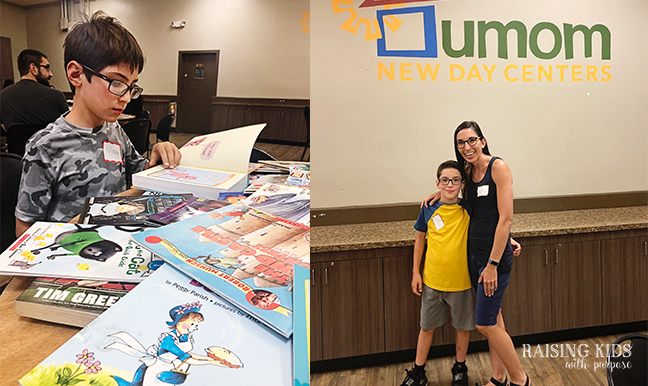
I started taking my oldest son to volunteer at our local homeless shelter as soon as he was old enough to participate. That first time he served by reading to kids who looked just like him but he fully understood they did not have a home like he did, was incredibly empowering for him.
When we got in the car, he looked at me with concern but also with a tinge of excitement in his voice and said, “I can’t wait to do that again! Did you see how many kids wanted to read with me?!”
COVID happened, causing that opportunity to disappear, but it planted a small seed that has been growing ever since.
This summer at fifteen, he had the opportunity to go on a service-learning trip to Peru.
I knew he was ready and that it would be transformative for him, and I was right. It was exactly the kind of experience that he needed to crack open his worldview in ways I never could from the comfort of our home.
He spent a week in rural communities, helping build infrastructure, playing with kids who had almost nothing, and taking tours and learning about the ancient and modern societies of the Sacred Valley, Cusco, and Lima. They ended the trip at Lake Titicaca, the highest navigable large lake and home to the Uros, an indigenous community living on traditional floating islands made of totora reeds. One of his friends even had a “marriage ceremony” with one of the local girls. He got to talk to the natives who shared stories and their group ended that visit by jumping in the freezing lake.
When he came home, he was different.
Not in some dramatic, overnight transformation kind of way. But quieter. More thoughtful. More present.
He still struggles to clean up after himself and is always asking for money for food, but his awareness of who he is as a person and his place in this world has grown tenfold. His love for people has grown even more. He’s more grateful too! and it’s the connective kind of gratitude, the good stuff we want to cultivate in our kids!
Volunteering and his service trip didn’t just teach him to be grateful. All of these experiences have taught him that gratitude isn’t about comparing yourself to people who have less so you can feel better about what you have. Gratitude is about recognizing the privilege, abundance, and opportunity in your own life and choosing to do something meaningful with it. This is something that has to come from within.
The Benefits of Volunteering and Community Service For Kids:
There is a lot of research to support what I’ve seen in my son.
Studies show that kids who volunteer regularly develop stronger empathy, better social skills, and a greater sense of purpose. They’re also more likely to express gratitude and show prosocial behaviors as they grow.
Here’s what volunteering does for kids:
- It builds empathy and compassion. Kids tend to connect with and build empathy for people they can relate to. When they meet someone their age who’s experiencing hardship, it becomes real in a way no lecture ever could.
- It shifts their perspective. Thinking about others where a child truly considers others people’s needs, struggles, and joys can change how they see their own life. They start to recognize what they have instead of fixating on what they don’t.
- It shapes them to care about the greater good. When kids participate in meaningful service, they begin to see themselves as contributors, not just consumers. They learn that their actions matter and that they have the power to make a difference.
- It brings happiness and purpose. Helping others gives kids a sense of personal satisfaction and fulfillment. Research consistently shows that people who serve others report higher levels of happiness and life satisfaction.
- It promotes collaboration and teamwork. Volunteering often requires working alongside others toward a common goal. This builds gratitude for the people supporting them and for those they’re serving.
- It helps kids appreciate their families. When kids see families in crisis or children without stable homes, they often come back with a renewed appreciation for their own parents and the sacrifices made on their behalf.
- It opens their eyes to a world beyond their own. And that might be the most important benefit of all. Kids who step outside their bubble grow up to be adults who care, contribute, and lead with empathy.
How to Make Volunteering Meaningful (Not Just a Checkbox)
If you want volunteering to actually impact your child’s sense of gratitude, don’t just sign them up and drop them off.
Reflect together afterward. Start a conversation about the impact they made and what they noticed. Ask open-ended questions like:
- What surprised you?
- Was there a moment that stuck with you?
- How do you think that person felt when you helped them?
- What’s something you’re grateful for after today?
These conversations help kids process what they experienced and internalize the lessons.
Make it regular, not just a one-time event. One afternoon of service is nice, but ongoing involvement is what creates lasting change. Find a cause your family can commit to monthly or quarterly.
Let them lead. As kids get older, let them choose where and how to serve. When they have ownership, they’re more invested in the experience.
Model service yourself. If volunteering is something you only make your kids do, the message gets lost. Show them that serving others is a value you live by, not just a character-building exercise for children.
Gratitude is cultivated through exposure, experience, and intentional reflection.
When we give our kids opportunities to step outside their bubble and see how others live, we’re not just teaching them to say thank you. We’re teaching them to recognize abundance, appreciate sacrifice, and use their privilege for good.
And that’s the kind of gratitude that actually sticks.
3. Exchange Relationship: When Gifts Feel Like Transactions
Understanding this concept has totally opened my eyes to look at what I thought was ungratefulness.
It also changed how I understand my kids’ reactions to gifts.
For years, I thought my children were very ungrateful (and entitled) when it came to getting gifts for birthdays and holidays.
We’d spend weeks planning, shopping, and wrapping. We’d watch their faces on Christmas morning or at their birthday party, waiting for that big emotional reaction. Sometimes, they would yell out, “Thank you!!!” but a lot of times, they would open the gift and move on to the next with not even a “thanks”.
But this, my friends, is not a child necessarily kids being ungrateful, the research explains how it’s something else!
What Science Tells Us About Expected vs. Unexpected Generosity
One study done at Yale found that kids ages 4-8 years old were less likely to feel a deep sense of gratitude if they thought they earned a reward or gift. The reason is that it was expected.
Researchers describe what looks like ungratefulness as actually an “exchange relationship.”
Here’s what they found: when kids believed they earned a reward or gift, or when they expected to receive it because “that’s just what happens”, they were far less likely to feel a deep sense of gratitude.
Not only that, but these children also showed no desire to give to others. They saw the exchange as transactional.
It’s this mindset of, “I did this, so I get that.” Like “I lost a tooth, so I get money.”
Or, It’s my birthday, so I get presents. It is an exchange relationship, not a moment of genuine generosity.
Here’s where it gets interesting.
When children were randomly given a reward out of pure generosity and it was completely unexpected, there was a much greater emotional impact. This deeper sense of gratitude actually motivated the kids to want to give to others. They felt moved by the kindness, and that feeling inspired reciprocity. This works for motivation too as Dan Pink explains in the book, Drive: The Surprising Truth About What Motivates Us.
In other words, surprise and generosity create gratitude.
Expectation and transaction do not.
Why Your Kids Seem Ungrateful on Birthdays and Holidays
Think about the gifts your kids receive on a regular basis.
- Christmas
- Birthdays
- The first day of school
- End-of-season sports celebrations
- Other holidays like Easter or Hanukkah
You put thought, time, effort, and money into making these moments special. You want to see joy and appreciation. You want your kids to feel special.
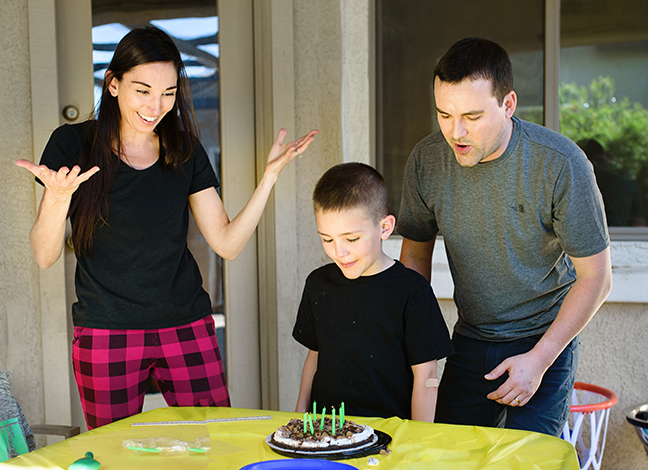
From a child’s perspective, gifts for annual events and holidays are expected. They know Christmas is coming. They know they’ll get presents on their birthday. It’s part of the rhythm of life. So even though you’re giving from the heart, your child may unconsciously categorize it as part of an exchange relationship. It’s my birthday, so of course I get presents. That’s how birthdays work.
The same thing happens with experiences.
During the summer, maybe you take your kids to the children’s museum, the science center, or the waterpark. You plan it out. You drive them there. You pay for admission and snacks and souvenirs.
But if these outings happen regularly or predictably, like every summer, or every time Grandma visits, they start to feel expected. And when something is expected, the emotional impact flattens.
It doesn’t mean your child doesn’t enjoy it. It just means the experience doesn’t trigger that deep well of gratitude.
A Real-Life Example
One year, my son got a Lego set for his birthday from his grandma. He’d been eyeing for months. It was exactly what he wanted. However, he just said, “Oh, cool,” when he opened it, then he moved on to something else.
That was it. A polite acknowledgment, and then he moved on.
I remember feeling frustrated. She spent a lot of money on that! She picked it out specifically for you! Can you at least act GRATEFUL?
But then, a few months later, that same grandma surprised him with a few new pairs of pajamas. She was visiting, saw them on sale, and thought of him.
He opened the bag, and you would’ve thought he’d just won the lottery.
He hugged her. He immediately ran to try them on. He came into the living room and said, “Grandma, thank you SO much! These are the best! I love them!”
You could feel the gratitude. But it was….over pajamas.
But then I remembered the research: The birthday Lego? Expected. Part of the birthday exchange. The random pajamas? A complete surprise. Pure, unexpected generosity.
And that’s what created the emotional response.
Learning about this concept of exchange relationships helped me see that my son wasn’t being ungrateful for the birthday present. He just wasn’t as emotionally impacted because it was expected. The surprise gift, on the other hand, broke through that transactional lens and landed as genuine kindness.
How This Changes the Way We Give
Does this mean we should stop giving gifts for special occasions and holidays?
No!
But it does mean we can be more intentional about how we give and what we emphasize in those moments. Here’s what you can do:
- Talk about the thoughtfulness, not just the gift. Instead of focusing only on what they received, highlight the person who gave it and why. “Grandma spent time picking this out because she knows how much you love building. That’s so thoughtful of her!”
- Create moments of unexpected generosity. Surprise your kids with small acts of kindness that aren’t tied to an occasion. A spontaneous trip for ice cream. A book you saw that made you think of them. A note in their lunchbox. These moments bypass the transactional mindset and land as pure love.
- Reduce the volume of expected gifts. If every holiday and milestone comes with an avalanche of presents, it all starts to blur together. Consider scaling back so that what they receive feels more meaningful and less like an expectation.
- Model surprise generosity toward others. Let your kids see you give unexpectedly to friends, neighbors, or strangers. Take cookies to a friend just because. Pay for someone’s coffee. Send a card for no reason. Sneak holiday baskets on friends’ front porches and try not to be seen. The kids LOVE doing this! This type of generosity isn’t transactional; it’s relational.
- Reframe birthdays and holidays as celebrations, not gift marathons. Shift the focus from “what will I get?” to “how will we celebrate together?” Emphasize experiences, traditions, and connection over the pile of packages.
Read Next: 25 Meaningful Examples of Family Traditions to Try This Summer
The Bottom Line
If your child seems ungrateful when they receive expected gifts, it doesn’t necessarily mean they’re spoiled or selfish.
It might just mean their brain has categorized the moment as an exchange rather than something they should feel grateful about. When you surprise your kids and you give from a place of spontaneity, you create space for real gratitude to grow.
And that’s the kind of gratitude that actually changes how they see the world.
4. Need for Autonomy: When “Thank You” Feels Like Admitting Dependence
I always assumed that when my kids didn’t thank me for something, it was because they didn’t notice, didn’t care, or just took things for granted.
But it turns out, there’s another reason entirely, and it has nothing to do with being spoiled or selfish. Sometimes, kids don’t express gratitude because acknowledging help threatens their growing sense of independence.
Why Teenagers (and Even Younger Kids) Resist Saying Thank You
There’s fascinating research on this, particularly with teenagers, but I’ve seen it play out with my younger kids as well.
Adolescence is a developmental stage when adulthood is knocking on the door. Teens are mentally, emotionally, and socially preparing to separate from their parents and step into their own lives. It’s a necessary and healthy process, even when it doesn’t feel great for us as parents.
This is where there can be tension: The teenager desperately wants to feel independent and capable, yet they’re still deeply dependent on us, their parents, for money, rides, food, housing, emotional support, and guidance.
That gap between how independent they want to be and how dependent they actually are creates internal conflict.
In his eye-opening book Nurture Shock, , Po Bronson explains it this way:
“For kids with a strong need for autonomy and independence, it might be demoralizing to recognize how much they are dependent upon grownups.” “Their sense of independence might be an illusion, but it’s a necessary illusion for the psychological balance and future growth into genuine independence. Their lack of gratitude might be the way they maintain the illusion that they are in control of their own lives.“
Surprising but totally makes sense, right?
When your teenager doesn’t thank you for driving them somewhere, cooking dinner, or buying them something they needed, it might not be because they are ungrateful.
It might be self-preservation.
Saying “thank you” requires acknowledging that someone else did something for them. It means admitting they needed help. And for a young person trying desperately to feel capable and independent, that acknowledgment can feel like a threat to their emerging identity.
So they stay quiet. They act like it’s no big deal. They move on as if you didn’t just go out of your way to support them.
And we, as parents, feel invisible and unappreciated.
It’s Not Just Teenagers
While the research focuses on teens, I’ve noticed this same dynamic with my younger son, especially as he’s moved into the tween years.
There are moments when I’ll help him with something like solving a problem he was stuck on, fix something that broke, step in when he’s overwhelmed, and instead of gratitude, I get responses like this…
“Yeah, I was about to figure it out anyway.”
“I didn’t really need help.”
“It wasn’t that big of a deal.”
At first, it hurt. I thought, Wow, okay. I guess my effort doesn’t matter to you.
But now I recognize it for what it is: he’s protecting his sense of competence and autonomy. He’s trying to prove to himself (and maybe to me) that he’s capable, strong, and independent. Also, he has an expression of autism called PDA, which means he has a vulnerable nervous system and has a HIGH NEED for control.
He’s not ungrateful. He’s protecting himself.
What This Means for How We Respond
Understanding this shift completely changed how I react when my kids don’t thank me.
Instead of taking it personally or launching into a lecture about gratitude and respect, I remind myself: this isn’t about me. Their brains are under construction, and they are developing.
That doesn’t mean we let it slide entirely or stop teaching gratitude. But it does mean we can respond with more empathy and less frustration.
Here’s what I’ve found helpful:
- Don’t demand thanks in the moment | If your child doesn’t thank you right away, resist the urge to say, “You’re welcome!” in that pointed, passive-aggressive tone we all know. It just creates tension and reinforces the power struggle.
- Acknowledge their growing independence. Sometimes I’ll say something like, “I know you’re getting more independent, and I love seeing that. I’m still here to help when you need it, though.” This affirms their autonomy while gently reminding them that interdependence is part of life.
- Model gratitude without expectation. Keep expressing thanks to them and to others, even when they don’t reciprocate right away. They’re watching. They’re learning. It just might not show up immediately.
- Create space for delayed gratitude. Sometimes my son will thank me hours or even days later. He’ll bring it up casually: “Hey, thanks for helping me with that thing the other day.” When he does, I make sure to acknowledge it warmly without making a big deal out of it.
- Talk about interdependence, not just independence. As kids get older, we can start having conversations about how even adults rely on others. Independence doesn’t mean doing everything alone; it means knowing when to ask for help and appreciating the people who support you.
Remember: your teen still needs you, even when he or she doesn’t act like it.
Your teenager might roll their eyes when you offer advice, but they’re still listening. Your tween might brush off your help, but they’re still watching to see if you’ll be there next time.
Keep showing up. Keep giving. The gratitude will come, even if it’s not immediate.
Bonus! Not sure what your kids are capable of doing? Sign up for my newsletter and receive a Free Skills By Age Printable!

Reframe Your Response
Next time you give your child a gift and they throw it to the side wanting more, stop and think why they are having that reaction.
Is it because they are entitled, they don’t have anything to compare it to, that the gift is expected, or that they are fighting for autonomy?
Instead of jumping to telling your kids how ungrateful they are, focus on teaching them how to be grateful. Work on reaching that connective state of gratitude, which will have a lifelong impact on their lives. And you can do this without sending your kid to Peru 😉!
Teaching Gratitude Takes More Than a Lecture: It Takes Connection
Do your kids fall into any of these categories when they forget to thank you or show appreciation? Comment below!
If your kids seem to be ungrateful no matter what you do, or you’re feeling like you’re at the end of your rope, I’d love to see if I can better support you.
Find a time to chat with me here.
Or you can email me: hello@raisingkidswithpurpose.com
Understanding why your kids seem ungrateful is the first step, but it might not be enough. You need practical tools, consistent strategies, and a framework that actually works in real life, not just in theory.
That’s exactly why I created the 12-Week Raising Kids With Purpose Program.
This isn’t another parenting course that gives you a list of tips and sends you on your way. It’s a complete system designed to help you raise kids who are grateful, resilient, kind, and purpose-driven.
Over 12 weeks, we work together to:
- Break the entitlement cycle by teaching your kids to contribute, wait, and appreciate what they have
- Build empathy and perspective through meaningful service and real-world experiences
- Shift from transactional to relational parenting so your kids feel loved, not rewarded
- Support their growing independence while maintaining connection and respect
- Create family rhythms and values that naturally cultivate gratitude and character
You’ll get step-by-step guidance, practical tools you can use immediately, and a community of parents who are in the trenches with you.
If you’re tired of nagging, lecturing, and feeling like your kids just don’t get it, this program will give you a better way.
Ready to stop feeling frustrated and start seeing real change?
Learn more about the 12-Week Raising Kids With Purpose Program here.
Because gratitude isn’t something kids stumble into on their own. It’s something we intentionally cultivate! And I can help you with that!

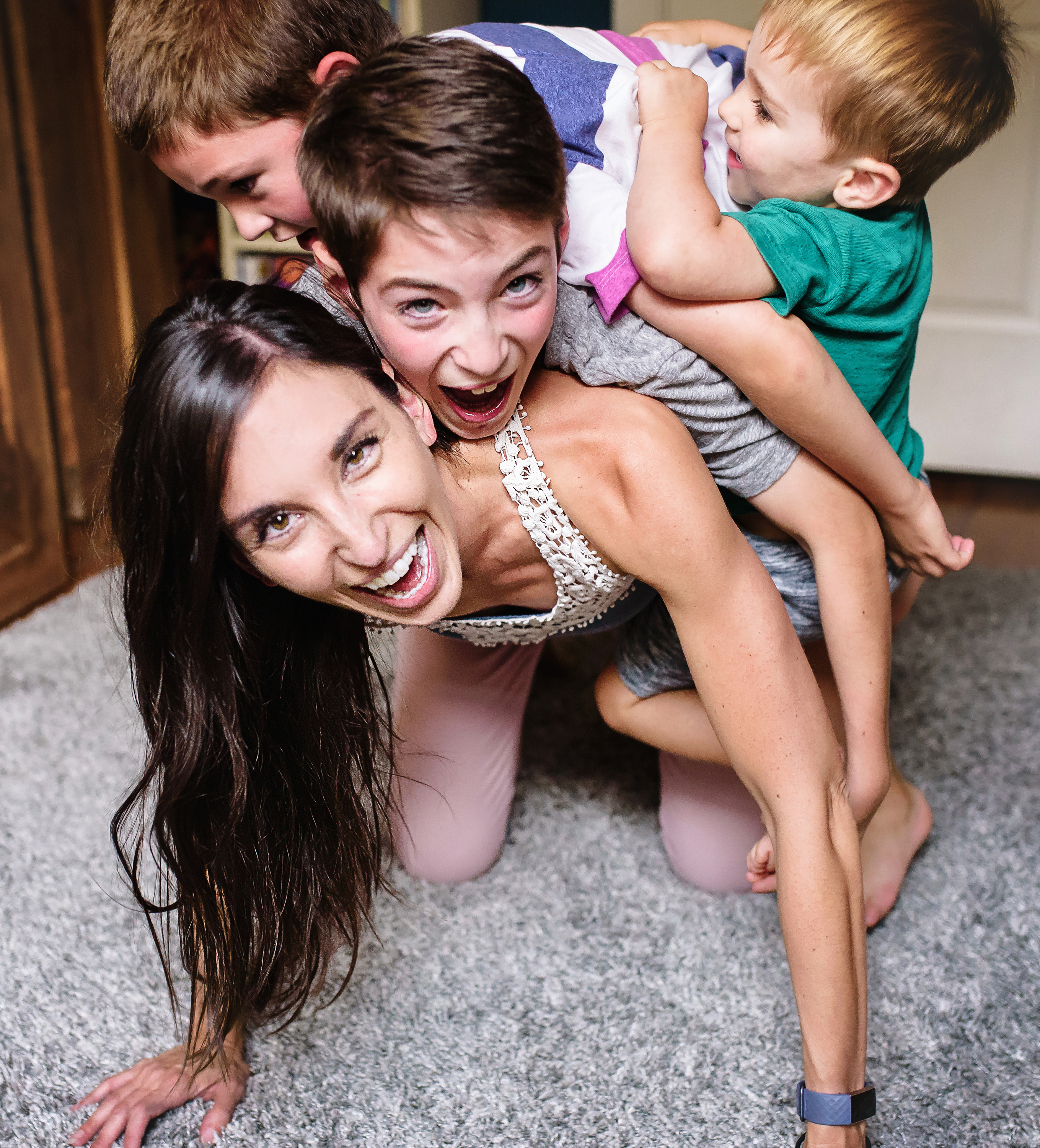
Hello!!! I’m Adriane. I’m a mom to three loud boys, am a research-a-holic and very passionate person who writes at Raising Kids With Purpose. Parenting can feel so hard sometimes but with mindset shifts and understanding, it can be very enjoyable. My hope is to inspire parents like you to create lifelong connections with your children and enjoy the journey along the way!
I have never heard the idea of an exchange relationship before, very interesting! Thanks for sharing the information.
I hadn’t either but it makes so much sense! You are very welcome!
Entitlement is a huge red flag!Its so hard with toddlers because they are so used to getting everything they want as babies
That’s such a good point!
One of my children is having a difficult time with gratitude. He’s the middle child and this year has been the hardest for him! I’ll have to read this a few times to try to help him!
awe! I’m going to be posting on how to teach gratitude soon too! Hope it helps! So happy to hear this 🙂
Great read, I agree many of these are reasons many kids tend to be ungrateful. We like to spoil our children a bit, but from a young age we’ve taught them that not everyone has the same opportunities, lives or things that we do. When our children out grown their clothing and toys that are still in like new condition we look for a family to give them to that needs them. And during the holidays, we help by donating to those in need and try to “adopt” a child in need if we can.
I love this so much! I was JUST talking to my son tonight about even how homework is something to be grateful for because of the opportunity he has that so many kids in this world do not. He’s our very empathic kiddo so he really gets it and it’s sweet to hear him process it all.
I love this. I don’t have any of my own kids, but I am an auntie and I am sad to see so many young kiddos showing those signs of entitlement. I hope that I can remember the tips in your blog when it’s my turn to be a parent. Hopefully going to be growing hearts full of gratitude!
There is just nothing sweeter than a little one who is genuinely appreciative of what they have!
Awe what a sweet comment. There is nothing sweeter! And thankfully it can be taught!
These are all really great tips and helpful information to raise better children and to be more grateful.
Thank you!
What a great post. Our boys are very little (3.5yo and 1yo) and we worry about them growing up feeling entitled. We keep thinking about ways to ensure that they don’t feel entitled without needing to restrict their toys and activities.
We don’t have to restrict but doing things like a toy rotation can be super helpful. And they tend to play with their toys more when they have less! I highly recommend, “The Me, Me, Me Epidemic”! She has great “unentitler” tools that would be great to implement even when your kiddos are super young
I think my kids struggle with managing expectations. They are grateful for things, they just wish they got something different.
hmmm that is definitely something to think about as well! I don’t notice my kids doing that but I have with others for sure. I wonder how we mitigate that? Thanks for sharing!
Excellent post. Some really actionable tips here that I will reflect on. The exchange relationship sounds very familiar with my children
Thank you! For us too!
Wonderful post! I feel that most behaviors are learned from observation and those around us and children observe way more than we imagine. I believe that also having a parent that shows gratitude is just as important when trying to teach it.
AS they say, “they’re little sponges!”
WOW! Very insightful! I am raising 4 kids in this naturally ungrateful society and it’s incredibly difficult. I learned a lot about the technical side of why some kids are naturally ungrateful. Knowing these things gives a great source of how to navigate their minds and behaviors away from raising kids who end up being ungrateful adults. Thank you for doing the research and sharing these tools and resources.
Thank you so much. It’s good to know all sides and not just assume that their unkind and entitled!
I feel like this is a constant struggle, especially with all the chore charts out there that reward kids just for helping around the house. It’s hard to raise a humble child, but I love seeing Ocean grow daily with this.
Exactly! And rewards do not work. Maybe very very temporarily to jump start motivation but it just increases entitlement. Kids will become instrinsically motivated if you let them!
You make some great points in your post. I am going to start looking for opportunities for my boys to serve others. I’ve also had to talk to certain family members who buy my boys anything and everything they want. I know they are somewhat entitled because they expect me to get them everything they want and they throw a fit when I don’t. It’s hard to raise grateful kids but it is definitely possible.
we have the same problem since we’re 2500 miles away from family. The grandparents used to be really bad but we have encouraged them to give experiences and money towards camps or memberships instead. That has helped minimize all the “stuff” a ton!
Our little guy is definitely entitled. We are slowly breaking him if that entitlement feeling. It’s definitely rough!
It is tough but it’ll be so good for him (and for the people in his life 😉 )!
I had never thought about the exchange relationship before. That’s very interesting!
right?!
Love this! I feel like as a mom it can be easy to let some bad behaviors slip by because we have so much to juggle but this one is so important!
Agreed 🙂 Thank you!
Thankis for sharing this. I was very enlightened byt his post. Sharing it with my group and page.
Thank you!
I needed to read this! Some great tips on how to instill gratefulness in my son!
I’m so happy to hear!
So many good points here. Now that my kids are older, I think it is easier to expose them to situations of people in need, like being able to volunteer in a soup kitchen. Definitely a good reminder to foster a grateful attitude!
It’s so much easier when they’re older. Thankfully, I have found some nonprofits that allow kids as young as four or five!
I love this post. I often wonder if my kiddos still need lessons in gratitude – and honestly, they will always need constant reminders to be grateful. We all do. I am definitely guilty of overparenting and I am trying to work hard in that arena. We are constantly working on exposing my kids to opportunities of empathy and thinking of others through our language, modelling, and teaching with delayed gratification. When my daughter was younger, it was easier to give in, and I’m seeing now how important it is to be more intentional with how I teach her the value of things and experiences.
Thank you for sharing your experience. It’s so important more than ever with this me, me, me society we live in. A book I highly recommend is The Gift of Failure by Jessica Lahey! That has really helped transform my parenting.
Great info!! I will bookmark this article for sure 🙂
thanks!
Sometimes I wonder if we are giving too much to our son since he did without so much to start. Ughh this is the hard part of parenting.
It is amazing how more grateful they are with less though. And I know I am too! It is hard especially with the pressures of society but I believe in you <3
Having children that are ungrateful is something that no one wants , am sure . This was a great post and there’s alot to be learnt , but what would you recommend for parents that are dealing with children that might be periodically showing signs of being ungrateful and does television also have a big impact on their behavior towards parents
I have a whole post on how to raise grateful children here: https://www.raisingkidswithpurpose.com/raising-grateful-kids . And yes, I’m sure television can really impact gratitude. Our children are exposed to so much advertising that it can be hard to fight against that. We don’t really watch TV in our house so we don’t fight that battle 🙂
I want to abolish the use of the term well-adjusted when referring to kids. Adjusted to what? I am not commenting on the advise, mind you! (I tis sound advise!) Just that term, which I used to happily throw in reports and comments when I was a teacher. I argue that kids will adjust to pretty much anything. There are kids who are well-adjusted to domestic violence, abuse, war and the like. I advocate for the much more positive and worth seeking term GROUNDED . What do you think?
Thank you for your input 🙂
The exchange relationship concept was eye-opening and makes so much sense. I’ve got three boys, too, and I feel like we’re raising amazing kids but sometimes those ungrateful and entitled attitudes flare and I’m really struggling on how to curb it. Thanks for the post.
It has been very eye-opening for me too!
I really enjoyed this article also! I know for me, it was being a single parent and feeling guilty for the father not being there and having to work FT so not being there for my daughter myself that allowed me the sense of “entitlement” to give my daughter everything I possibly could. I thought I was making her “happy” but instead I was creating entitlement and I see now that it was the “connecting” and spending TIME with me that she craved most. My daughter now has an 8 year old who also doesn’t have her father in the picture and i see my daughter using those “guilt” feelings for1) not only the father being absent, but also 2) her own ways that she comes up short as a parent (which I also did). I see how this has created entitlement in my daughter and granddaughter. They are both so sweet and loving with huge hearts but also have expectation issues. So thank you for opening my eyes to the points you made. Another thing that had struck me is that we had no purpose and did not get outside our own world to see how others lived either better or worse. I had severe depression as my daughter grew so she was “alone” most of the time – even when I wasn’t working. She is already a much more mindful and better and healthier parent to my granddaughter than i was for her. I am so proud of her!!! Could you send more info on the “purpose” part? I am very interested in this aspect.
Thank you again,
~MJ
Hi! This is my first visit to your blog! We are a group of volunteers and starting a new project in a community in the same niche. Your blog provided us beneficial information to work on. You have done a extraordinary job!
Thanks!
Dear raisingkidswithpurpose.com webmaster, Your posts are always well-structured and logical.
Thanks!
I notice with my
Kids they covet and model off of what other children have, how do I address that
You validate and empathize their feelings beneath the behaviors.
I know I’m late here, but it seems that what I’m reading is that behavior that looks like entitlement or lack of gratitude is often something else being misinterpreted by us parents, yes?
That is correct!