
10 Play-Based Ideas for Hard Behaviors During the Holidays
Affiliate disclaimer – This post may contain affiliate links, which means I may earn a small commission if you choose to make a purchase through them—at no extra cost to you.
When my boys were younger, I remember feeling incredibly exhausted during the holiday season, which also happens to be the end of the year. Having three kids in three different school environments meant three different types of holiday events.
In addition to what was happening at school, we had church obligations, and there are always so many family fun activities to do around where we live.
It was too much.
Not only for my kids who have hard behavior, but for me and my own behaviors!
In addition to all the events that come with extra noise and people, everywhere you go has bright lights (sometimes flashing), loud Christmas music, advertisements galore with so many sales, and messaging about this being the season of wanting and receiving. There’s just a higher amount of excitement and intensity.
For our family, especially with our different wired brains and sensitive nervous systems, this was all leading to dysregulation.
The holidays are supposed to be magical. But when you’re parenting kids with hard behavior, whether they’re neurodivergent, highly sensitive, or just deeply feeling kids, this time of year can feel more like survival mode than celebration.
Here’s what I’ve learned after years of parenting and now coaching other parents:
Play isn’t just something you do when kids are happy. It’s one of the most powerful tools we, parents, have to help our children regulate their nervous systems, process big emotions, and navigate stressful situations.
In this guide, I’m going to show you exactly how to use play to reduce holiday stress for your kids (and for you). Not Pinterest-perfect play activities. Not complicated therapeutic interventions. Just simple, doable, connection-filled play that actually works during the chaos.
By the end of this post, you’ll have:
- A clear understanding of why holidays are so hard for kids with hard behavior
- 10 practical play-based ideas you can use immediately
- Scripts you can copy and use during meltdowns
- A simple holiday play plan you can customize for your family
Let’s dive in.
Table of Contents
Why the Holidays Add More Stress for Kids with Hard Behaviors
Before we jump into solutions, we need to understand what’s happening in your child’s brain and body during the holidays.
Routine Disruption Sends Their Nervous System into Overdrive
Kids with challenging behaviors, ADHD, autism, or sensory processing differences thrive on predictability. Their nervous systems need routine to feel safe. During the holidays, everything changes.
School schedules shift or disappear. In Arizona, our boys get between 15-20 days off of school…right in the middle of the school year!
Bedtimes get pushed back. Meal times become irregular. The food you eat is different. Typically, with holidays come an increase in sugar, which leads to inflammation in the body, which comes out as hard behaviors. And suddenly, with events, parties, and gatherings, the calendar quickly fills up.
For some kids, this can be threatening to their brains and nervous systems.
Their brain interprets all this change as danger, which activates their stress response. This is why you might see more meltdowns, aggression, or shutdown behaviors during the holidays, even when the events themselves are supposed to be fun.
Sensory Overload Is Everywhere
Think about a typical holiday gathering from your child’s perspective:
Bright, twinkling lights on every corner.
Loud Christmas music.
Multiple conversations are happening at once.
Strong smells from candles, cooking, and perfumes.
People want to hug and touch them.
New textures on fancy outfits.
Crowds of relatives they haven’t seen in months.
For kids with sensory sensitivities, this isn’t festive—it’s overwhelming.
Read Next: The Ultimate Guide to Understanding Sensory Processing Disorder
My oldest son once described a Christmas party as feeling like “someone turned up the volume on the whole world.” That visual stuck with me. No wonder he would hide in the bathroom or become defiant when we tried to get him to participate.
The Emotional Load Is Massive
The holidays bring a unique cocktail of emotions that’s hard for developing brains to process:
- Excitement about presents and time off from school.
- Anxiety about changes and new situations.
- Disappointment when things don’t match their expectations.
- Overstimulation from constant activity.
- Fatigue from late nights and packed schedules.
Kids with challenging behaviors often already struggle with emotional regulation. Add in holiday stress, and you get emotional dysregulation on steroids.

For Neurodivergent Kids, the Stakes Feel Even Higher
If your child is neurodivergent or struggles with big emotions, hard behaviors, or is a highly sensitive child, they’re also dealing with:
Masking exhaustion | Many neurodivergent kids work incredibly hard to “hold it together” in public or around extended family. This takes enormous energy. When they get home or feel safe, all those big feelings explode.
Social demands | Holiday gatherings require small talk, eye contact, reading social cues, and navigating group dynamics. These are all things that can be genuinely exhausting for autistic kids or kids with ADHD.
Unpredictable expectations | “Be polite to Grandma.” “Say thank you nicely.” “Don’t be rude.” These vague instructions are confusing for concrete thinkers who need specific expectations.
One year, my middle son cried over everything. We did the whole Santa thing, and it did NOT make sense to his pragmatic way of thinking. The Elf on the Shelf only brought even MORE tears, meltdowns, and anger, so we had to stop all of those traditions. And that’s okay!
Related: How to Help Your Anxious Child at Christmas Time
He wasn’t being difficult.
He was genuinely anxious because the idea of a big man coming down our non-existent chimney to give him presents that his elves made, but they actually looked like they were from a store, while a little elf left our house every night to go talk to that big man, made absolutely no sense to him. All it did was make Christmas incredibly stressful.
His behaviors got harder, and it was giving him the WRONG message about what this season is about.
I share this story to help you see that if your kid is “extra hard” during this time of year, neurodivergent or not, he or she is not trying to ruin the holidays for you or the rest of your family.
Their nervous system is overwhelmed, and they’re doing their best to cope with a level of stress that most adults would struggle to handle.
Now let’s talk about how play can help!
The Secret Power of Play During Stressful Times
Here’s something most parents don’t realize: play is regulation.
When your child is stressed, anxious, or dysregulated, their brain literally cannot access the thinking, logical parts that help them make good choices. They’re stuck in their emotional brain (the limbic system) or their survival brain (the brain stem).
Play helps move them back into their thinking brain (the prefrontal cortex) where they can regulate, problem-solve, and connect.

Why Play Works (The Brain Science Made Simple)
Play activates your child’s parasympathetic nervous system, which is the part that calms them down and helps them feel safe.
It also:
- Releases feel-good chemicals | Playful interactions boost dopamine, serotonin, and oxytocin, all of which help with mood regulation and connection.
- Builds co-regulation | When you play WITH your child, your regulated nervous system helps regulate theirs. This is way more effective than saying “calm down” from across the room.
- Processes emotions safely | Kids don’t have the language to say, “I’m feeling overwhelmed by the unpredictability of this holiday season.” But they can show you through play. And through play, they can work through those big feelings.
Creates connection | Connection impacts behavior more powerfully than any discipline strategy. When kids feel connected to us, they’re more regulated and cooperative.
Play vs. Distraction
Here’s where many parents get confused. There’s a difference between using play to regulate and using play to distract.
Distraction says: “Don’t feel that. Look at this instead!” It’s handing your melting-down child an iPad so you don’t have to deal with the emotions. Or it could look like giving them a toy to distract them from crying, which may make you feel uncomfortable.
Regulation through play says: “I see you’re struggling. Let’s move your body/be silly/connect so you can process what you’re feeling.”
Distraction temporarily stops the behavior but doesn’t help your child develop regulation skills.
Play-based regulation teaches their nervous system how to calm down while maintaining connection with you.
I learned this the hard way with my youngest. I used to immediately hand him toys or would literally redirect him to look at or do something else when he started getting dysregulated. It “worked” for about five minutes. Or it would “work” completely, but I realized I was teaching him to ignore his emotions and not process them so that I could feel okay in my body.
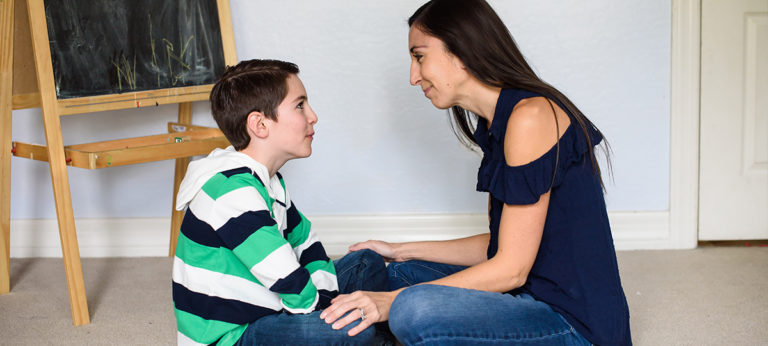
When I shifted to getting down on the floor and engaging with him playfully, the meltdowns became shorter and less intense. He was actually learning how to regulate, not just being distracted from his feelings.
10 Play-Based Ideas to Reduce Holiday Stress (That Actually Work)
Alright, let’s get practical. Here are 10 strategies you can use immediately to help your child navigate holiday stress through play.
1. Pre-Event Power Play (Before You Leave the House)
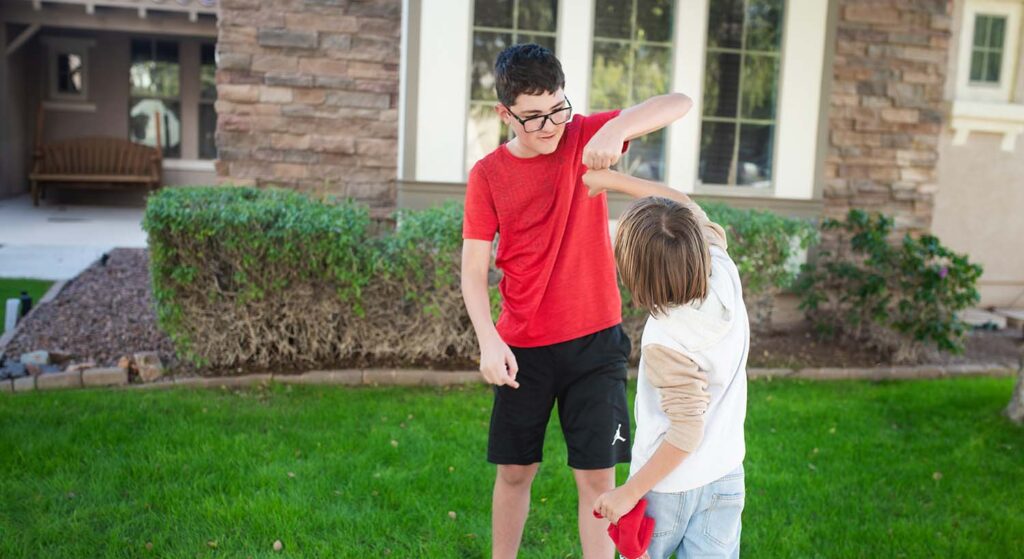
What it is: 5-10 minutes of rough-and-tumble, physical play right before you leave for a holiday event.
Why it works: Physical play releases pent-up energy and anxiety. It also fills up your child’s connection cup, making them more regulated and cooperative during the event.
How to do it:
Start this 15-20 minutes before you need to leave. Set a timer so you’re not stressed about time.
Choose activities that involve crashing, pushing, or proprioceptive input:
- Pillow fights
- Couch cushion jumps
- Wheelbarrow walks
- Wrestling or tug-of-war
- Animal walks (bear crawls, crab walks, etc.)
- Planks and airplanes – if they’re big enough, you can be the plane!
Keep it playful and fun. Let your child win sometimes. Laugh together.
Age adaptations:
- Toddlers (2-4): Hold them upside down, swing them, do “flying” games
- Elementary (5-10): You can incorporate races and simple obstacle courses
- Tweens/teens (11+): Shooting hoops, dance battles, running/racing
I started doing this with my boys before leaving the house or as soon as we got home, and it was game-changing.
We call it our “power-up time,” and they looked forward to it. It has become a ritual that helps them feel prepared and connected before (or after) overwhelming events.
2. Sensory Play Stations (Create calm corners anywhere)
What it is: Portable, quiet play activities that provide sensory input and help kids self-regulate during events.
Why it works: Sensory play gives overwhelmed nervous systems something to focus on. It provides organizing input that helps kids feel grounded.
How to do it:
Pack a small bag with sensory items your child can access during events:
- Playdough or thereapeutic putty
- Magnetic putty – this stuff is so cool and NOT messy!
- Fidget toys (pop-its, squishy toys, tangles)
- Small LEGO or building toys – we love these magnetic blocks!
- Coloring supplies like this Create N; Carry Travel Art Set by Crayola
- Craft supply tote
- Slimy sand
- Noise-canceling headphones
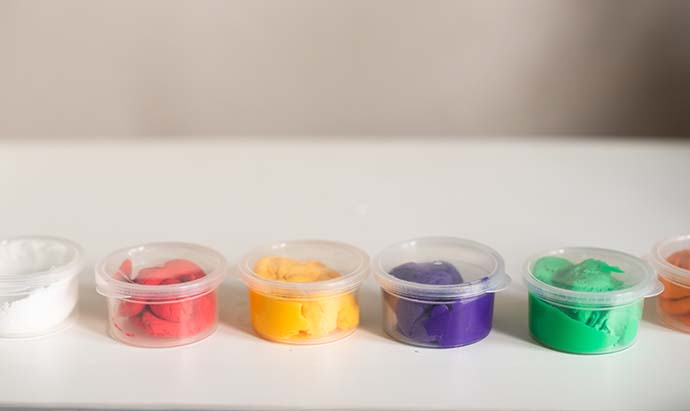
Find a quiet corner or room where your child can take breaks with these items. Frame it positively: “This is your calm space if you need it.”
Pro tip: Test these items at home first to see which ones actually calm your child. Some sensory items are alerting (wake up the nervous system) while others are calming. You want calming ones for holiday events.
My middle son’s regulation kit included a small stress ball, a fidget cube, and a tiny sketch pad. Just knowing he had these tools available helped him feel more in control during unpredictable situations.
3. Movement Play Breaks (Every 30-45 Minutes)
What it is: Scheduled movement breaks during long events or gatherings.
Why it works: Kids with challenging behaviors can’t sit still for hours. Their bodies need to move to regulate. Fighting this is like fighting gravity—you’ll lose.
How to do it: Set a phone reminder for every 30-45 minutes. When it goes off, take your child outside or to another room for 5-10 minutes of movement.
Quick movement activities:
- Race to the mailbox and back
- Simon Says with big movements
- Follow the leader with silly walks
- Red light, green light
- Dance party to one song
- Jumping jacks contest
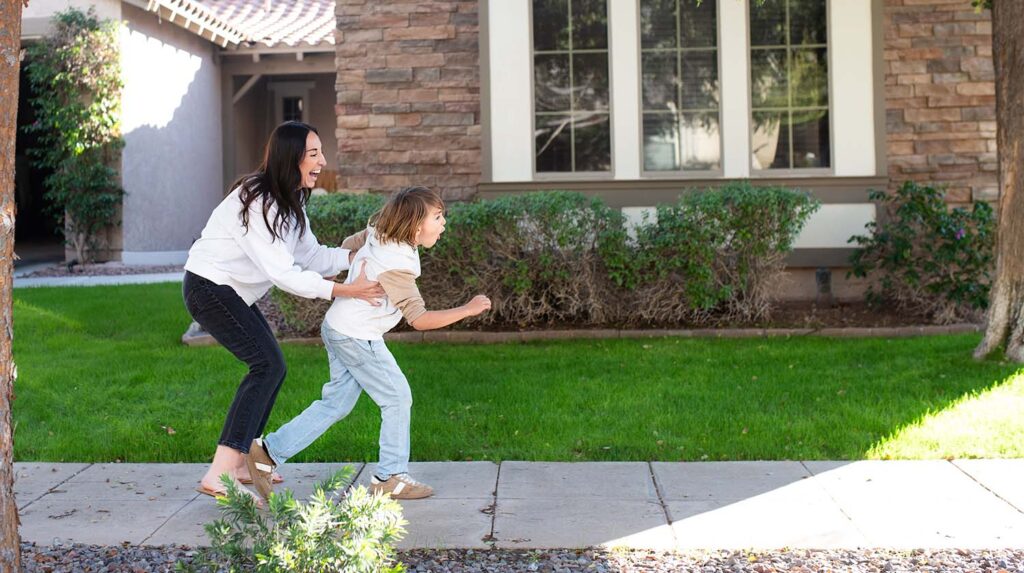
You can frame this to relatives as “We just need a quick break” without over-explaining.
The secret: Do this BEFORE your child starts showing signs of dysregulation. Prevention is always easier than intervention.
During one particularly long Thanksgiving dinner, I quietly told my son, “When we finish our food, we’ll go run around the property, then see who can do the silliest walk to the end of the driveway.” It gave him something to look forward to and kept him regulated enough to make it through the meal.
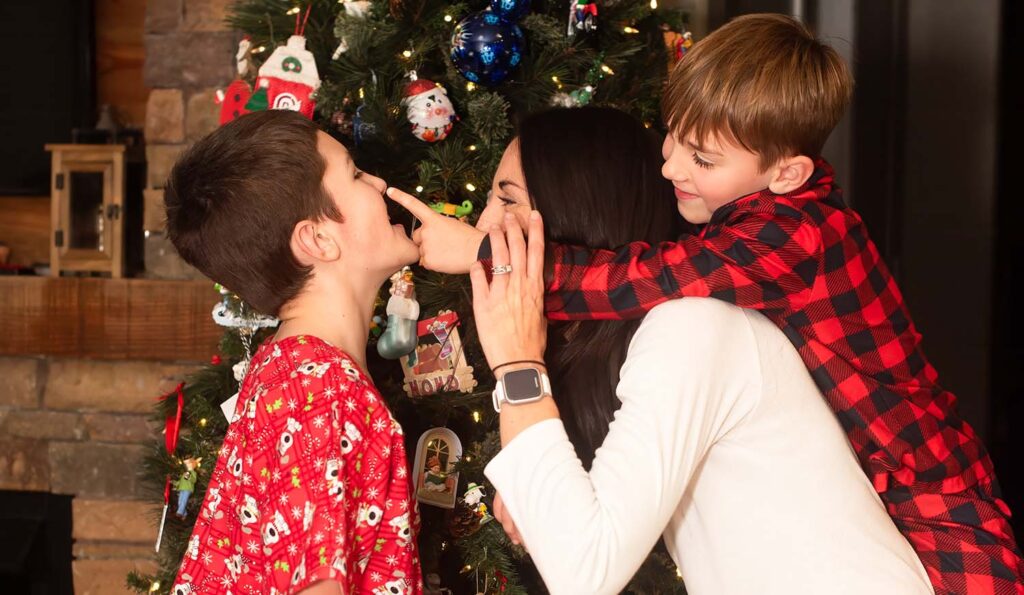
4. Silly Play to Release Tension (Your Stress-Buster Secret Weapon)
What it is: Intentionally goofy, absurd play that makes everyone laugh.
Why it works: Laughter is literally medicine for the nervous system. It releases tension, reduces stress hormones, and creates connection. When kids laugh deeply, their whole body relaxes.
How to do it:
Watch for signs your child is getting tense (not yet melting down, just starting to escalate). Jump in with something unexpectedly silly:
- Talk in funny voices or accents
- Do exaggerated, dramatic reactions to small things
- Play “opposite day” where everything is backwards
- Have a silly face contest
- Do the “I’m going to catch you” chase game
- Pretend to be animals in ridiculous scenarios
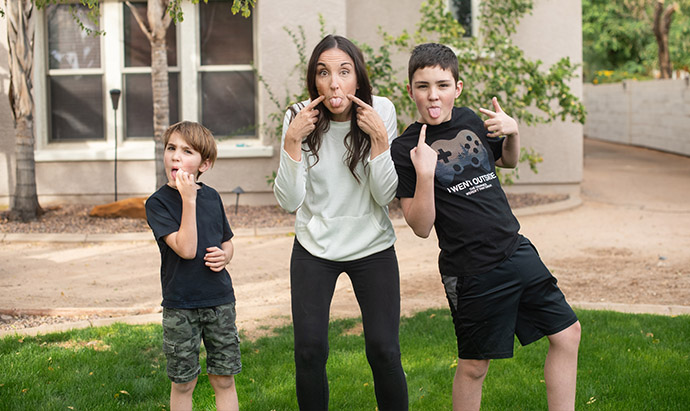
The key is committing fully to the silliness. If you’re half-hearted, it won’t work. Be a playful parent.
Real-life example: One Christmas, my oldest was getting frustrated wrapping presents. Instead of correcting him, I grabbed a roll of wrapping paper and dramatically wrapped myself like a present, stumbling around the room. He laughed so hard he couldn’t stand up. The tension was completely broken, and he finished wrapping with a smile.
5. Role-Play Rehearsal (Practice Makes Peaceful)
Why it works: Kids with anxiety or concrete thinking need to visualize what’s coming. Role-play gives them a mental script so the real event feels less threatening.
What it is: Playing through upcoming holiday scenarios before they happen.
How to do it: When visiting family, set up a simple role-play:
Here are some sample scripts or prompts you can use to act out the scenarios to “practice”:
- “Let’s pretend I’m Grandma. What will you say when you first see me?”
- “Okay, you’re going to walk into Aunt Sissy’s house. What do you think you’ll see? Who will be there?”
- “Let’s practice what you can say if someone asks you a question and you don’t want to talk.”
Make it playful, not like a drill. You can use fun voices, dress up costumes, stuffed animals, or action figures to act out the scenario.
Include a script for when they’re overwhelmed: “If things feel like too much, you can say, ‘I need a break,’ or come find me and touch my elbow. That’s our signal.”
We role-played a lot when my kids were younger. They found it funny, and I noticed it reduced their anxiety when having to interact with people they haven’t seen in a long time.
6. Quiet Connection Play (The Opposite of Stimulation)
What it is: Calm, one-on-one play that rebuilds connection without adding stimulation.
Why it works: After a lot of excitement and chaos, some kids need quiet togetherness to regulate. This is especially true for introverted or highly sensitive children.
How to do it:
Find a quiet space away from the action. Sit close to your child and engage in calm activities:
- Read books together
- Build with blocks (no competition, just side-by-side)
- Draw or color
- Play with stuffies while cuddling
- Build puzzles
- Look at family photos
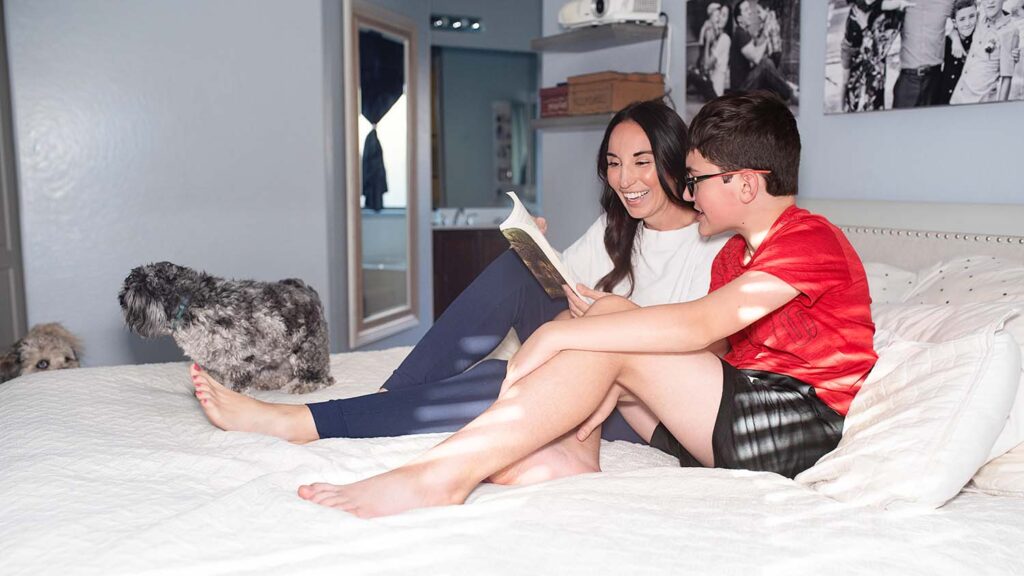
Don’t force conversation. Sometimes just being together is enough.
When to use this: After overstimulating events, during the wind-down before bed, or when your child is showing signs of being “touched out” or overstimulated.
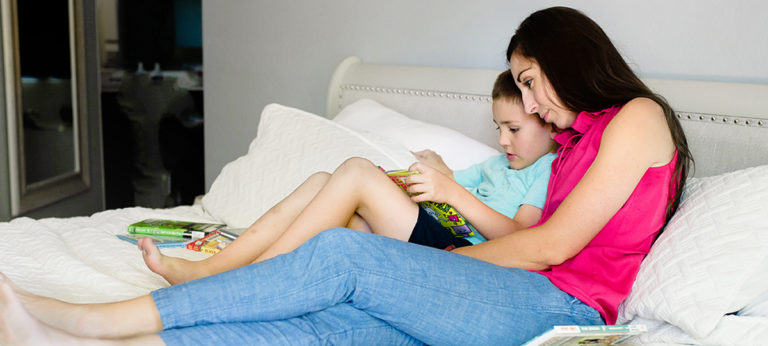
My youngest needs this a lot since he has a sensitive nervous system. We have a routine: we get home, change into pajamas, and I read a book aloud to him in his bed with this awesome red booklight. It’s his reset button.
7. Anger Play (My Personal Favorite Strategy)
What it is: Playful activities that help kids physically release anger and frustration in safe ways.
Why it works: Kids with challenging behaviors often have big, intense emotions that need a physical outlet. Anger play gives them permission to express these feelings without hurting anyone or anything.
How to do it:
When you see your child starting to get angry or frustrated, you can say something like:
“Whoa, I see some big mad feelings! Where should we put that anger?”
Then offer options:
- Rip up old paper or newspaper
- Punch or kick a pillow (make a game of it)
- Stomp their feet as loud as they can
- Push against the wall with all their strength (you count to 10)
- Squeeze playdough as hard as possible
- Draw their angry feelings with angry scribbles
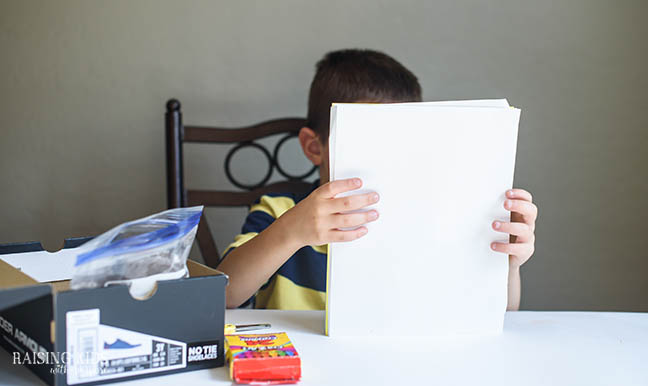
The key is naming the emotion and giving it a safe place to go while staying connected to your child.
This is something I’ve written about extensively because it transformed my relationship with my middle son. When he was 3-5 years old, I used to ask him, “Where should I put your anger?”
He’d say things like “In the trash!” or “Outside!” or “On your head!” And I would dramatically pretend to grab his anger, walk it to wherever he said, and deposit it there with exaggerated movements.
He would giggle, the anger would dissipate, and we’d move on. It helped him learn that anger is okay, but we need to find safe ways to express it.
8. Countdown Games (Making Transitions Playful)
What it is: Turn transitions and endings into games instead of battles.
Why it works: Kids with ADHD or autism often struggle with transitions. Making the transition itself playful reduces resistance and keeps connection strong.
How to do it:
Instead of “Time to go!” which often triggers defiance, try:
- “Let’s count down from 10, and when we get to 1, we’ll race to the car!”
- “I bet you can’t beat me getting your shoes on!”
- “How many kangaroo hops can you do to the door?”
- “Let’s move in slow motion as we count each step to the car.”
The transition itself becomes the game.
Important: Give a 10-minute and 5-minute warning before the transition so it’s not completely sudden. Then use the playful countdown for the actual transition.
9. Escape Plan Play (Yes, Plan Your Exit)
What it is: Create a fun, pressure-free way to leave a fun place when needed.
Why it works: Knowing they CAN leave reduces anxiety for many kids. Having a playful exit strategy makes it less awkward for everyone.
How to do it:
Before the event, create a secret signal or code word:
- “When I say ‘pineapple,’ that means we’re leaving in 5 minutes.”
- Touch my elbow if you need to go
- Secret hand signal only you two know
Make up a silly excuse you can use to leave without drama:
- “Oh! We need to go let the dog out!”
- “Time for our special bedtime routine!”
- “We have an early morning tradition tomorrow!”
Practice this ahead of time so your child knows the plan.
Here’s the truth: Some years, we’ve left events early. And that’s okay. It’s better to leave on a good note than push through until there’s a massive meltdown everyone will remember.
10. Wind-Down Play Rituals (The Recovery Plan)
What it is: A consistent play-based routine after stressful events to help kids decompress.
Why it works: Holiday events are like marathons for sensitive nervous systems. Kids need a predictable way to recover and transition back to normal.
How to do it:
Create a simple ritual you do after every holiday event:
Option 1: Physical Release
- Jump on the trampoline for 5 minutes
- Have a dance party to 2-3 favorite songs
- Do a “shake it out” game where everyone shakes different body parts
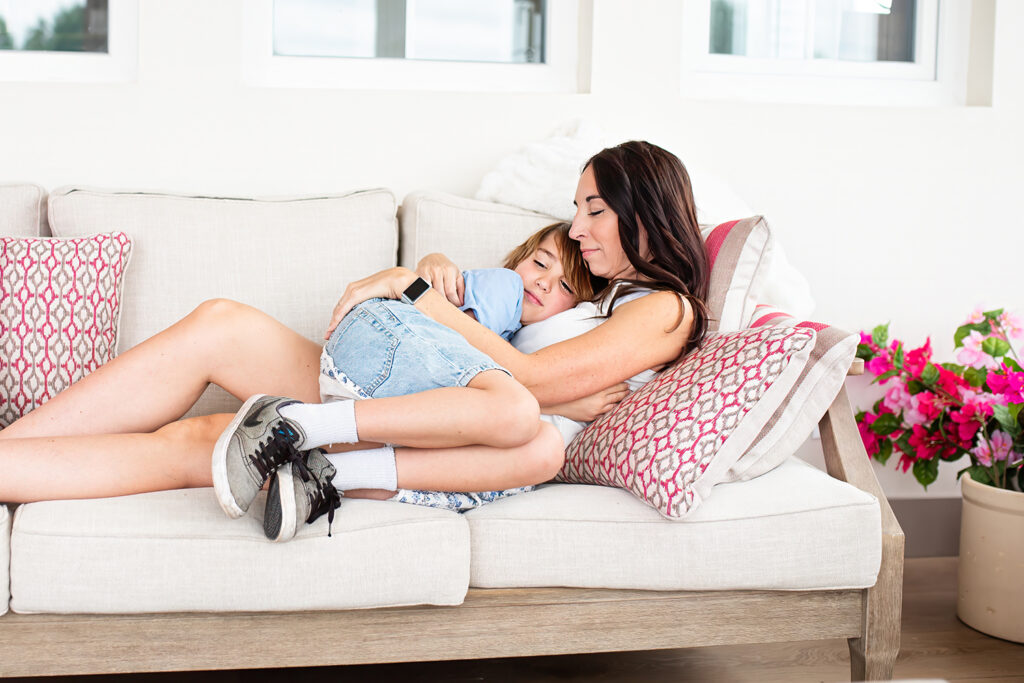
Option 2: Quiet Connection
- Warm bath with dim lights
- Read a stack of favorite books
- Cuddle time with a special blanket
- Gentle back rubs or foot massages
Option 3: Combination
- 5 minutes of physical play + 15 minutes of quiet connection
Make it predictable so your child knows what to expect. The routine itself becomes regulating.
Our family’s wind-down ritual: Everyone takes a bath or shower, puts PJs on, then we make hot chocolate, and each person shares one thing from the event. It signals to our boys’ nervous systems: “We’re safe. We’re home. We can relax now.”
Play Scripts for Holiday Meltdowns (Copy and Use These)
Even with all the prevention strategies, meltdowns will still happen. Here are scripts you can use in the moment:
When your child is starting to escalate:
- “I see your body getting tense. Want to do some elephant stomps with me?”
- “Whoa, big feelings! Should we push against this wall together and see how strong we are?”
- “Let’s take a silly walk to the bathroom. Can you walk like a penguin?”
During a full meltdown:
- “I’m right here with you. You’re safe.”
- (Quietly) “Your feelings are okay. I’m going to stay close.”
- (After they calm slightly) “Want me to do silly faces while you breathe?”
After the storm passes:
- “That was hard, huh? You got through it.”
- “Wonder what your body needed? Want to play a quick game before we go back?”
- “Should we make a signal for next time so I know when you need a break?”
With relatives who don’t understand:
- “He needs a movement break. We’ll be back in a few minutes.”
- “She’s doing great. This is just how she regulates.”
- “We’ve got this. Thanks for understanding.”
Remember: You don’t owe anyone an explanation. Your priority is your child, not managing other people’s opinions.
Download: Play-Based Ideas for Kids
All of these strategies can be used year long so I created a printable for you! It has all 10 play-based ideas to help your kids reduce stress, and it’ll help you with their hard behaviors.
Sign up for my newsletter, and receive your free Play-Based Ideas 2-page Poster below!

When Play Isn’t Enough (And That’s Okay)
Let’s be really honest here: sometimes, despite our best efforts, our kids will still struggle.
Signs your child is beyond the point where play can help:
- Complete shutdown (not responding to anything)
- Aggressive behaviors that could hurt someone
- Dissociation or disconnection from reality
- Sensory meltdown that’s too intense
What to Do if Play Does Not Help:
Priority 1: Safety. Keep everyone safe.
Priority 2: Co-regulate without words. Get close (if they’ll allow it), breathe deeply yourself, stay calm and present.
Priority 3: Remove from the situation. Sometimes the kindest thing you can do is leave early.
Priority 4: Give yourself grace. You’re doing an incredibly hard thing. Parenting kids with challenging behaviors during the holidays is expert-level parenting.
One Christmas Eve, we went to a local event and had to leave early before my middle son had a complete meltdown. We packed up, said our goodbyes, and went home.
Sometimes we need to protect our children and attune to their needs, which sometimes makes it so we have to cut events short. And that’s okay!
Your Holiday Play Challenge
Here’s my challenge for you this holiday season:
Choose just ONE play strategy from this list. Not all ten. Just one.
Try it consistently before, during, or after holiday events. See what happens.
My guess? You’ll see less intense meltdowns, more connection, and more moments of joy—even in the chaos.
The holidays don’t have to be perfect to be meaningful. Your child doesn’t need a picture-perfect Christmas. They need a parent who sees them, understands them, and helps them navigate a world that often feels too loud, too much, too overwhelming.
Play is your secret weapon
It’s connection.
It’s regulation.
It’s teaching your child that their big feelings are okay and that you’ll help them through it.
You’ve got this, friend. And I’m cheering you on.
Ready to become the playful parent your child needs? Join my Play with Purpose: 4-Week Class and transform how you connect with your child during challenging moments.
In just 4 weeks, you’ll learn:
- How to use play to prevent meltdowns (not just distract from them)
- Specific play strategies for big emotions, transitions, and defiance
- How to be playful even when you’re exhausted or stressed
- A personalized play plan that fits YOUR family’s needs
This isn’t just theory; it’s practical, doable strategies you can start using immediately. The class is perfect for parents of kids with challenging behaviors, ADHD, autism, big emotions, AND ALL kids because play is every little human’s first language.
Enroll in Play with Purpose here and bring more joy, connection, and calm to your home this holiday season.
Join my newsletter for weekly strategies, encouragement, and practical tools for parenting kids with challenging behaviors. You’ll also get instant access to the Play-based Ideas for Kids printable.
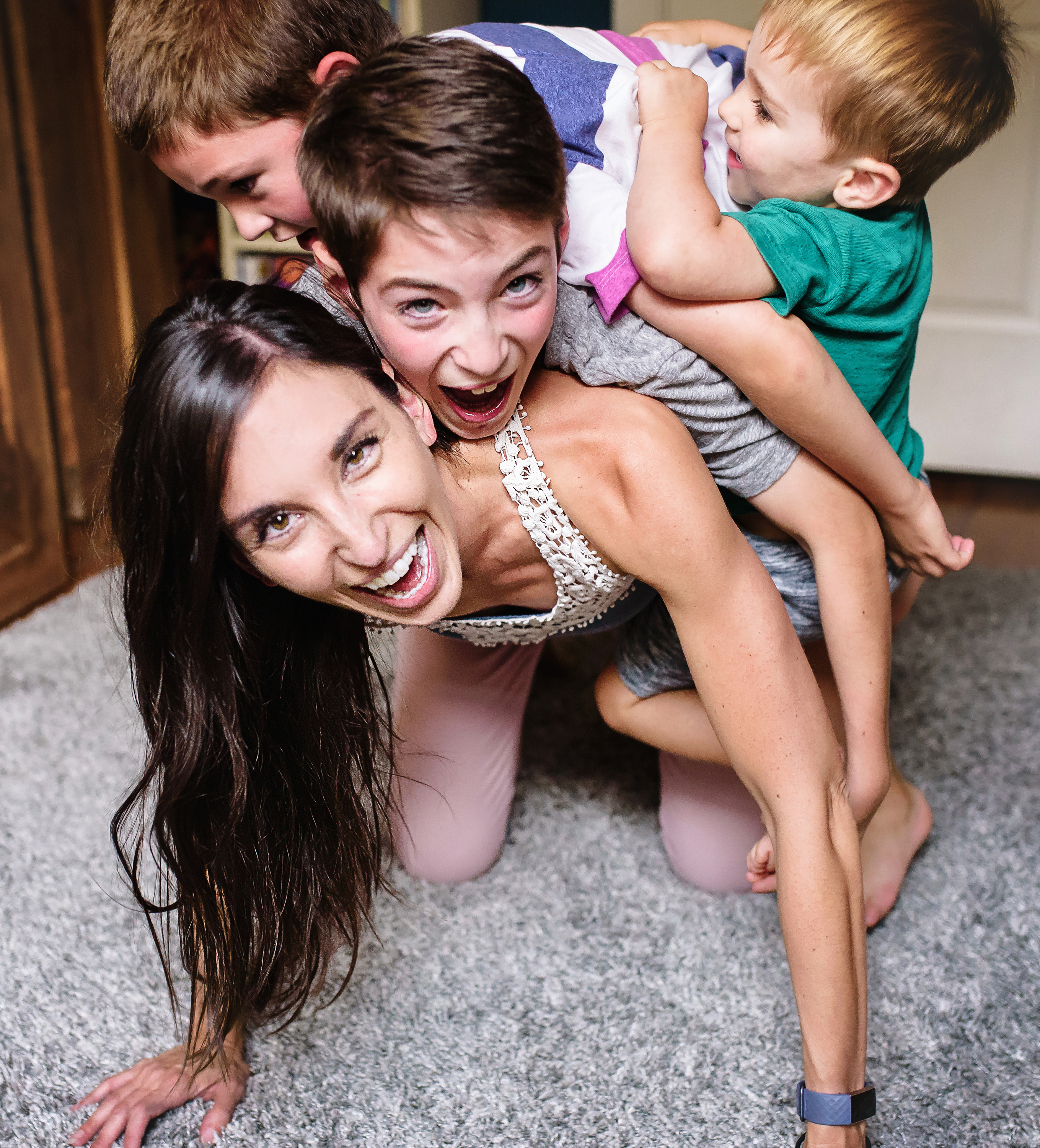
Hello!!! I’m Adriane. I’m a mom to three loud boys, am a research-a-holic and very passionate person who writes at Raising Kids With Purpose. Parenting can feel so hard sometimes but with mindset shifts and understanding, it can be very enjoyable. My hope is to inspire parents like you to create lifelong connections with your children and enjoy the journey along the way!


Wow so incredibly helpful! The most impactful quote for me: “ Distraction temporarily stops the behavior but doesn’t help your child develop regulation skills.” I admit that I’ve gone for the quick fixes distraction fixes before but I love the long-term strategies offered here.
Thank you so much! Happy it helps you to reframe distraction and what it does 🙂
Super helpful. This is a constant struggle with a couple of my kids and I love the power up and anger play suggestions -going to try that!
Let me know how it goes!