

How to Set Boundaries with Kids While Giving Them Autonomy
Episode 18 of The Raising Kids With Purpose Podcast: How to Set Boundaries and Stop Giving In To Your Kids’ Every Request. Learn how to set boundaries with kids that actually build connection and cooperation instead of fear and compliance. You’ll get a breakdown of the difference between boundaries and rules so you can learn how to create limits that foster your child’s autonomy while keeping everyone safe. This post includes affiliate links.
Listen to Episode 18: How to Set Boundaries and Stop Giving In To Your Kids’ Every Request on your favorite podcast player:
I’ve been speaking across the Phoenix Valley this month with other professionals, at a school parent night, and for a few MomCo meetups. I’ve met so many incredible parents, including grandmothers who have adopted and are raising their grandchildren. There is a lot of weight on moms’ shoulders today, and a theme consistently shows up,
Time and time again, I’ve heard phrases like, “I just need to have better boundaries.” Or “It’s really important that my kids have boundaries.”
Then that’s typically followed up with what consequences they have given their child.
We have been told a lie. Consequences don’t actually change behavior. And boundaries with kids are super important, but only when held in a way that builds connection instead of fear, collaboration instead of compliance, and understanding instead of just obedience.
Table of Contents
What consequences and boundaries actually are
I’m going to break down what consequences and boundaries actually are versus what parents think they are, and why it’s so important to understand their true purposes in parenting kids.
Consequences
When a parent uses the word, consequence, they typically mean punishment, which doesn’t work to change behavior. Think about it: When have you been motivated to do well when you have been punished?
If you do things like take away screen time, send your kids to their room, or make them lose a privilege or not attend an event they had been looking forward to all day in order to “teach them a lesson,” your kids are getting a lesson, but probably not the one you want to teach.

In Punished by Rewards by Alfie Kohn, we learn that the lesson we end up teaching kids is that our love is conditional.
Essentially, they learn that when they mess up, that means they lose the most important factor in developing a healthy way, a connection with you.
Punishments and consequences teach kids to hide their mistakes instead of learning from them. And it teaches them that the person with the most power gets to control others through fear.
The actual definition of consequence is: The effect, result, or outcome of something occurring earlier.”
It’s simply the thing that comes after a child does a thing.
Therefore, if the consequence comes naturally, such as getting wet in the rain when he or she doesn’t wear a raincoat, or burning his or her hand when touching the hot stove, then they may (or may not) wear a raincoat or avoid touching the stove the next time. Since the brain is so undeveloped, it may take multiple getting-wet-in-the-rain days and stove burns to actually learn the lesson; eventually, the natural consequence does typically “work.”
The thought of the consequence needs to be partnered with an intentional choice or at least an intentional focus of attention to prevent that thing from happening again, but there’s no guarantee.
Boundaries
When a parent uses the word “boundaries,” they often think it means having stricter rules with bigger consequences when those rules are broken. But that’s not what boundaries with kids actually are. And just like punishments not working to do what you intend to, it’s the same for boundaries when used in this way.
Real boundaries aren’t about controlling your child’s behavior at all!
They’re about you taking responsibility for creating safety and respect in your family. And how I teach boundaries in my P.U.R.P.O.S.E. Parent Transformation Program is through connecting them to your family values.
Read Next: How to Define and Discover Your Family Values
Dr. Becky Kennedy puts it perfectly: “A boundary is something you tell your child you will do, and it requires your child to do nothing.“
I have also applied her being a “sturdy leader” to my parenting by reminding myself that’s what my kids need when their behaviors are difficult and challenging.
She breaks down the difference between a request and a boundary in this clip from the Huberman Lab podcast.
Here’s the difference:
A rule states, “Don’t throw toys.” A boundary states, “I will keep everyone safe, so I’m moving the toys if they’re being thrown.”
See how the boundary puts the responsibility on you, not your child? And that it’s connected to your family value of safety? You’re not demanding they change their behavior in the moment. You’re taking action to maintain safety and respect.
When we set boundaries with kids this way, we teach children that they are worthy of safety and respect, even when they’re struggling. We show them what it looks like to take responsibility for our own actions rather than trying to control others. And we create an environment where they can learn and grow without fear of losing our love and connection.
The actual definition of a boundary is: A real or imagined line or limit that separates two things. When applying it to human relationships, it’s a limit that protects the physical and emotional well-being of everyone involved.
Setting boundaries with kids is about creating the conditions where your child can make choices, learn from them, and develop their own internal compass for doing the right thing.
It’s not about controlling how they behave, which is what parents have done for generations. Instead, it’s because they understand why it matters, and it becomes part of who they become as a person.
Today, I want to break down why your children need boundaries and how to set boundaries for kids in a way that builds connection rather than resistance.
When parents understand the real purpose of boundaries, everything changes.

Why setting boundaries actually backfires
Here’s where things get tricky for most families.
When parents say they need “better boundaries,” they usually mean they want their kids to follow more rules with fewer arguments. So they create longer lists of consequences, hoping that fear of punishment will motivate better behavior.
But here’s what research shows us: fear-based compliance doesn’t teach kids how to make good choices. It teaches them to avoid getting caught or create coping mechanisms like people-pleasing, perfection, or anxiety.
Children who grow up with punishment-heavy “boundary” settings often become adults who:
- Only do the right thing when someone’s watching | Studies suggest children subjected to authoritarian tactics become less resourceful, less confident, and more likely to depend on external approval to maintain good self-esteem.
- Struggle to make decisions without external pressure | Children raised with punishments often exhibit difficulty making their own decisions and rarely learn to think on their own.
- Have difficulty trusting their own judgment | Research shows these children become poor judges of character and struggle with decision-making abilities.
- Feel resentful toward authority figures | When given punishments instead of being taught skills to make better choices, kids rebel against authority figures when they are older.
- Develop people-pleasing behaviors and perfectionism | Kids have a significantly greater chance of developing imposter syndrome, which kindles a dependent attitude on external approval when raised in a consequence-heavy environment.
- Experience higher rates of anxiety and depression | A large body of research shows links between corporal punishment and mental illness, including behavioral and anxiety disorders, depression, and low self-esteem that continue into adulthood.
- Have difficulty with emotional regulation | Kids demonstrate a weaker correlation to emotional intelligence throughout their childhood and adolescence due to depending on consequences instead of emotional connection in disciplining.
Research also consistently shows that physical punishment (including spanking, even when done in love) is associated with a wide range of negative long-term outcomes that continue into adulthood. There’s not much research that shows that it teaches and helps a child feel emotionally safe, which is what they need to make good choices.
The real purpose of boundaries with kids
Real boundaries serve a completely different purpose than rules and consequences.
Boundaries create emotional safety.
They help your child understand that no matter what happens, you’ll make sure everyone in the family feels respected and protected.

Boundaries foster autonomy.
Instead of telling your child exactly what to do, boundaries create a safe space where they can practice making choices and learning from them.
Boundaries build connection.
When your child knows you’re committed to keeping everyone safe (including them), trust grows instead of fear.
Research consistently shows that children thrive when they have both structure and autonomy. The key is understanding that boundaries provide structure, while choice-making within those boundaries provides autonomy.
Connection before correction: The foundation of effective boundaries
Before we dive into the practical how-to, there’s something crucial you need to understand: connection always comes before correction. And for a lot of parents, they need to connect to themselves and to God first so they can be regulated enough to be a safe harbor.
I know we’re talking about boundaries, and not rules, but the same concept applies! “Rules without relationships lead to rebellion” ~Josh McDowell
What was your reaction the last time your child had a meltdown or broke a family rule?
If you’re like most parents, you probably wanted to address the behavior immediately. Fix the problem. Make sure your child understands why what he or she did was wrong.
Here’s what child development research tells us: a dysregulated child cannot learn. When your child is upset, angry, or overwhelmed, their brain literally cannot process logical consequences or remember rules.
This is why connection has to come first.
Connection looks like:
- Getting down to your child’s eye level
- Acknowledging their feelings: “You seem really frustrated right now.”
- Offering comfort: “I’m here with you.”
- Waiting until they’re calm before addressing the behavior
Correction can come later, once connection is established
I know this feels backward if you grew up with immediate consequences for misbehavior. But children who feel seen and understood are infinitely more likely to cooperate than children who feel judged and controlled. I’m going to guess that you are the same way!
No human likes to be told what to do or to not feel heard or be understood. Kids included!
Related: 11 Ways to Build A Strong Parent-Child Relationship (Through Connection)
The difference between compliance and cooperation
This brings us to another crucial distinction: the difference between compliance and cooperation.
Compliance happens when your child follows rules because they’re afraid of consequences or want to earn rewards. It’s external motivation.
Cooperation happens when your child chooses to follow boundaries because they understand and respect the reasons behind them. It’s internal motivation.

How to tell the difference between compliance and cooperation
A compliant child might clean his or her room because they’ll lose screen time if they don’t. A cooperative child cleans their room because they understand that taking care of their space shows respect for their belongings and makes their family life run more smoothly.
The compliant child will likely stop cleaning their room as soon as the consequence is removed. The cooperative child has internalized the value of contribution and will continue the behavior even when no one’s watching.
This is why boundaries with kids matter more than rules.
Boundaries teach cooperation. Rules often only achieve compliance if the kid cares enough to comply.
How to set boundaries with kids that actually work
Now let’s get practical. Here’s how to set boundaries with kids that create safety, foster autonomy, and build cooperation.
Start with your family values
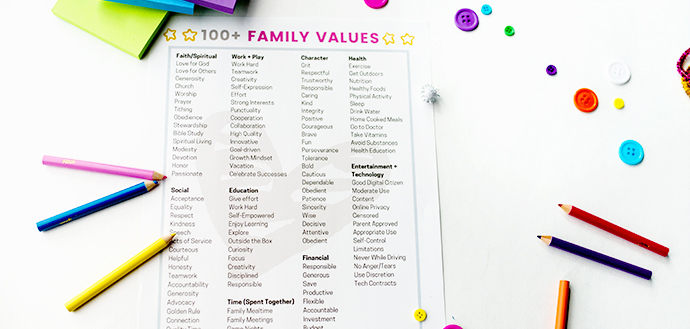
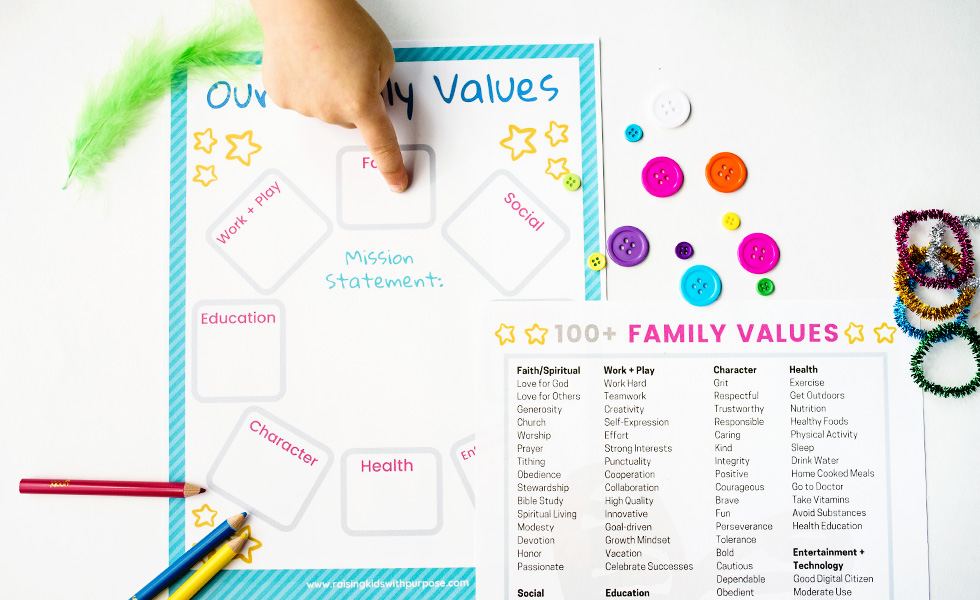
Effective boundaries aren’t random rules you’ve picked up from parenting books. They’re rooted in your family’s core values, which are unique to YOU! If you haven’t done so yet, scroll up a little to download the Family Values Toolkit. It has a list of over 100+ values if you haven’t written them down as a family yet.
Examples:
If respect is a family value, your boundary around communication might be: “We speak kindly to each other, even when we’re upset.”
If kindness is a core value, your boundary around sharing might be: “In our family, we look for ways to include others.”
Take a moment to think: What are your family’s most important values? How do your current boundaries reflect those values?
Focus on permanent vs. evolving boundaries
Not all boundaries should stay the same as your child grows. Understanding the difference between permanent and evolving boundaries will save you so many power struggles.
Permanent boundaries
These are non-negotiable boundaries. These are the core safety and respect guidelines that never change:
- We treat each other with kindness
- We keep our bodies and words safe
- We respect each other’s personal space
Evolving boundaries
These types of boundaries adapt as your child matures and proves they can handle more autonomy:
- Bedtime routines
- Screen time limits
- Independence in decision-making
- Chores and other family responsibilities
- Driving boundaries and limits
The key is being intentional and communicating changes clearly as your child grows.
Use natural and logical consequences
When boundaries are crossed, consequences should feel connected to the behavior, not arbitrary.

Natural consequences
These happen automatically as a result of the choice. The examples I used above are natural consequences.
Others include things like if your child refuses to wear a jacket, they get cold. If they don’t do their homework, they have to talk to the teacher, or they may not do well on a test that the homework was preparing them for.
Logical consequences
These are imposed by you but are directly related to the behavior.
Another component of logical consequences that is crucial, but often not done, is to include the child in what the consequence should be. More on this in the next section.
Logical consequences example
If boundaries you set around having a phone are constantly crossed or not followed by your teenager (because kids under the age of 15-16 should NOT own cell phones, but that’s a post for another day!), it’s best if you collaborate with the teen BEFORE you have to give the consequence.
This is where cell phone contracts, if done appropriately, can come into use. I love Axis’s cell phone resources. You can find their “Everything Smartphone” Guided Toolkit and Cell Phone Charter freebie here.

You can use tools like the Charter or simply have ongoing conversations about why it’s not healthy for their developing brain to be on the phone for 8,9,10+ hours a day. You can have conversations about the mental health impact of isolating themselves in their bedroom away from the rest of the family just to be on the phone.
Help your son or daughter understand what family value the boundary is connected to; not that they’ll agree or fully understand, because again, even at 16, the thinking brain where logic and reasoning happen is still majorly under construction.
Then discuss what happens if they don’t follow those boundaries.
We don’t really use the word, consequence, in this house because that just creates resistance. My kids are all twice exceptional, so they’re wired to push back and fight for autonomy more than the average kid! Instead, we focus on the plan for what happens next.
Related: To the Parent of “That Kid” Who is Always Seen for His Behavior (Instead of His Character)
The last part of this that’s crucial is to follow through on the consequences you came up with together.
Compare this to arbitrary consequences: taking away screen time for every infraction, regardless of what happened. That doesn’t help children understand cause and effect or develop better decision-making skills.
Remember, the goal is to teach your child how to make better choices, especially when you’re not around.
More on collaboration: The secret to boundaries that stick
Parents set boundaries for their children instead of with their children.
Collaboration doesn’t mean letting your kids make all the rules. It means involving them in understanding why boundaries exist and how they can work within them, like in my example above.

Dr. Ross Greene’s collaborative problem-solving model, called Collaborative and Proactive Solutions, gives us a powerful framework:
- Empathy: “I’ve noticed bedtime has been really hard lately. What’s going on for you?”
- Define the problem: “So you’re feeling anxious about going to sleep, and I need to make sure you’re getting enough rest for school. That’s our challenge.”
- Brainstorm solutions: “What ideas do you have that could help with both of those things?”
This approach teaches critical thinking, builds buy-in, and helps your child develop problem-solving skills they’ll use for life.
Read Next: 4 Easy Steps for Teaching Life Skills to Kids
Age-Appropriate Boundary Setting
The way you implement boundaries with kids should evolve with your child’s developmental stage. Here’s what this looks like in practice:
Toddlers and Preschoolers (Ages 2-5)
- Focus on immediate safety and basic respect
- Use simple, clear language: “I’ll keep everyone safe” or “try that again and say it with kindness.” Then read books about how to treat others with kindness.
- Offer limited choices within boundaries: “Would you like to brush teeth first or put on pajamas first?”
- Expect pushback and testing boundaries!! It’s developmentally appropriate
School Age (Ages 6-12)
- Begin explaining the “why” behind boundaries
- Invite input on family rules and expectations
- Allow natural consequences when possible
- Teach problem-solving skills through collaboration
- Expect pushback and testing boundaries!! It’s developmentally appropriate
Teens (Ages 13+)
- Shift toward collaboration and shared decision-making
- Focus on natural consequences over imposed ones
- Respect their growing need for autonomy while maintaining safety
- Have conversations about values and decision-making
- Expect pushback and testing boundaries!! It’s developmentally appropriate
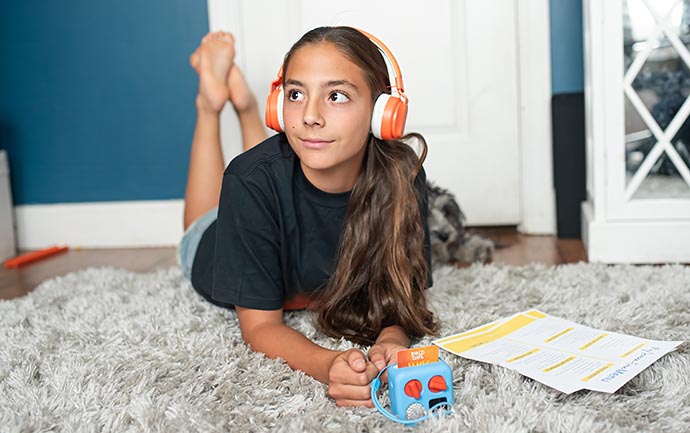
Remember: these are guidelines, not rigid rules. Every child develops differently, and neurodivergent children may need modified approaches regardless of age.
Common boundary-setting mistakes to avoid
Even well-intentioned parents can undermine their boundary-setting efforts. Here are the most common mistakes I see:
Mistake 1: Too many rules, not enough connection
When parents focus primarily on behavior management without building a relationship, children become resistant rather than cooperative.
Mistake 2: Inconsistent follow-through
Setting a boundary but not following through teaches your child that boundaries are suggestions, not safety guidelines. The caveat for this is to still follow through, leaning hard into connection.
Mistake 3: Using boundaries to control rather than protect
Boundaries should create safety and autonomy, not compliance and control.
If your “boundary” requires your child to do something, it’s probably a rule.
Mistake 4: Not adjusting for development
What works for a 5-year-old won’t work for a 15-year-old. Boundaries need to evolve with your child’s growing capabilities.
Mistake 5: Skipping the empathy step
Leading with consequences instead of connection creates resistance. Always validate feelings before addressing behavior.
When kids push back: Handling resistance
Let’s be real: even the most thoughtfully created boundaries will be tested. Here’s how to handle pushback without falling into power struggles.
Kids are supposed to test your boundaries
Kids push boundaries to make sure they’re solid, and honestly, it’s how the brain learns.
This isn’t defiance, it’s development. Remember, brain maturation is loud, messy, emotional, and involves learning from mistakes, which is sometimes uncomfortable for you as a parent.
Stay calm and consistent
Your emotional regulation models for your child how to handle frustration and disappointment.

Acknowledge your child’s feelings
It can sound something like this, “You’re really frustrated about this boundary. That makes sense! It’s hard when we can’t do what we want.”
You don’t have to validate the unwanted behavior, but always validate the emotion that’s driving that behavior. This will help your child develop a strong sense of identity and build emotional intelligence.
Hold the boundary anyway
Empathy doesn’t mean changing your limits. It means maintaining them with kindness. This is something I struggle with or will bend slightly. Growing up, the adults in my life worked a lot, leaving me to make my own decisions, even ones that weren’t age-appropriate, causing me to “grow up” quickly.
I recognize that this impacts how I struggle to hold boundaries, but it’s been a work in progress!
Follow up later
Once everyone is calm, have a conversation about what happened and brainstorm solutions together. Circling back is often a step that parents miss, but this is where the most growth happens. Kids need to be taught skills; they don’t just automatically know what to do.
Creating an environment that supports healthy boundaries
Boundaries don’t exist in a vacuum. They work best within a family environment that supports emotional safety and growth.
Physical safety means your home feels secure and predictable.
Emotional safety means your child knows they can express their feelings without being shamed or dismissed.
Consistency means boundaries are maintained by all caregivers in similar ways.
Empathy means your child’s perspective is valued and considered.
Growth mindset means mistakes are viewed as learning opportunities, not failures.
When these elements are in place, boundaries feel supportive rather than restrictive.

Practical Scripts for Communicating Boundaries with Kids
Sometimes the hardest part of setting boundaries with kids is knowing what to say in the moment. Here are some scripts you can adapt for your family:
When setting a new boundary: “I’ve noticed [situation], and I want to make sure everyone feels safe and respected. So from now on, what do you think we should do [discuss boundary]? I know this might feel hard, and I’m here to help you with it.”
When a boundary is crossed: “I see [behavior]. My job is to keep everyone safe, so I’m going to [your action]. We can talk about this when you’re feeling calmer.”
When collaborating on solutions: “We have a challenge: you need [child’s need] and I need [parent’s need]. What ideas do you have that could work for both of us?”
When acknowledging feelings: “You seem really [emotion] about this boundary. That makes sense. The boundary is still going to stay, and I’m here to help you with these big feelings.”
Building Your Child’s Internal Compass
The ultimate goal is to help your child develop their own internal compass for making good choices. This happens when children understand the values behind the boundaries, not just the rules themselves.
Ask yourself: “What do I want my child to believe about themselves, about relationships, about making choices in the world?”
Your boundaries should support those beliefs, not undermine them.

When your 16-year-old is making decisions about curfew, you want them thinking: “What choice aligns with my family’s values of respect and safety?” not “What can I get away with?”
That internal compass develops through years of experiencing boundaries that are rooted in love, respect, and genuine care for their well-being.
Moving Forward: Your Next Steps
Start small. Choose one area where boundaries feel challenging in your home, and apply these principles:
- Connect before you correct
- Root boundaries in your family values
- Collaborate when possible
- Use natural and logical consequences
- Adjust for your child’s developmental stage
Remember: this is a practice, not a destination. There will be days when you fall back into old patterns, when your child tests every boundary, when nothing feels like it’s working.
Your children are learning how to be in a relationship with others through their relationship with you. The boundaries you set today are teaching them how to respect themselves and others for the rest of their lives.
Ready to Go Deeper?
If you haven’t done so yet, don’t forget to download the Family Values Toolkit because this is what will help you build the foundation as you transform your parenting:
If boundaries are something you struggle with, no matter how many books you’ve read about it, let’s chat!
I have an entire week on setting boundaries in my 12 Week Purpose Parent Transformation Program.
It’s not just about gaining more knowledge, but also about putting it into practice so you can truly transform your relationship with your kids and break generational patterns for good. The program is equipped with tools to help you understand your child’s unique needs, foster intrinsic motivation, and cultivate a family culture grounded in your values.
To learn more and to start getting support right away, you can schedule a Parent Support Discovery Call by clicking here or by finding a time below.
Shifting how you parent will help you raise children who know their worth, respect others, and make choices from a place of internal wisdom rather than external pressure.
Your family deserves that kind of transformation.

Hello!!! I’m Adriane. I’m a mom to three loud boys, am a research-a-holic and very passionate person who writes at Raising Kids With Purpose. Parenting can feel so hard sometimes but with mindset shifts and understanding, it can be very enjoyable. My hope is to inspire parents like you to create lifelong connections with your children and enjoy the journey along the way!



Incredibly helpful insights here! I definitely have to pause and remember connection before correction, especially when I’m not pleased about the boundary being crossed. Thanks for the helpful examples and scripts you provided!
Thanks, Emily!!! I’m happy the examples and scripts are helpful.