
10 Tips for Raising Grateful Kids






Originally published: 11/10/2019 Updated: 11/14/2025
Inside: I give you every single way I could think of to help you raise grateful kids who not only say thank you but they truly feel a sense of gratitude every day.
All of my boys learned to say, “thank you” as soon as they could speak.
With my youngest, who has been incredibly empathic out of the womb, anytime someone did something nice for him, gave him something, or did what he asked, he responded with the absolute cutest “tank you.” My older boys followed HIS lead!
It sure made me feel like I was raising grateful kids.
But here’s what I started noticing: those sweet words weren’t always followed up with a grateful heart or attitude. Half of the time he didn’t even know what he was saying, “tank you”, for.
As they got older, the “thank you’s” were automatic for things like gifts or when someone did something nice, but then they would immediately ask for something else or for that person to do more for them.
My boys would thank me for dinner, then complain the next day. The words were there, but something deeper was missing.
At first, I thought it was mainly because of entitlement. And honestly? Sometimes it was.
But as I dug deeper into the research and reflected on my own kids’ behavior, I discovered there were actually several surprising reasons why kids can seem ungrateful, even when they’ve been taught good manners.
My husband and I want to raise grateful kids who are thoughtful, compassionate, and genuinely happy. I know many parents share these same goals.
The question is: how do we actually do this?

This post contains affiliate links, see disclosure policy for details.
It’s not enough to just teach our kids to say “thank you.” We need to cultivate something much deeper.
We need to cultivate what researchers call connective gratitude. This is the kind of gratitude that goes beyond good manners and becomes a genuine appreciation for what they have, the people in their lives, and the opportunities they’re given.
So let’s start by understanding what real gratitude actually looks like, and then I’ll share ten powerful, research-backed strategies that will help you raise kids who don’t just say the words, but truly feel and live with grateful hearts.
Read Next: 4 Surprising Reasons Your Children Are Ungrateful
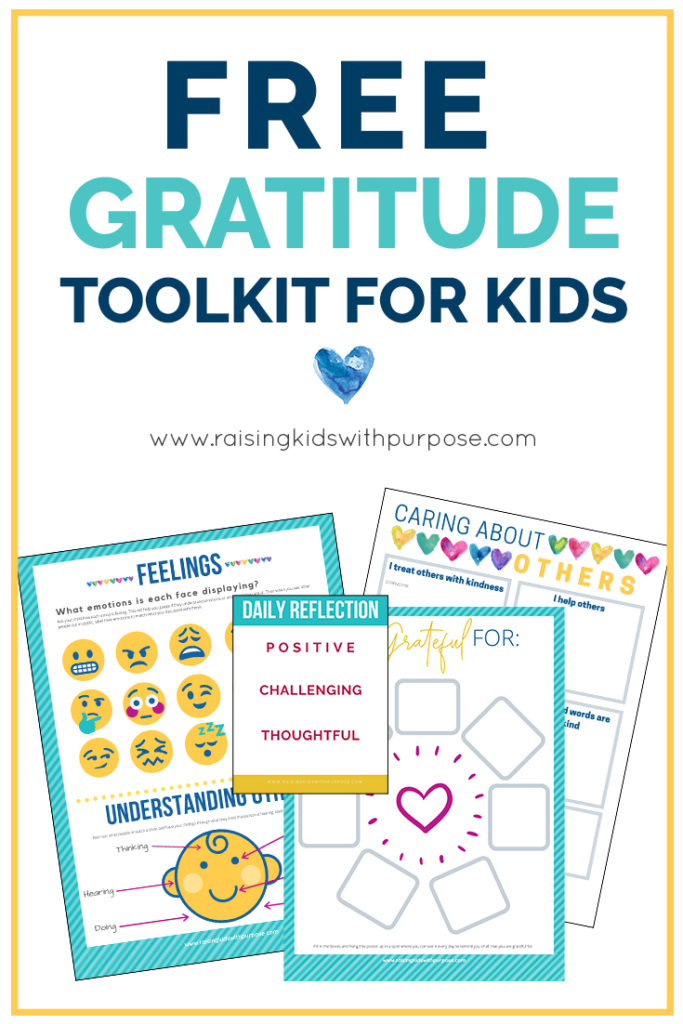
For You! Sign up for my newsletter and receive a FREE Gratitude toolkit including Gratitude Poster, Random Acts of Kindness cards, Dinnertime Reflection cards, and a few worksheets that teach empathy!
Table of Contents
What Gratitude Actually Is
Gratitude is more than telling your kid to say thank you.
Before we dive into the practical tips, let’s break down what gratitude really is. Because here’s the thing: gratitude isn’t just a feeling that magically appears. It’s actually a skill that can be taught and practiced.
Researchers have identified four key components of genuine gratitude. Think of these as building blocks that work together to create that deep, connective gratitude we want our kids to develop.
I’m sure you have said it a time or two after your kid gets something or a friend does something nice for him or her…
“Now, what do you say?”
Gratitude can be broken down into four parts:
1. NOTICE – Becoming aware of what you have
This is the foundation. Kids need to actually notice and acknowledge what they have to be grateful for.
This isn’t about your kids comparing themselves to others or thinking about “kids who have it worse.” Instead, it’s about pausing to recognize the good things in their own lives, the people, experiences, and yes, even the material things.
Simple ways to practice this:
- Gratitude sharing at dinner (keep it casual, not forced!): You can use something like this book to open up conversations, One Year of Dinner Table Devotions and Discussion Starters
- Invite your kids to use a Gratitude journal
- Have a quick gratitude moment during car rides to and from school
Questions to ask your kids:
“When someone gives you a gift, what else can you be grateful for besides the actual item?” (Hint: someone thought about them, spent time picking it out, wanted to make them happy)
“What’s something in your life right now that you’re thankful for?”
Read Next: The Importance of Family Dinner: 10 Ways to Make it Fun!
2. THINK – Understanding the why behind what your kids have
Once kids notice what they’re grateful for, they need to think deeper about why they have these things.
This is where perspective really develops. When kids understand that gifts, experiences, and opportunities don’t just magically appear and that it’s because someone made a sacrifice, worked hard, or chose to be generous, gratitude starts to take root.
When to practice this:
- Right after someone does something kind
- During quality time together
- Around the dinner table
- At family meetings (seriously, if you’re not doing these, start!)
- Immediately after someone does something kind
Questions to spark deeper thinking:
- “Do you think you earned this, or was it a gift?”
- “Why do you think they gave this to you?”
- “Do all kids get to have experiences like this?”
- “How do you think Grandma felt when she picked this out for you?”
3. FEEL – Connecting with emotions of gratitude
Here’s where gratitude moves from the head to the heart.
Kids need to actually feel the warmth, joy, and appreciation that come with being grateful. When they can connect emotionally to what they’ve received or experienced, gratitude becomes real and meaningful.
How to help kids connect with their feelings:
- Have conversations immediately after they receive a gift or have a special experience
- For younger kids, especially, have them close their eyes and have them connect to how that made them feel.
- Validate and name their emotions: “I can see you’re so excited about that!” or “You look elated right now.”
Questions to explore feelings:
- “How does that make you feel?”
- “What part of that experience made you the happiest?”
- “When you think about that gift, what feelings come up?”
4. DO – Expressing gratitude through words and actions
This is where it all comes together.
Gratitude isn’t complete until it’s expressed.
When kids express gratitude, it actually deepens their own grateful feelings. It’s a positive feedback loop. Explaining to kids what they can do to thank someone usually happens in the moment, but it can also be done anytime.
Ways to practice expressing gratitude:
- Make thank you cards (even a simple drawing for little ones)
- Practice verbal “thank you’s” that are specific: “Thank you for thinking of me!” instead of just “Thanks”
- Paying it forward or random acts of kindness
- Doing something thoughtful in return
- Saying it out loud to the person versus just texting, “Thx.”
Questions to encourage action:
- “What could you say or do to let them know you’re thankful?”
- “I noticed that gift made you so happy! Do you think you could make someone else feel that way? I wonder what you could do.”
- “What would be a meaningful way to show your appreciation?”
This is a helpful video that walks you through discussions with your kid from The Greater Good Science Center. Check out more of their videos here.
It’s important to look at all of these for raising grateful kids who spread joy in the world and who become better humans and personally benefit from this daily practice.
The Loss of Gratitude Over Time
The reason why it’s important to be mindfully aware of what it is that you are grateful for is that the emotional connection tends to wear off. This is something called hedonic adaptation.
Great emotions like joy and happiness or even loss and sadness dwindle over time.
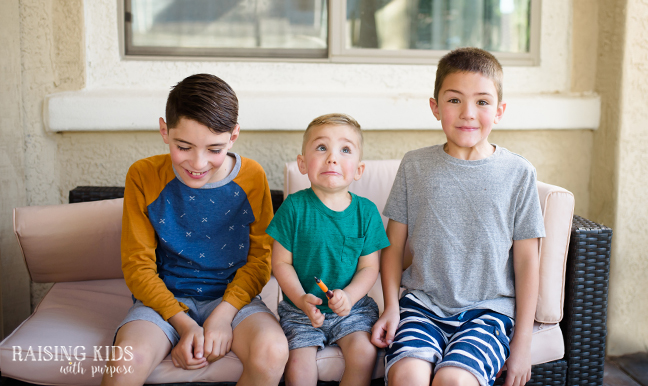
This explains why kids are so excited to receive a toy, but then within a few days or months (or sometimes even hours, right?!), they barely touch it.
It’s not that they don’t appreciate it; they just become used to it, and the excitement goes away. That initial dopamine spike is gone.
Participating in a toy rotation can help minimize this hedonic adaptation and keep you from feeling like you need to buy new toys constantly.
According to Greater Good Magazine, “research suggests that some degree of scarcity and restraint is more conducive to happiness.” This is good to keep in mind as we dive into all the ways we can teach and practice gratitude with our children.
10 Powerful Ways to Raise Genuinely Grateful Kids
With all the reasons why we don’t have grateful kids, and why gratitude is so important to our own state of being and our children’s, I wanted to know,
What can we do to make sure we are raising grateful kids?
Maybe you are asking the same thing, which is why you’re here. Let’s explore together!
1. Model gratitude in your everyday life
This should be NUMBER one on any top list involving parenting, and here’s why:
The single most important thing we can do is model what we want our children to learn and do.
Kids are like little mirrors. They’re always watching and learning if we like it or not.
We can talk the talk all day long, but what actually matters is that we walk the walk. Ouch.
Think about it. If you never say thank you, or you are constantly grumbling about what you don’t have, or are complaining about every little inconvenience, your kids will probably follow suit. It doesn’t matter how many times you tell them how important gratitude is if you’re not practicing it yourself.
Parenting starts with you.
Pro tip: make gratitude visible and audible in your daily life
During your day-to-day routine, find natural ways to express gratitude toward others:
- Thank someone who opens the door for you
- Say “thank you” to people who let you merge in traffic (even though the other driver can’t hear you; you’re not doing it for them!)
- Return someone’s cart at the grocery store
- Thank the cashier by name
- Tell your spouse, “thank you” for working hard, doing dishes, and for how they made you feel that day IN FRONT of your kids
- Express appreciation for your kids’ contributions: “Thank you for setting the table. That really helped me get dinner ready faster!”
Reframe challenges with gratitude:
When something goes wrong, verbally express the good that came from that situation. This is huge! It teaches kids that gratitude isn’t just for when everything’s perfect, but rather, it’s a mindset we can choose even in difficult moments.
For example:
- “Well, we got a flat tire, but I’m grateful we were close to home and that Dad knows how to change it.”
- “The restaurant messed up our order, but I’m thankful we got to spend extra time talking as a family while we waited.”
- “I’m frustrated that the concert tickets sold out, so I couldn’t go with my friends, but I’m grateful I learned what not to do next time.”
This doesn’t mean you’re toxic-positive or dismissing real problems. It means you’re showing your kids how to hold both feelings at once—disappointment and gratitude.
The power of “out loud” gratitude:
Here’s something I started doing that’s made a huge difference: I say my grateful thoughts out loud, even when they’re about everyday things.
“I’m so grateful for this coffee this morning.” “I appreciate that the sun is shining today.” “I’m thankful we have a warm house to come home to.”
It feels a little weird at first. What I’ve noticed is that my own brain likes it as much as it’s teaching my kids how to be grateful. My youngest, remember, the kid who came out of the womb empathic, loves to mimic me and say what he’s grateful for.
That’s the power of modeling. Our kids become what they see, not what we tell them to be.
2. Talk About Gratitude
Lately, I’ve been greeting my kids in the morning with, “I’m thankful to see your smile this morning.” Also, “I’m thankful to be your mom.” The more they see that I’m truly thankful for them, the more they will return that feeling to me and others.
Use all the questions listed under the four parts of gratitude to spark conversations. I flat-out tell my kids about what is and isn’t beneficial for their brain development.
3. Volunteer and Give Back
Put your words into action by giving your children opportunities to serve and give to others.
Volunteer at a local nonprofit or better yet, take your children on a service trip.
Most people who go outside of the country to make a change say they are the ones who come back changed.
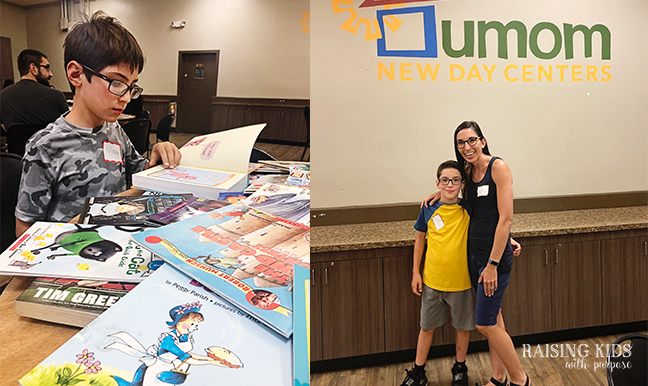
I planted these seeds back when my older two were 8 and 6. My oldest went with me to read to homeless children while they’re parents were in meetings. I still remember how joyful he felt when we got in the car after that first time volunteering.
My other son wasn’t old enough to go, so he took the initiative to do a book drive at school. His class was able to donate many books that the kids not only read but also got to take back to the shelter with them.
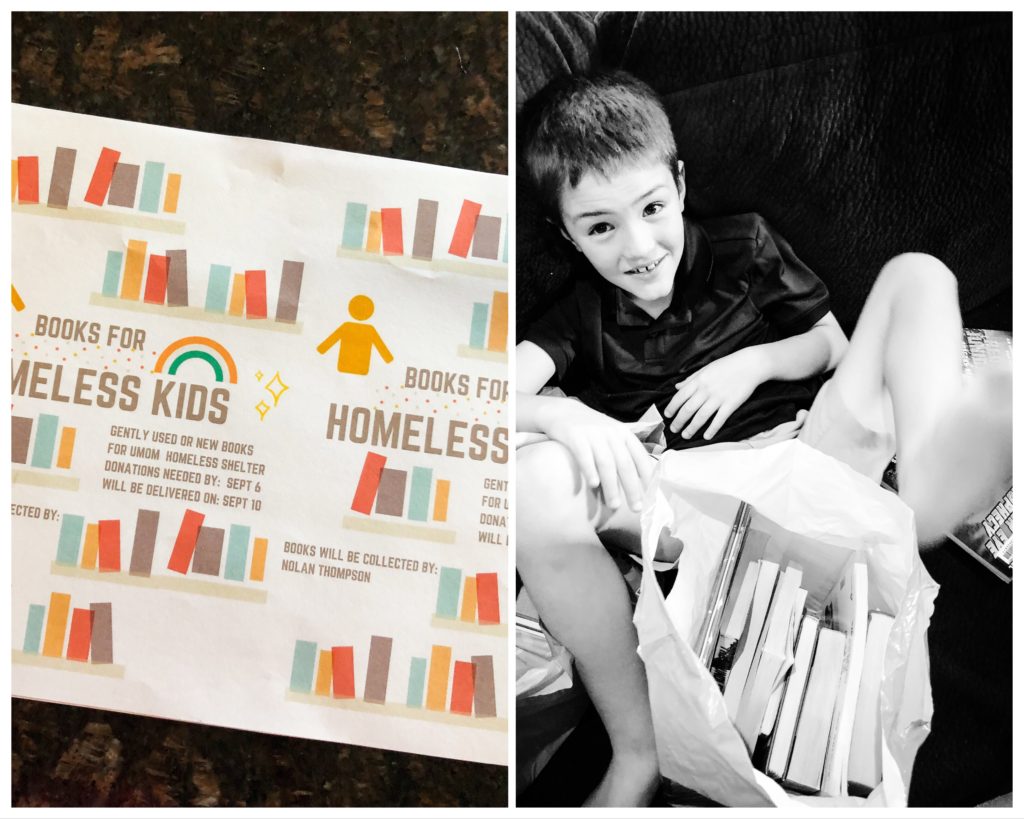
Since then, my oldest has really developed a heart to serve. He’s also the first to help kids at the skatepark when they’re struggling with a trick, and he loves giving support to his friends. Recently, he went on a 12-day service-learning trip to Peru that helped him develop a worldview that has led him to want to do mission trips.
Seeing how other people live locally and internationally through service has naturally led him to become more gratitude, the kind that he truly feels.
4. Create Gratitude Habits
Weave gratitude into your daily life!
Here are some very simple ideas of habits that can lead to raising grateful kids.
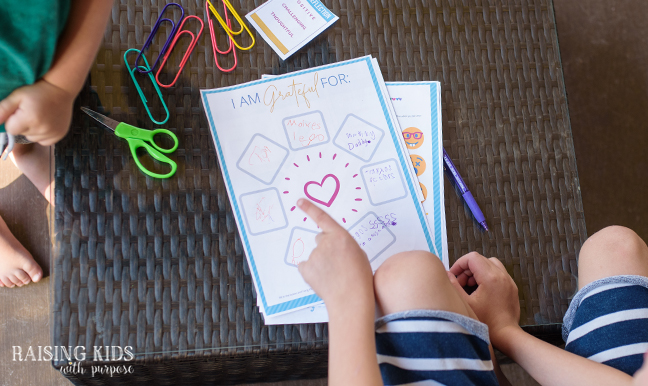
Gratitude Journal
Every night before bed, write down three things that went well that day (even if it was a horrible day) and what you are thankful for. Turning negatives into positives is very impactful on the brain. Or if it’s too much to write it down, simply state three things!
Dinner Conversations
Every night before we start eating, we say a prayer and thank God for all the good (and not-so-good) things happening in our lives. Occasionally, each child goes around and names something they are thankful for.
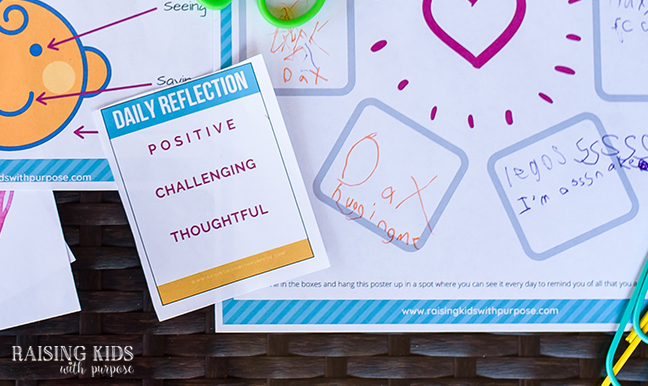
Because I wanted to get more consistent with this, I created a Daily Reflection Card.
It’s free for you to download as part of the Gratitude Toolkit. We want to start using these as a way to discuss the good, the challenging, and something we did that was thoughtful during our day.
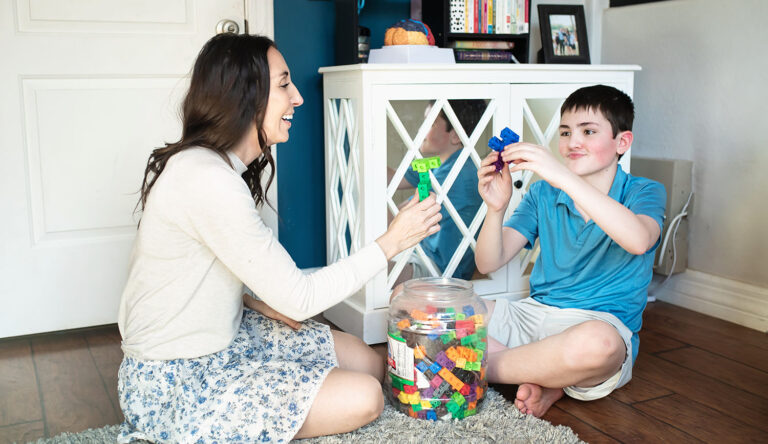
PS: And to clarify in the picture below: It says, “legos ssssss. I’m a ssssnake,” because something else might jump out at you!)
visual reminders
If your kid has a phone, text a picture each week of something that you appreciate. Or you can also do this if they have a kid smart watch like this. This can spark bigger conversations on the topics of gratitude!
A friend of mine said she printed a photo I took of a cactus with bright fuchsia flowers. She has it on a bookshelf she sees as soon as she wakes up every day. As she gets out of bed, she uses the photo as a reminder to think about things she’s grateful for. How sweet is that?!
You can have each of your kids draw and pick a photo to frame so they can do the same thing!
Car Conversations
Another great time to list what you are grateful for is when everyone is trapped in the car! Listening to Christian radio helps initiate conversation.
Another idea is to develop a habit. Before you put the car into drive, have everyone mention something they are thankful for. You can also find podcasts for kids (here’s my ultimate list of podcasts we love), that get you talking about gratitude.
5. Savor
You have probably heard of this word in terms of savoring food, but did you know you can savor almost anything you experience?
Savoring is when you become mindfully engaged and aware of your feelings during positive events.
When you do this, your joy and happiness increase. Savoring can also improve relationships, better physical and emotional health, and increase creativity.
There are many ways to do this!
Create Mental Pictures
Teach your child to stop and become mentally aware of positive experiences.
Is your child having the time of his life at a soccer game? Encourage him to stop and think about how he feels. Mentally record the reactions of the other players, what it felt like to kick the ball, and even what the weather and atmosphere were like that day.
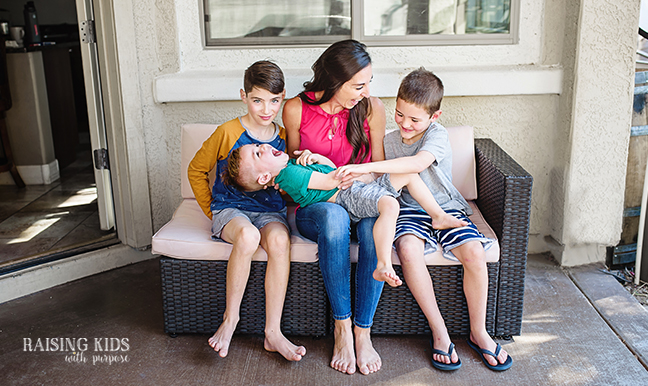
When my kids make their little brother laugh, I tell them to record that memory in their minds. By encouraging them to close their eyes, I have them think about what it sounds like and how that giggle makes them feel. Then, when they open their eyes to see their brother’s cute face, they record what he looks like in their minds.
I did this a lot when that little guy was born. After having a rough pregnancy with extreme morning sickness and overwhelming amounts of sadness, his presence quickly became a time of joy that I didn’t want to forget.
Fully Experience Every Sense
It’s been fun to watch how this has impacted my son, who is naturally pessimistic and suffers from anxiety. I encourage him to focus on one sense while thinking positively.
An easy way to do this is to cook and eat a favorite meal. While cooking, have your child hone in on his or her smelling sense by closing her eyes. Take a deep breath in to really enjoy that smell. Then, when it’s finished, stare at the food to appreciate what it looks like. If they like textures, the food can also be savored while chewing, and lastly, they can zero in on the yummy taste.
Compare the Experience
Get your child to look outside of her world and compare what she’s experiencing to others. Does she come to you saying she’s bored because she doesn’t have anything to play with?
Remind her that there are children who have no toys and to be grateful for what she does have. Or better yet, take her to donate a toy to one of those kids.
6. Read Books About Gratitude and Reciprocity
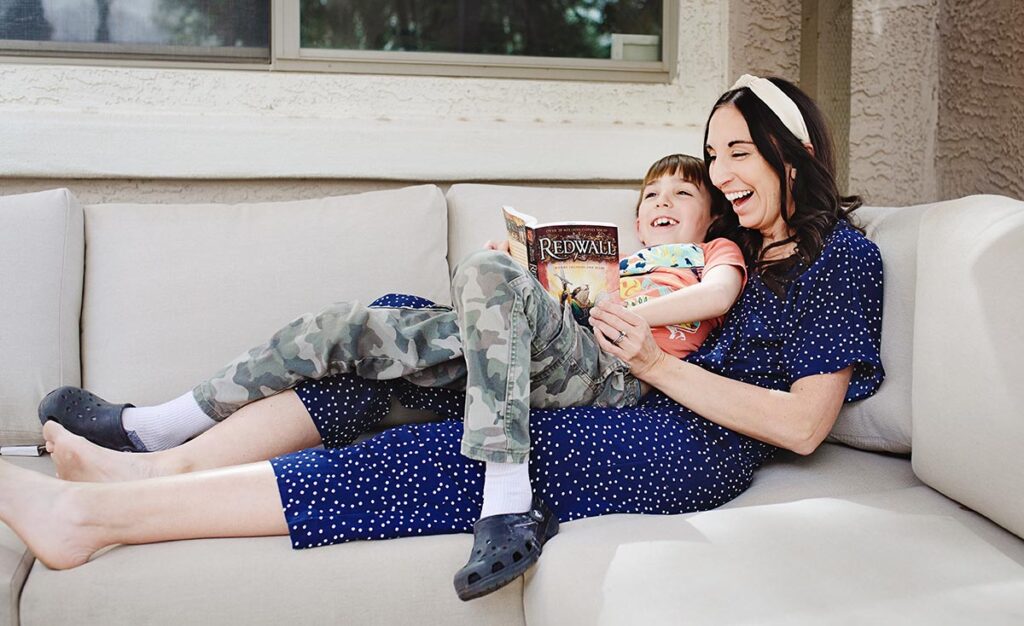
Here’s something that surprised me when I first learned it: reciprocity of kind acts is not natural or instinctual. It actually has to be taught!
Kids don’t automatically know that when someone does something nice for them, it’s meaningful to return that kindness. They need to see it modeled and have it explained. I know, I know, I keep talking about how modeling is so important.
One of the simplest and most effective ways to teach this concept is through books. Stories help kids see gratitude and reciprocity in action through characters they can relate to.
Our family favorites:
- Do Unto Otters by Laurie Keller – This book teaches the Golden Rule in the most fun, engaging way!
- The Thankful Book by Todd Parr – Perfect for younger kids
- Me and My Feelings by Vanessa Green Allen – Great for 7-12 year olds
You can find a whole list of other books about gratitude on Amazon!
7. Mental Subtraction
This is a powerful gratitude practice backed by research, and it might sound counterintuitive at first: To increase gratitude for what we have, we need to imagine life without it.
Psychologists call this “mental subtraction,” and studies show it’s actually more effective at building gratitude than simply reflecting on what we’re thankful for.
How it works:
Experts suggest doing this practice at least once a week. Sunday nights work perfectly for this kind of reflection!
Step 1: Choose a joyful memory | Encourage your child to think of a really happy event like when they got their new puppy, had a special day with friends, won an award, made the team, or had an amazing birthday party.
Step 2: Explore what made it possible | Help them process what it took to make that event happen. Who helped? What choices were made? What had to fall into place?
Step 3: Imagine it differently | Write down how it could’ve gone differently or what could have stood in the way of it happening.
“What if we hadn’t been able to get our puppy?” “What if our friends moved away and they lived too far away to go on adventures together?” “What if you’d been sick that day?”
Step 4: Appreciate that it DID happen | Finally, have your child shift their focus back to remembering that the event actually did occur and that it wasn’t guaranteed.
Help them realize that choices had to be made, certain circumstances had to align, and people had to show up for that moment to happen. THAT is something to be genuinely thankful for.
This practice helps kids stop taking good things for granted and start seeing them as the gifts they truly are.
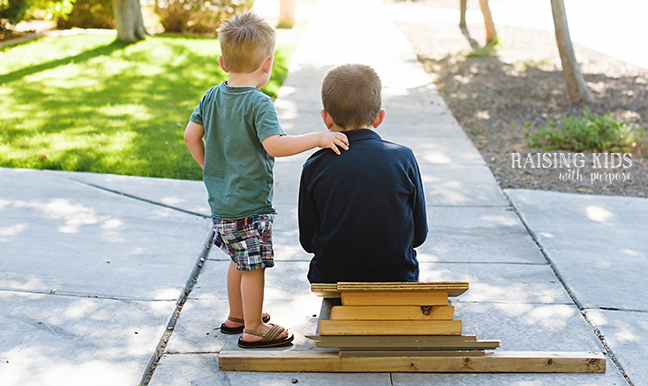
8. Teach Empathy
“No one cares how much you know, until they know how much you care.”
– Theodore Roosevelt
Empathy is about seeing other people’s perspectives, and ALSO caring about that person.
This idea goes hand in hand with emotional intelligence and can lead to so many positive things in a little person’s life, such as forming strong relationships, developing acceptance for others, developing good mental health, creating high levels of happiness, and reducing toxic stress.
According to Goodstart Early Learning, “Building an understanding of what others are feeling, how their own actions can impact others, and why someone might be experiencing feelings at a particular time is a valuable life skill for children to possess.” And I believe it leads to raising grateful kids.
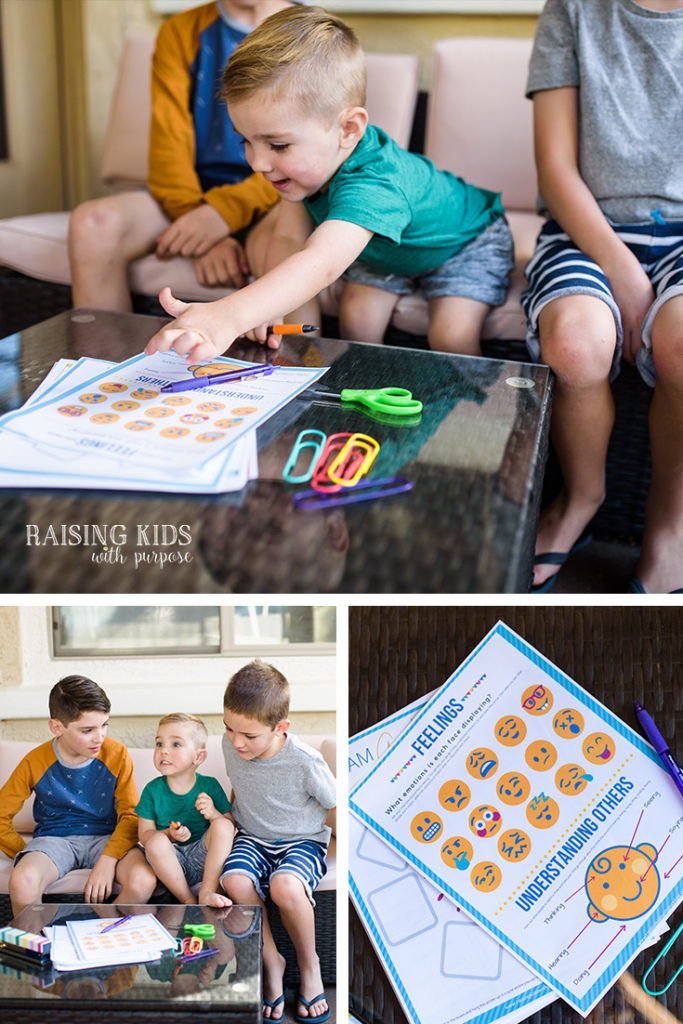
Fun Ways to Teach Empathy
- Point to and Mimic Emotions | We did this a lot when our kids were young! Any time a child was crying at the store or someone was angry in our house, we would have the boys label the emotion. Afterward, I’d ask that son to mimic the child we saw so he could understand that emotion better.
- Role Play | Act out different scenarios of people with different emotions.
- Point Out Animal Emotions | This one can be fun. Dogs and cats can be quite expressive so ask your child what kind of emotion she thinks the animal is experiencing. And if you don’t have a pet, point out animals you see outside or even when you go to the zoo *We have one 10 minutes away, so we go often! It can sound like, “How is the lion feeling today?“
- Talk About Feelings | You want to ask your child how they feel about a situation, but if that’s not working, express how you felt about a certain situation when you were their age.
- Make a Feelings Collage | Take your old magazines and have your child cut out the people. Then, under each photo, label how that person is feeling.
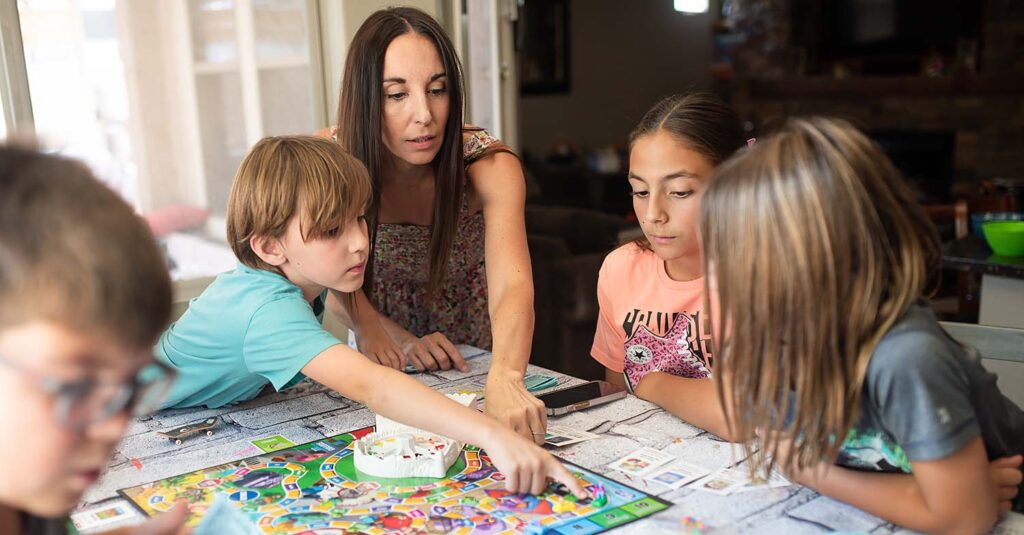
- Play a Game. Find a fun game that promotes empathy and understanding of feelings. Here are a few I found on Amazon:
- Friends and Neighbors The Helping Game by Peaceable Kingdom – Emotional development cooperative game for kids (ages 3+)
- Happy or Not Board Game – Bingo emotions and feelings for social skills (ages 4+)
- Chat Chains – The game that connects us (ages 8-99)
- Head Rush – Social skills games and therapy games that develop mindfulness, self-awareness, and communication (ages 12+)
A gift for you! I have created a Gratitude Toolkit which includes two worksheets that encourage and teach empathy! Click here to sign up for the newsletter and receive the toolkit for free!
9. Give Your Kids Responsibilities
One of the most effective ways to build gratitude in kids? Make them responsible for contributing to the family.
I know, I know. It feels counterintuitive. We think we’re teaching gratitude by giving our kids things, but actually, it’s when kids have to do things themselves that they start appreciating what others do for them.
When your child has to make their own lunch, they suddenly notice all those years you packed it for them. When they’re responsible for their own laundry, they develop an appreciation for clean clothes appearing in their drawer. When they help prepare dinner, they realize meal planning and cooking are work.
We often hear, “But I don’t want to do that.” And instead of reacting with something like, “Well, I don’t like to do a lot of things, but sometimes we just need to suck it up and do it anyway,” we have the opportunity to give them the gift of responsibility through connection.
Eventually, they will learn the lesson of having to do it anyway and push through the mundane or frustrating tasks of life, but through our actions and how we talk about those things.
Why responsibilities build gratitude:
Kids who regularly contribute to the household develop a healthier perspective on give-and-take. They start to understand that families work because everyone pitches in, not because one or two people do everything.
They also gain empathy for the effort others put in on their behalf. It’s hard to stay entitled when you’ve experienced firsthand how much work goes into keeping a household running.
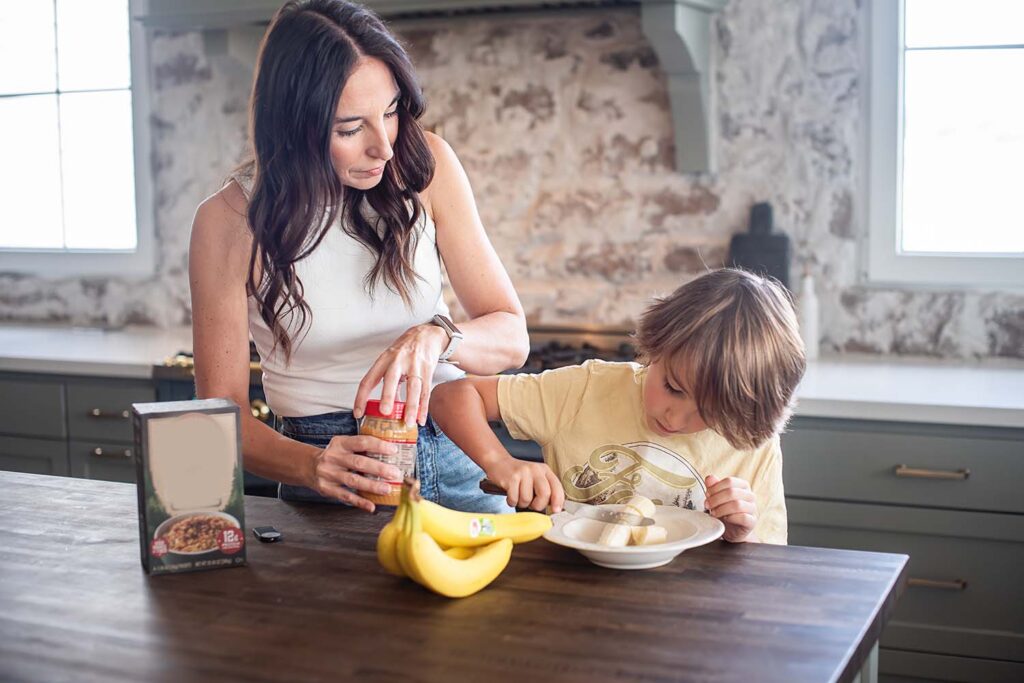
Age-appropriate responsibilities:
The key is giving kids tasks they can actually handle and gradually increasing responsibilities as they grow:
- Preschoolers: Put toys away, help set the table, feed pets
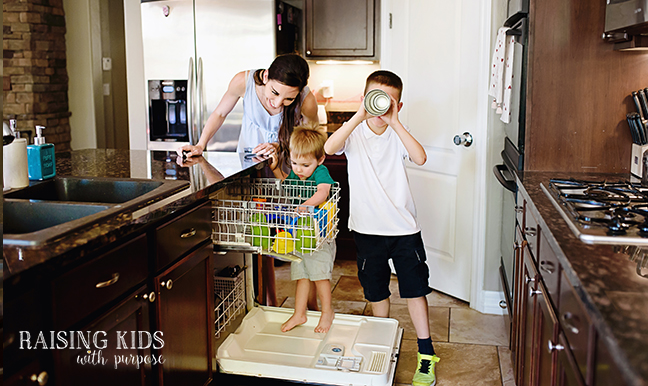
- Elementary: Make their bed, pack their lunch, unload dishwasher, fold laundry
- Middle school: Cook simple meals, do their own laundry, yard work, babysit younger siblings
- Teens: Grocery shopping, meal planning and prep, car maintenance, managing their own schedules
Chores and Contributions
Maybe begin with one chore a week. Let your child pick the time, day, and task. When kids feel like they are in charge, they are more likely to want to help.
One of my boys loves dusting and doing laundry because he gets to be in control of when and how he does it! I also show gratitude and thank him for helping me so I can spend more time with him to do fun activities! See what I did there, I’m modeling gratitude also while ensuring my child isn’t becoming entitled.
Routines
Help your kids come up with morning and evening routines so they can follow them without your help. I let my kids pick the order of their routines, made these awesome charts, laminated them, and hung them on our command center corkboard.
It has reduced the nagging so much and allows my kids to be thankful they can make their own choices and get themselves ready for school and bed without having to rely on me or my husband.
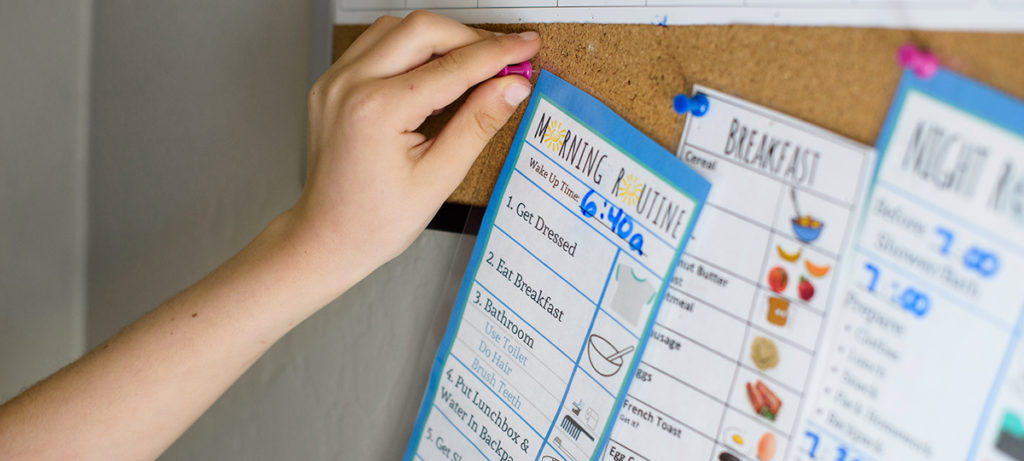
BONUS! Sign up for my newsletter and receive FREE routine charts!
Tools
After spending a ton of time reading and seeing what praise and rewards were doing to our kids, we threw all the sticker charts away.
A great way to help your kids take responsibility and, in turn, learn how to be grateful for the privileges they have is to give them tools, not just rewards.
I learned that rewards create that exchange relationship we talked about earlier. Kids start thinking, “I’ll only do this if I get that.” But tools? Tools empower kids to take ownership of their responsibilities.
Tools we use in our home:
- Timers – We use these visual timers for so many different tasks and responsibilities: schoolwork, chores, screen time, and even transitions between activities. Kids can see time passing, which helps them manage it themselves.
- Alarm clocks – Our boys wake themselves up using their own alarm clocks. This simple tool teaches them responsibility for getting up on time and builds appreciation for all those years we woke them up!
- Checklists – Visual checklists for morning routines, bedtime routines, and weekly chores help kids remember what needs to be done without constant reminders from us.
- Age-appropriate supplies – Kid-sized brooms, their own laundry baskets, step stools to reach the sink, their own tool bench with a complete set of actual tools, and even something like a drill says, “you’re capable” instead of “you need me to do this for you.” **My 13-year-old has the BEST laundry system using something like this vertical rolling laundry hamper!
Make it about contribution, not rewards:
Here’s the crucial part: don’t tie responsibilities to allowance or rewards. That creates an exchange relationship (remember that concept from why kids are ungrateful?).
Instead, frame chores as: “This is how our family works. We all contribute because we all benefit from living here together.”
When kids understand they’re part of a team rather than customers being served, gratitude typically follows.
10. Teach Humility
Gratitude is born of humility, for it acknowledges the giftedness of the creation and the benevolence of the Creator. This recognition gives birth to acts marked by attention and responsibility. Ingratitude, on the other hand, is marked by hubris, which denies the gift, and this always leads to inattention, irresponsibility, and abuse.
~Mark T. Mitchell, Professor of Political Science at Patrick Henry College in Virgini

In order to overcome ingratitude, our kids need to understand how to be humble. This allows
Gratitude Changes Everything
Remember, we have the power to encourage compassion, kindness, empathy, and happiness in our children’s lives. The number one way to make sure you are raising grateful kids is to teach them how to express gratitude for all they have and get to do.
In summary, here are the Top 10 Ways to Teach Gratitude to ensure we are raising grateful kids:
- Model
- Talk about thankfulness
- Volunteer/Serve/Give back
- Create daily gratitude habits
- Savor
- Read books about gratitude
- Do mental subtraction exercises
- Teach empathy
- Give your kids responsibilities
- Teach humility
Don’t Forget! Your Free Gratitude Toolkit
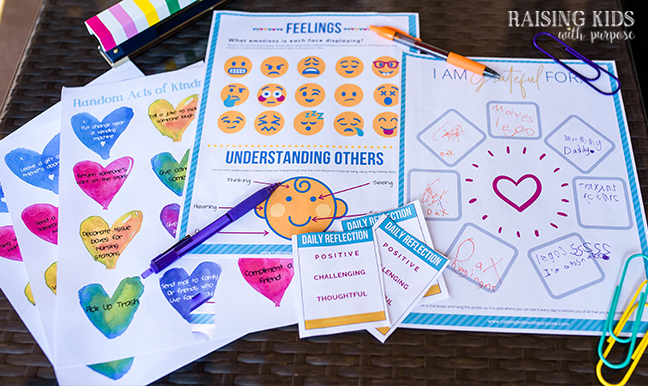
I created a gratitude toolkit to help you with raising grateful kids. It includes:
- A fill-in-the-blank gratitude poster
- A FUN worksheet to teach your child about emotions and how others feel
- A worksheet to help your child understand what his or her strengths are in understanding others and what he or she can improve upon.
- Daily reflection cards for the whole family
- Random acts of kindness hearts to help your children find ways to bless others
Need more support?
If you need more support than just following these 10 tips to teach your kids gratitude, I’d love to chat!
I have a 12-week parent coaching program that gives you the exact tools and roadmap needed to be the happy parent you want to be and raise kids who grow up to be grateful, responsible, and well-adjusted. I am also offering parenting classes like this one on becoming a more playful parent.
If you want to chat to see if it’s a great fit, I’d love to meet you virtually!
Find a time to talk to me below:

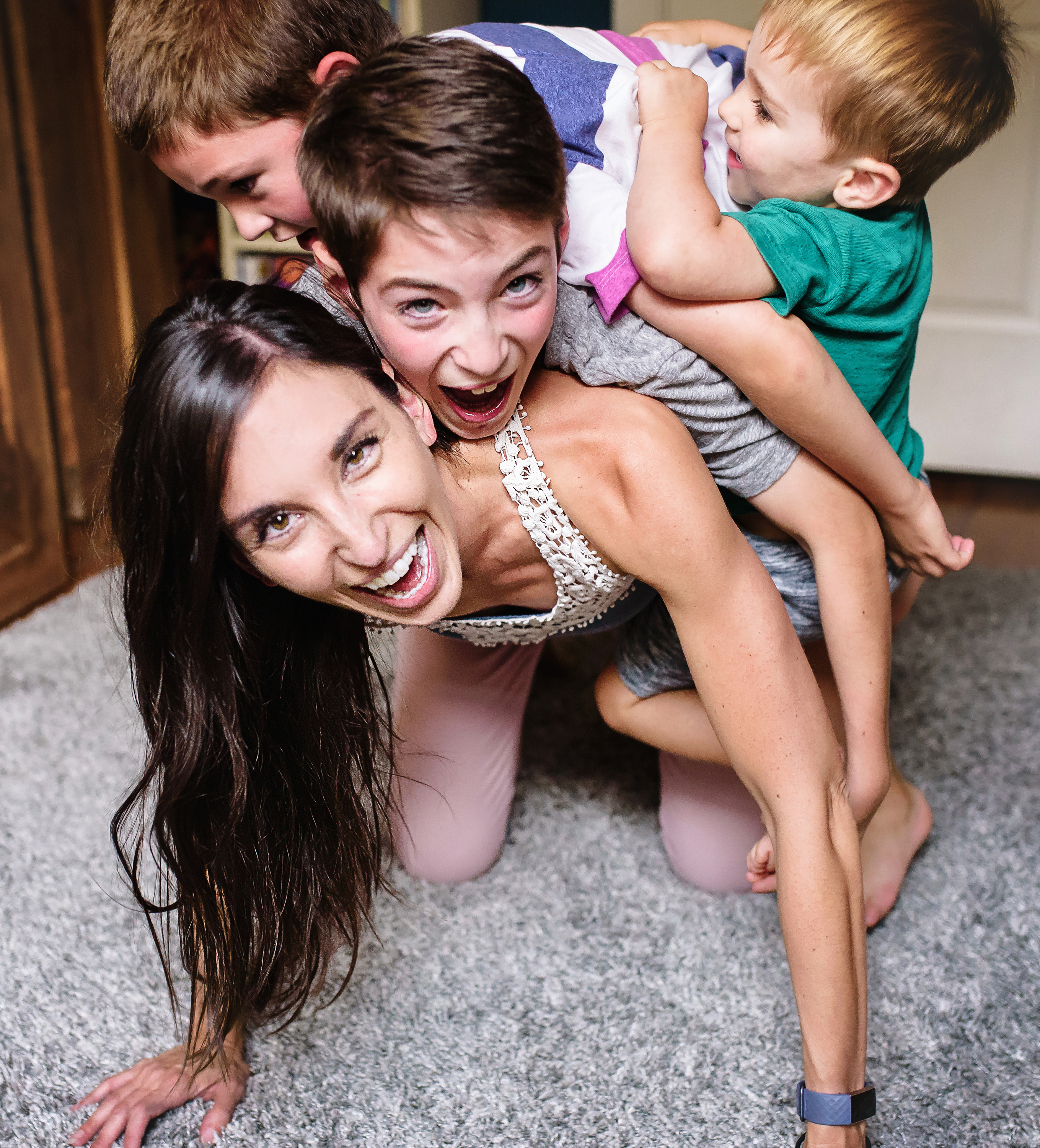
Hello!!! I’m Adriane. I’m a mom to three loud boys, am a research-a-holic and very passionate person who writes at Raising Kids With Purpose. Parenting can feel so hard sometimes but with mindset shifts and understanding, it can be very enjoyable. My hope is to inspire parents like you to create lifelong connections with your children and enjoy the journey along the way!



Love that you are focused on this with your kids and encouraging us all to be more intentional about allowing our children opportunities to learn about gratitude! You rock! 🙂
Thank you!
Wonderful post! I love the idea of teaching my kids to pay it forward 🙌🏻 I especially loved the part about empathy and emotional intelligence. I feel like this is a huge thing, specifically with being a fellow boy mom! There is a stigma surrounding boys showing their emotions when there shouldn’t be! You’ve given me lots to think about and put into practice w my sons ✌🏻🖤
Awe what a sweet comment. I never thought about the boy thing. And yes, it’s so important to teach emotional awareness and for them to know that emotions are healthy!
Thank you for sharing these awesome suggestions. I love the practices like journaling, even at a young age. Thanks for sharing.
Thank you! It’s hard to remember to journal but it can be a powerful tool for sure!
I am always so shocked when people compliment me because my kids say please and thank you. I can’t imagine not teaching your kids to do that!
I agree!
I love this post so much!! We have the 3 Minute Gratitude Journal. Being thankful is a huge aspect at our home too!
We really need to get one of those. They look amazing!
I love this post so much. My son just turned two and I have been trying to figure out how to teach him manners and about his emotions. Thank you so much for this!
It’s so fun to teach two-year-olds about emotions. I’m having a blast with it!
Thank you so much for this post and all the information you freely share to help us teach gratitude to our children! I’m always amazed by the amount of education packed into each one of your posts. I’m pinning this! I subscribed to the toolkit too. We homeschool so I am going to try to work it in to next weeks school schedule.
Thank you thank you for all your sweet comments! Let me know how it goes!
Wonderful tips! So important for our little ones to learn!
It really is!
Love this idea!
Thank you!
I love the idea of making a gratitude journal! That would bring a moment to sit and reflect everyday and would become a great daily habit. Awesome ideas!
Me too! I wrote it but we need to do it!
This is such a great and important post. I love the idea of talking about gratitude around the dinner table. Family table time is important for us to talk and socialize.
Love “family table time”. It was a big part of my childhood and so has been very important for our family, too!
Great tips about teaching gratitude. I do think that even many adults don’t stop to think about what they are grateful for and thus can’t truly teach kids. We do teach, almost reflexively, to say “thank you” but it’s usually taught as part of good manners and not true gratitude.
This is so true. Thank you is only the tip of the ice berg. Or maybe the leaves; gratitude is the roots 😉
Modeling gratitude all the time is so important our kids learn so much from what we do and say.
They really do watch everything we do.
Such an important thing for kids to learn. These are all great ideas to help foster a grateful attitude in children.
Thank you!
I definitely agree with modeling behavior!
That’s with anything, right? 🙂
I completely agree. My children are still very young (2 and 1) but I try to think of simple ways they can understand and express gratitude. It has been the thing that has kept me grounded.
My two year old is catching on to empathy so quickly. It’s amazing how much he already understands being so young. Grounded is a great word!
These are such excellent tips for raising grateful and more fulfilled children. Loved the part about empathy and emotional intelligence! Spot on!
Thank you so much! Emotional intelligence is so important and it can be super fun to teach 🙂
This is such a great post! The attitude of gratitude needs to start at a very young age. And it starts with us as parents having gratitude.
Yes, it really does start with us! Thank you 🙂
Thank you for sharing! Thank God my daughter is respectful and appreciative.
She had to learn it from somewhere 😉
What an incredible post. Raising kids in general is no easy feat, but raising them with Gratitude is truly a gift. It is so important that our kids learn to be grateful, and it’s so true, modeling it for then and instilling it through ongoing conversation and writing it down are paramount. Thank you for the downloadables and for the reminders here.
Thank you so much!!! Gratitude is such a gift. I love that you put that. And you are so correct!
What a great, comprehensive post! And I LOVE your free printable toolkit, too! Every night before bed we have our girls reflect on the best parts of their day, and count their blessings out loud – it is so important to teach them gratitude from an early age!
I love this so much!
So important to raise our children to be grateful and empathetic. I love how you have explained in deatils all of the above.
It really is. Thank you!
I am very excited about the printables! I know I will enjoy doing these with my children. It is always good to remember that there are things we need to be teaching our kids besides behaving and being kind. You have come up with some great tips and ideas I want to put into action in my home! Thank you.
Awe what a sweet comment. I love creating tools so it absolutely warms my heart to know they are going to be used for good! Thank you!!!
We noticed our son wasn’t showing gratitude so we started a homeless ministry. It’s been a game changer for him.
You started your own ministry? That’s incredible!
Such a great post. Filled with lots of great information. I will follow everything you said on this post.
Thank you!
I love this post. Very helpful. I’ll definitely keep these tips in mind. Thanks for sharing.
Thank you!
It is so important to teach kids gratitude and to pay it forward. We started getting our daughter involved with picking gifts for our angel this year. It’s so important to teach them that not everyone is in the same situation we are and helping others is important.
I forgot about that program! We do Operation Christmas Child every year. My kids look forward to our church’s packing party! I love that you are giving your children the gift of giving to others <3
There’s some great tips. Our boy has autism & learning disabilities we have to work really hard to help him with his understanding of things, there’s definitely things within this post we can utilise with him so thanks
Yes, I completely understand. I do a lot of research on autism and neurodiversity so I try to apply tips to all kids with an understanding that every single kid is unique and not everything will work for everyone.
I am so happy to see and read your post. I really believe that it is very important to teach gratitude to our kids. And it is wonderful if we can start as early as we could. Thank you so much for sharing these tips. I just shared your post too with the World Gratitude Summit group
Awe thank you so much Clarice! I really appreciate it and your sweet sweet comment!
This is a great way to break it all down, I often find my kids saying the words but not really showing that they are truly gracious. We recently started the gratitude journals, so I’m hoping this helps!
Yes! That’s the key is to teach empathy so they actually have meaning behind the words!
Woah! This article on Different and Exciting Activities to Do with Kids” is a game-changer! 🎉🌈 And speaking of kid-friendly awesomeness, I’ve got a similar article loaded with kindness ideas at https://aliciaortego.com/acts-kindness-kids/. Let’s keep the good vibes rolling! 🤸♀️💕 #KidFun #SpreadKindness
Hello.This article was extremely motivating, especially because I was searching for thoughts on this topic last Monday.