

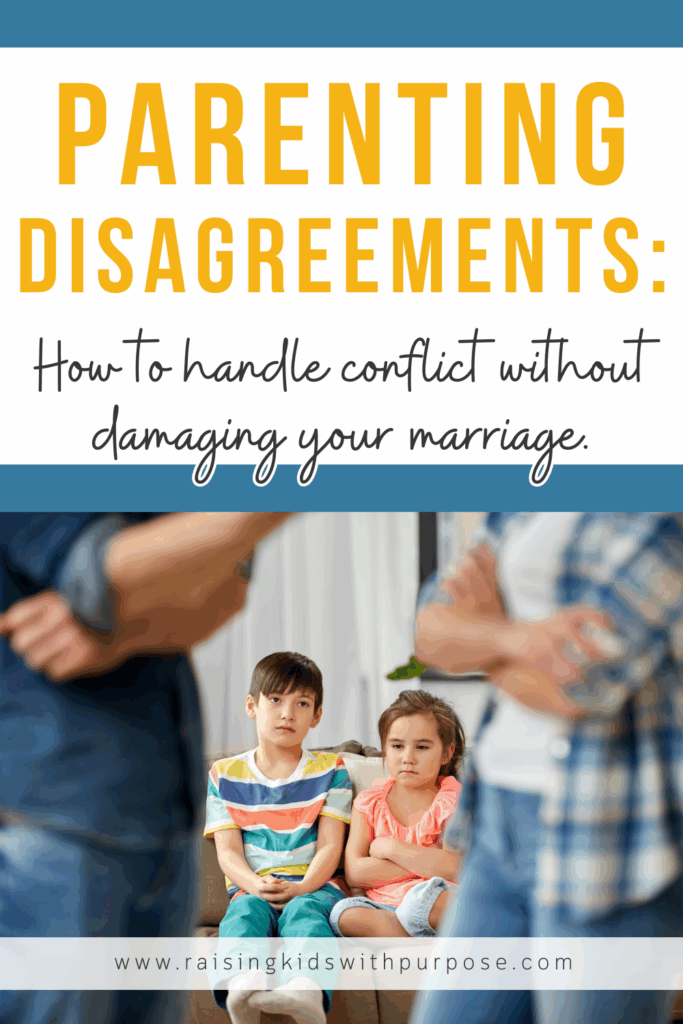
Parenting Disagreements: How to Handle Conflicts Without Damaging Your Marriage
Inside: Struggling with parenting disagreements can leave you feeling disconnected from your partner. In this honest and relatable post, Jordan shares how her military background clashed with her husband’s when it came to raising their son. She includes practical tips that can help you navigate disagreements without damaging your relationship with your spouse.
Guest Post by: Jordan Palmer
As fellow Air Force veterans, my husband and I thought we’d naturally align on parenting. We both understood structure, discipline, and following orders. We’d worked together through deployments, military moves, and the challenges of service life. But when our son was born, we discovered that shared military experience doesn’t guarantee freedom from parenting disagreements. It created an entirely new source of conflict we never saw coming.
I’ll never forget the first major parenting disagreement that left us both questioning everything. Our two-year-old was having a complete meltdown over the “wrong” cup at breakfast. My husband saw defiance that needed immediate correction—”He needs to learn he can’t always get his way.” I saw a toddler overwhelmed by big emotions who needed understanding and guidance through the feeling. We stood there, both trained in military discipline, yet seeing the same situation through completely different lenses.
If you’re experiencing constant parenting disagreements with your spouse, you’re not alone. Furthermore, these conflicts don’t mean you’re failing as parents or partners—they mean you’re human beings with different perspectives trying to figure out one of life’s biggest challenges together.
Table of Contents
Why Parenting Disagreements Are So Common (And Why They Escalate)
The truth about parenting disagreements is that they’re virtually inevitable. Moreover, they often catch couples completely off guard, especially when other areas of their relationship function smoothly. Research consistently shows that most couples experience increased conflict after having their first child, with parenting decisions being a primary source of tension.
The Role of Our Own Upbringings in Parenting Conflicts
My husband comes from a multi-generational military family where strict discipline and clear expectations were the norm. Rules were non-negotiable, consequences were swift, and children were expected to comply without argument. Consequently, his instinct is to establish clear authority and immediate compliance.
I was the first in my family to serve, coming from a more hands-off background where conflicts were often avoided or swept under the rug rather than directly addressed. While my husband believes in ending conflict quickly through authority, I value teaching through conflict and showing our son respect as an individual with his own thoughts and feelings.
This difference became especially apparent during my battle with postpartum depression. When I was already feeling fragmented and overwhelmed, our parenting disagreements felt like another confirmation that I was failing at everything. Nevertheless, what I’ve learned through my psychology background and current Master’s in Social Work studies is that these disagreements often stem from fundamentally different beliefs about children’s autonomy and learning.
How Stress and Sleep Deprivation Fuel Parenting Arguments
Sleep deprivation and the constant stress of early parenthood create the perfect storm for parenting disagreements. Additionally, when we’re exhausted, we default to the parenting patterns we observed growing up, even if we intellectually prefer different approaches.
During those early toddler years with our son, minor disagreements would escalate quickly. My husband would see my approach as “too soft,” while I felt his methods were “too harsh.”
What we didn’t realize was that we were both operating from a place of stress and fatigue, making it nearly impossible to think clearly about long-term parenting goals.
This post may contain affiliate links, which means I may earn a small commission if you choose to make a purchase through them—at no extra cost to you.
The Hidden Cost of Parenting Disagreements on Your Marriage
Unresolved parenting disagreements don’t just affect your relationship with your children; they can create lasting damage to your marriage. Subsequently, research from the Gottman Institute shows that couples who can’t resolve parenting conflicts are significantly more likely to experience overall relationship dissatisfaction.
What Constant Parenting Conflicts Do to Your Partnership
When parenting disagreements become frequent, several damaging patterns emerge:
Erosion of trust and teamwork. Partners begin to feel like they’re working against each other rather than together. Consequently, this creates an adversarial dynamic that spills into other areas of the relationship.
Increased criticism and defensiveness. Each parent starts viewing the other’s approach as “wrong,” leading to constant correction and criticism. Therefore, both partners become defensive about their parenting choices.
Emotional distance. Repeated conflicts create resentment and emotional withdrawal. Moreover, partners may start avoiding parenting discussions altogether, leading to parallel parenting rather than collaborative parenting.
Impact on intimacy. When you’re fighting about parenting during the day, it’s difficult to reconnect as partners in the evening. Furthermore, the stress of constant disagreement affects physical and emotional intimacy.
How Children Are Affected When Parents Fight About Parenting
Children are incredibly perceptive and quickly pick up on parental conflict. Research indicates that children who witness frequent parenting disagreements between their parents show increased anxiety, behavioral problems, and difficulty regulating their own emotions.
Additionally, children learn to manipulate parental disagreements to their advantage, asking one parent for something they know the other would refuse. This dynamic undermines both parents’ authority and creates confusion about boundaries and expectations.
Most importantly, children need to see their parents as a united team. When they consistently witness parenting disagreements, they may feel insecure about their place in the family structure and worry about their parents’ relationship stability.
How to Handle Parenting Disagreements Without Damaging Your Marriage
The goal isn’t to eliminate parenting disagreements entirely; that’s unrealistic and potentially harmful. Instead, the objective is to handle these conflicts in ways that strengthen your partnership and provide security for your children.
The 24-Hour Rule for Heated Parenting Conflicts
When a parenting disagreement escalates to the point where voices are raised or harsh words are exchanged, implement the 24-hour rule. This strategy involves:
Immediate de-escalation. One partner says, “I need to pause this conversation. Let’s revisit this tomorrow when we’re both calmer.”
Individual reflection time. Each parent spends time considering their position, their partner’s perspective, and the underlying needs they’re trying to meet.
Structured discussion. After 24 hours, return to the conversation with specific guidelines: no interrupting, focus on solutions rather than blame, and acknowledge valid points from your partner’s perspective.
This approach prevents parenting disagreements from causing lasting damage while ensuring important issues get resolved thoughtfully.
Ready to stop the daily parenting fights?
Download Jordan’s FREE 7-Day Parenting Partnership Peace Plan and start working together as a team, rather than against each other.
Get immediate access to communication scripts, de-escalation techniques, and a proven framework that’s helped hundreds of families find their groove.
[Download Your Free Peace Plan Here]
Finding Common Ground in Your Parenting Values
Despite different approaches, most parents share similar core values for their children. Therefore, starting parenting discussions by identifying shared goals can help prevent disagreements from becoming adversarial.
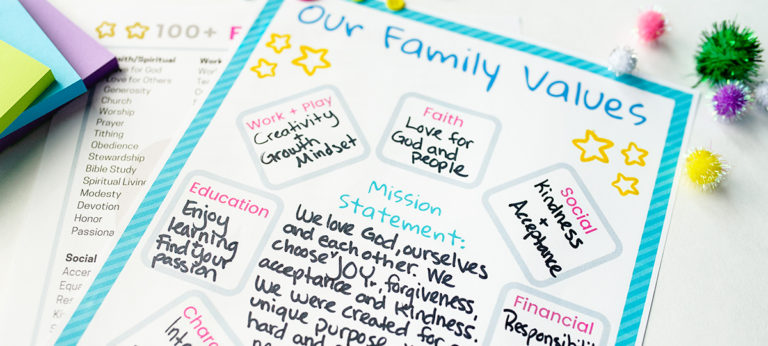
Exercise: The Parenting Values Alignment
- Each parent independently lists their top five values they want to instill in their children (examples: kindness, resilience, honesty, independence, respect)
- Compare lists and identify overlapping values
- Discuss how different parenting approaches can serve the same underlying values
- Create a family mission statement that reflects your shared vision
For example, my husband and I both value respect; he shows it through teaching our son to respect authority, while I show it by respecting our son’s developing autonomy. Consequently, we’ve learned that both approaches can coexist and actually complement each other.
Creating a United Front When You Disagree
Unity doesn’t mean uniformity. Partners can have different parenting styles while still presenting a united front. Moreover, children benefit from exposure to different approaches as long as the underlying message of love and security remains consistent.
Strategies for maintaining unity:
Present decisions together. Even if you disagree privately, present parenting decisions as joint choices to your children.
Support your partner in the moment. If you disagree with your partner’s handling of a situation, support them publicly and discuss alternatives privately later.
Use your strengths. Acknowledge that each parent brings different strengths to parenting. Subsequently, divide responsibilities based on these natural abilities when possible.
Establish non-negotiables. Identify the issues where you absolutely must agree (safety, core values) versus areas where flexibility is acceptable (bedtime routines, food choices).

Practical Strategies for Common Parenting Disagreements
Authority-Based vs. Respect-Based Parenting Approaches
One of the most common sources of parenting disagreements involves different philosophies about children’s autonomy and respect. My husband, influenced by his military family background, believes in clear authority and immediate compliance. I, drawing from my psychology training, believe in explaining the reasoning behind rules and treating our son as an individual deserving of respect.
Finding balance between authority and respect:
Age-appropriate explanations. Provide simple reasons for rules that match your child’s developmental level. Consequently, children learn to internalize values rather than simply follow orders.
Consistent boundaries with flexible approaches. Agree on the non-negotiable rules while allowing different enforcement styles.
Teaching moments vs. immediate compliance. Identify situations where immediate compliance is necessary (safety issues) versus opportunities for teaching and discussion.
Teaching Through Conflict vs. Ending Conflict Quickly
My husband sees conflict as something to resolve quickly through clear authority—establish the rule, enforce the consequence, move on. I see conflict as an opportunity to teach emotional regulation, problem-solving, and communication skills.
Strategies for bridging this gap:
Time-sensitive vs. teaching moments. Agree on when quick resolution is necessary (public meltdowns, safety issues) versus when teaching opportunities are valuable (home conflicts, emotional regulation).
Tag-team approach. The parent who handles the immediate situation gets support from the other parent for follow-up teaching or processing.
Validate both approaches. Acknowledge that sometimes children need quick, clear boundaries and other times they benefit from extended discussion and emotional support.
When One Parent Is Stricter Than the Other
Different levels of strictness can actually benefit children when handled thoughtfully. Nevertheless, extreme differences in approach can create confusion.
Creating balance with different strictness levels:
Define your roles. The stricter parent handles discipline and rule enforcement, while the more flexible parent focuses on emotional support and problem-solving.
Consistent consequences. Agree on consequences for major infractions, regardless of which parent is present.
Regular check-ins. Assess whether your different approaches are working together or creating problems for your child.
Respect each other’s strengths. The stricter parent provides security and clear boundaries; the more flexible parent teaches emotional intelligence and adaptability.

Disagreements About Discipline and Consequences
Discipline disagreements often reflect deeper differences in parenting philosophy. Moreover, these conflicts can escalate quickly because they trigger our own childhood experiences with punishment and authority.
Framework for resolving discipline disagreements:
Separate discipline from punishment. Focus on teaching appropriate behavior rather than punishing mistakes.
Natural consequences vs. imposed consequences. Discuss when to allow natural consequences to teach lessons versus when parental intervention is necessary.
Consistency vs. flexibility. Establish core discipline principles while allowing for situational adjustments.
Follow-up and repair. Agree on how to handle situations where one parent feels the other’s discipline was inappropriate.
Screen Time, Bedtime, and Daily Routine Conflicts
Daily routine disagreements may seem minor, but can create significant stress when they occur repeatedly. Furthermore, these conflicts often reflect broader differences in priorities and values.
Practical solutions for routine conflicts:
Evidence-based guidelines. Research recommendations for screen time, sleep, and nutrition to create objective standards that both parents can accept.
Flexibility within structure. Establish basic routines with room for individual parent preferences.
Weekend vs. weekday standards. Allow different expectations for special occasions while maintaining consistent daily routines.
Child’s individual needs. Adjust routines based on your specific child’s temperament and development rather than rigid rules.
When to Seek Professional Help for Parenting Disagreements
As someone pursuing a Master’s in Social Work with a background in psychology, I understand both personally and professionally when parenting disagreements require outside support. Therefore, recognizing these signs early can prevent long-term damage to your marriage and family.

Red Flags That Indicate Professional Support Is Needed
Escalating conflict patterns. When parenting disagreements consistently result in yelling, name-calling, or personal attacks, professional intervention is necessary.
Child behavior changes. If your child shows increased anxiety, aggression, or behavioral regression in response to parental conflict, seek guidance immediately.
Relationship deterioration. When parenting disagreements spill over into all areas of your relationship, couples therapy can provide tools for conflict resolution.
Feeling overwhelmed or hopeless. If either parent feels consistently undermined, disrespected, or hopeless about resolving differences, professional support can offer new perspectives.
Impact on mental health. Parenting disagreements that contribute to depression, anxiety, or other mental health concerns require professional attention.
Types of Professional Support Available
Family therapy. A family therapist can help identify underlying dynamics and teach communication skills specific to parenting conflicts.
Parenting classes. Evidence-based parenting programs provide shared language and techniques for both parents.
Individual therapy. Sometimes individual work is necessary to address how childhood experiences influence current parenting approaches.
Marriage counseling. Couples therapy focused on communication and conflict resolution can strengthen the overall relationship.
Parent coaching. Specialized coaching can help parents develop specific strategies for common challenges. You can book a complimentary coaching call with Adriane here!
Building a Stronger Marriage Through Better Conflict Resolution
Parenting disagreements, when handled well, can actually strengthen your marriage. Moreover, learning to navigate these conflicts teaches valuable skills that benefit all areas of your relationship.
Lessons Learned from Our Journey
Through our own struggles with parenting disagreements, my husband and I have learned several crucial lessons:
Different doesn’t mean wrong. Our different approaches both have value and can complement each other when we work as a team.
Communication is everything. Taking time to understand the reasoning behind each other’s approaches prevents assumptions and resentment.
Flexibility strengthens unity. Being willing to adjust our approaches based on what works for our specific child has brought us closer together.
Professional support helps. Using my psychology training and seeking couples therapy during difficult periods provided tools we still use today.
Children adapt to different styles. Our son has learned to respond appropriately to both his father’s authority-based approach and my respect-based approach.

Creating Your Parenting Partnership Moving Forward
Remember that parenting disagreements are normal and, when handled thoughtfully, can strengthen your family. Furthermore, your children benefit from seeing parents who can disagree respectfully and work together to find solutions.
Action steps for moving forward:
- Schedule regular parenting check-ins to discuss what’s working and what needs adjustment
- Practice the 24-hour rule for heated disagreements
- Identify your shared parenting values and return to them during conflicts
- Seek professional support if conflicts escalate or impact your relationship
- Celebrate your successes when you handle disagreements well
Additionally, consider reading The Whole-Brain Child by Daniel Siegel for research-based approaches to child development, or Seven Principles for Making Marriage Work by John Gottman for relationship communication strategies.
What parenting disagreements are you facing in your home? How have you and your partner worked through different approaches to parenting? I’d love to hear your experiences and any strategies that have worked for your family in the comments below.

Jordan is a psychology graduate currently pursuing her Master’s in Social Work, an Air Force Veteran, and mom to a spirited 2-year-old boy. After experiencing postpartum depression and rage following her son’s birth, she became passionate about maternal mental health and creating sustainable self-care practices for mothers.
Through her blog Jordanhallie.com, she shares evidence-based strategies for maternal wellbeing, authentic motherhood stories, and resources that support women through difficult seasons of motherhood. When she’s not studying or chasing her toddler, you’ll find her tending to her indoor plant collection or lost in a good book.




This is a topic that’s close to my heart…
Many thanks! Where are your contact details though?
You’re welcome! They’re in the About Me section of the website.
Excellent blog here! Also your site loads up fast! What host are you using?
Can I get your affiliate link to your host? I wish my site loaded up as
fast as yours lol
Thanks! I don’t have an affiliate link but thanks for asking.